


Why diversify?
The federal government of KP Oli says ‘diversifying’ away from India and China is among its key foreign policy priorities. After coming to office a year and a half ago, Oli sought to bring Nepal-India ties on an even keel. He has been as keen to involve the northern neighbor in Nepal’s development endeavors. Yet his government has tried to do much more. Foreign Minister Pradeep Gyawali made a historical bilateral visit to Washington DC, in the clearest sign of Nepal’s wish to diversify away from its two neighbors. On the occasion, the Americans were quick to point out how Nepal had now become a key component of its (anti-China) Indo-Pacific Strategy. The Nepali side denied it was part of any such strategy. (Yet the steady flow of senior US officials to Nepal suggests the Americans are determined to push it.)
But what do we make of the government efforts to reach out to countries like Costa Rica, Cambodia and Vietnam? Can these efforts be seen as part of the same diversification policy? What of PM Oli’s most recent trips to the UK and France? Many see no method to the government’s foreign policy ‘madness’. Former Foreign Minister Ramesh Nath Pandey says national interest rather than diversification should be at the heart of Nepal’s foreign policy.
Carnegie India’s Constantino Xavier disagrees. He lauds Oli for trying to reach out to countries other than big powers, which he thinks gives Nepal “more options”. But even if the intent of the government is right, it is failing in execution. During his UK and France visits, he could not even get an audience with their heads of state. Nor could any of the agendas he had taken along be finalized. It is also unclear what was achieved from his trips to Cambodia and Vietnam.
If Nepal stands for a non-permanent UN seat tomorrow, will Costa Rica or Cambodia support its candidacy? Will they speak out in Nepal’s favor in case of another blockade? Or are they ready to invest here? If the government has a clear goal, there is a lot to be gained from diversifying our foreign relations. But without such a clear goal, Nepal could overstretch and its international standing might take a bad beating …

Frictions galore in the new federal republic as the PM consolidates power
In the third week of May, Prime Minister KP Sharma Oli remarked that provincial and local governments are not free and independent entities, but units under the federal government, thereby implying that he holds executive power over all three tiers of government. This hinted of Oli’s desire—and his government’s increasing attempts—to concentrate power in his hands. Experts caution that such centralization of powers would be detrimental to both the nascent republic and the new federal structure. After the 2006 people’s movement, Oli has been projected as a senior mainstream leader who is not fully committed to federalism and republicanism. Ironically, he is now in the country’s driving seat and is responsible for implementing its federal setup.
Oli’s statements (and steps) have ratcheted up the tensions between the federal and provincial governments. There are several instances of the prime minister crossing the red line set by the constitution when it comes to the division of powers between the federal, provincial and local governments. Oli has already snatched away several rights granted to the provincial governments.
Provincial chief ministers and heads of local bodies have long been complaining that they are being denied the opportunity to exercise their constitutional rights. They are also criticizing the federal government for not allocating sufficient budget to them. At the same time, provincial and local governments lack adequate human resources to carry out their responsibilities. They are systematically being made more and more dependent on the federal government.
Political analyst Chandra Kishore says Province 2 is unhappy with the central government for not giving it sufficient budget. “In some areas, the province is collaborating with the federal government but there also are issues that have widened the rift between the two. The federal government is not serious about formulating necessary laws for the provinces, which also suffer from a lack of sufficient staff. And there are differences over how to manage the police force and other security issues,” says Kishore. Schedule 6 of the constitution clearly gives the provincial governments the right to make laws on the maintenance of law and order and the formation of a state police force.
Parallel power-centers
The Oli government has curtailed the rights of the provinces by appointing chief secretaries and secretaries to provincial governments. In the name of security arrangement, there have been systematic attempts to increase the power of the federal and local governments (at the expense of the provincial governments). Currently, the chief district officers (CDOs) appointed by the federal government have the right to mobilize the police force. In a draft bill, Province 2 has proposed appointing district administrators who will hold parallel positions to the CDOs. This is likely to create problems in the coming days.
Generally, other provinces are not as vocal in their criticism of the center as is Province 2. But complaints are heard not only from Province 2, whose government seems more hostile toward the center, but also from other chief ministers, who are from the ruling Nepal Communist Party (NCP) itself. Speaking to journalists in Butwal on June 17, Province 5 Chief Minister Shankar Pokhrel, who is close to PM Oli, said, “The country’s budget is still centered on Kathmandu. A Kathmandu-dominated economic system cannot ensure the country’s balanced development.”
After much pressure, the federal government registered a bill in the parliament aimed at forming a formal mechanism for effective coordination among the local, provincial and central governments. But there is no sense of urgency to endorse the bill.
The bill envisages a committee chaired by the prime minister to manage the relations between the three governments. Another coordination committee at the provincial level is envisaged to settle disputes between the provinces and the local bodies. The provincial assembly also has the right to adjudicate such disputes.
The constitution has given some exclusive rights to each of the federal, provincial and local governments. But the three also share a number of common rights; hence the need for effective coordination among them. The central government, however, does not appear sincere about passing laws on the interpretation of shared rights. The most reasonable explanation is that it does not want to share power.
Error of Commission
Even in matters where the provincial and local governments are free to make laws, the center has created various obstacles. The ongoing controversy over staff recruitment by the Public Service Commission is but an example of the Oli government dilly-dallying on the devolution of rights.
First, there has been a painful delay in forming provincial public service commissions, which are mandated to recruit civil servants for provincial and local bodies. Second, the bill on civil service has been pending in the federal parliament secretariat for several months. (A few months ago, APEX had published a comprehensive story on how staff recruitment will remain a controversial issue if provincial level arrangements are not immediately adopted.)
Similarly, there are complaints that the central government is not handing over big infrastructure projects to provincial and local governments. Moreover, the federal government continues to appoint and mobilize secondary school teachers by setting up separate units of the education ministry in the districts. A report prepared by the High Level Education Commission has not been made public, whose only purpose seems to be the concentration of all education-related rights at the center.
Oli is not only centralizing the powers of the three tiers of government, but also those of the three organs of the state, namely the executive, the legislature and the judiciary. In February, the government came up with a bill on Work, Responsibility and Rights of National Security Council, which, if approved, vests the power to recommend army deployment in the prime minister without even holding a council meeting. The main opposition and the civil society have objected, but the government has shown no sign that it will change the bill’s content.
Similarly, a new bill to amend the National Human Rights Commission Act aims to curtail the rights of the constitutional body, which is mandated to independently monitor human rights violations in the country. The new bill has some provisions which make the NHRC accountable to the government. It also bars the NHRC from opening offices at the provincial level, which goes against constitutional provisions.
In sum, Prime Minister Oli is in the mood to exercise greater control, both by denying rights to provincial and local governments and by concentrating power in the executive branch.
| Areas of friction | Concurrent powers between federal and provincial governments |
|
• Appointment of senior staff to provincial and local governments • Appointment of CDOs by the federal government and lack of coordination in the security sector • Appointment by the federal government of senior police officers in the provinces • The federal government’s unilateral control of the forests, which actually fall under the common jurisdiction of federal and provincial governments • Appointment by the federal government of the Chief Administration Officers of the local governments • Exercise of authority by the federal government to appoint teachers • Delay in the formation of laws on the interpretation of joint rights between the three tiers of government • Centralization of financial resources |
• Cooperatives • Education, health and newspapers • Agriculture • Services such as electricity, water supply, irrigation • Service fees, penalties and royalty from natural resources • Forests, wildlife, birds, water uses, environment, ecology, and bio-diversity • Mines and minerals • Disaster management • Social security and poverty alleviation • Personal events, births, deaths, marriages, and statistics • Archaeology, ancient monuments, and museums • Management of landless squatters • Motor vehicle permits
Source: The Constitution of Nepal 2072 |

How the small parties in Nepal are faring
Small political parties have an important role in a diverse society like Nepal. Riding on a global trend, the more recognized bigger parties are becoming populist. In this process, they often abandon minority groups and important agendas that they are reluctant to adopt fearing a populist backlash. In Nepal’s case, the smaller parties in the past have carried the agendas of individual ethnic groups, religions and regions. Says General Secretary of CPN (ML) CP Mainali, which currently does not have any seat in the federal lower house: “Fringe parties have a big role in ensuring an inclusive political system.”
But these smaller political outfits in Nepal are facing an existential threat following a 2017 law that made it mandatory for political parties to secure at least one directly-elected seat and at least three percent of proportional representation votes for them to be recognized as a national party. This provision drastically cut down the number of parties represented in the parliament.
After the first (2008) and the second (2013) Constituent Assembly elections, there were 25 and 30 parties represented in the national assembly, respectively. But following the 2017 federal election, after the new electoral law came into effect, only nine political parties and one independent lawmaker won seats under the FPTP category, and just five parties were elected under the PR category. As of now there are just four recognized national parties. The lawmakers elected from other parties are represented in the parliament as individual candidates.
But the big political parties decided on a threshold for a reason. “Earlier, the presence of so many parties in the parliament made decision-making hard,” says Radheshyam Adhikari, a member of the federal upper house representing the Nepali Congress. Governments were constantly made and unmade as smaller parties frequently switched sides.
One good thing is that after the new law came into effect extremist voices like those of anti-federal Rastriya Janamorcha and pro-monarchy RPP have been weakened. But many marginalized communities may argue their voices are no longer heard in the new majoritarian set-up. Perhaps there is a case for slightly lowering the 3 percent threshold, say to 2 or 2.5 percent. It will be dangerous to let two or three political parties monopolize the hold on power and set the nation’s agenda and direction.
Life on the fringes
Although the presence of a large number of small parties can contribute to political instability, it also ensures a steady supply of diverse ideas and provides voters with more political choices
Although only two parties, the Nepal Communist Party (NCP) and the Nepali Congress (NC), currently dominate national politics, there is a recent history of fringe parties wielding considerable political influence. Only five parties—the CPN-UML, the NC, the Maoist Center, the Rastriya Janata Party, Nepal (RJPN), and the Federal Socialist Forum, Nepal (FSFN)—could secure the ‘national’ status based on the seats they won in the 2017 elections. (The number of national parties is now four, following the merger last year between the UML and the Maoist Center to give birth to the NCP.) Lawmakers from other parties are represented in the parliament as independent candidates. In the upper house called the National Assembly (NA), only the four national parties are represented.
In the first Constituent Assembly (CA) election in 2008, 74 political parties were registered with the Election Commission (EC). Only 54 of them participated in the polls, and nine parties and one independent member won seats under the first-past-the-post (FPTP) category. But altogether 25 political parties were represented under the proportional representation (PR) category.
The number of political parties taking part in the second CA election in 2013 increased significantly. But of the 122 political parties that fielded candidates under the FPTP category, only 11 won seats. However, of the 122 political parties, as many as 30 were elected to the CA under the proportional representation (PR) category. After the first and second CA elections, it was hard for the Parliament Secretariat to arrange for parliamentary party offices due to the high numbers of elected political parties.
In the first and second CA elections, several fringe parties were formed on ethnic lines, but they failed to impress the voters in the last elections. “Earlier, the presence of so many parties in the parliament made decision-making harder because of protracted bargaining and renegotiation,” says Radheshyam Adhikari, an NA member representing the Congress.
In the 2017 federal election, nine political parties and one independent lawmaker won seats under the FPTP category, but only five parties were elected under the PR category. Naya Shakti Nepal Party, Nepal Majdoor Kishan Party, Rastriya Janamorcha and Rastriya Prajatantra Party each won one seat under the FPTP category but failed to get the new 3 percent of the total vote threshold required to secure national status.
The big squeeze
The number of political parties plummeted after a 2017 law had made it mandatory for parties to get both three percent of the total votes under the PR category as well as at least one seat under the FPTP category to be recognized as a national party. After the imposition of the 3 percent threshold, some small parties merged into bigger ones.
According to the latest EC data, altogether 113 political parties are registered as per constitutional provisions. But not all of them contest elections. In 2017, 95 political parties had submitted an application to the EC for participation in the federal and provincial elections. The EC listed 91 of them as eligible and gave them election symbols. But only 55 political parties fielded candidates under the FPTP category. As many as 88 political parties had submitted an application to the EC for the PR category, but only 49 ended up sending their lists of candidates.
The absence of smaller parties in the parliament and in national politics has both pros and cons. Over the last three decades, fringe parties were one of the reasons behind government instability. Big parties sought their support, either to form or topple the government. General Secretary of CPN (ML) CP Mainali says big parties as well as the media and civil society blamed fringe parties for the country’s political instability, which created an opinion in favor of limiting the number of political parties by imposing a certain threshold.
“But fringe parties have a big role in ensuring an inclusive political system,” Mainali told APEX. “Small parties like ours have a vastly different political ideology than the big parties,” he added.
In the past, instead of sticking to a permanent alliance, many fringe parties displayed a tendency to support any party or leader if it served their immediate purpose. There are several instances of fringe parties playing a decisive role in the formation or toppling of governments. So electoral laws were amended to discourage smaller parties. “Now we have realized our mistake and are working tirelessly to repair our image and revive the party. We face many issues as the current government with a two-thirds majority has failed to deliver,” says Mainali.
Diversity v chaos
There indeed are concerns that restrictions on political parties adversely affect diversity and pluralism. In a democracy, political parties play a vital role in making the government accountable and transparent. In several cases, major political parties have a rigid ideological viewpoint and dread experimenting. It is smaller parties, whose chances of winning elections and ascending to power are slim, that can take the risk of introducing new and out-of-the box ideas. “In a plural society like Nepal’s, fringe parties could play a vital role in giving voice to diverse ideas and opinions,” argues Puranjan Acharya, a political analyst.
But Adhikari, who had a hand in introducing the 3 percent threshold, does not subscribe to this view. “In other countries, fringe parties have a firm ideological position, with which they try to secure voter support. The situation is different in Nepal, where fringe parties frequently trade ideology for political gain,” he says. He cites the example of the Rastriya Prajantra Party led by Kamal Thapa, which he thinks has pursued power at the expense of a steady focus on its Hindu agenda.
Yet there is no denying that the voices of only a few parties are dominant in the parliament. In the first and second CA, Chitra Bahadur KC of the Rastriya Janamorcha vehemently opposed the idea of federalism and his presence was striking. But now that his party is no longer represented in the parliament, his ideas are rarely heard in the media and in public spaces, although he remains steadfast in his belief that a federal system is unsuited to Nepal.
“There have been systematic attempts by the big parties to minimize the role of smaller parties in the parliament. With a party status in the parliament, it would have been easier to convey our message to the people,” KC told APEX. “Smaller parties play a vital role in ensuring political inclusion, but there have been attempts to impose a two-party system in the country. However, we will continue to convince people that federalism is not suitable for Nepal,” he said.
Many political commentators say smaller parties are even more important in the federal step-up. Although they are unlikely to win seats in the federal parliament, they can win elections at the provincial and local levels, where they can highlight grassroots issues neglected by the big national parties.
The existence of small parties also gives voters more political choices. In the last elections, for example, many urban residents voted for the Bibeksheel Sajha Party, which inspired voters with its agenda of ‘alternative politics’. Although it didn’t win a single seat in the federal parliament, it secured two in the Province 3 legislature.

Oli’s two-front war
With the average age of a Nepali government only nine months in the past three decades, leaders of big parties are not used to staying out of power for long. After playing second fiddle to KP Sharma Oli for the past 13 months, no wonder the by nature impatient Pushpa Kamal Dahal has had enough.
On May 29, the eve of PM Oli’s India visit, Dahal leaked the secret agreement he had with Oli on power-sharing, whereby the two NCP co-chairs would be the prime minister for two-and-a-half years each. If the message was still lost on someone, Dahal went on national television on the same day to stake his claim on government leadership.
Dahal has given Oli a choice: give him the PM’s chair after a year or make him the ‘consensual’ party chairman following next year’s Gen- eral Convention. If only things were so easy. Oli is in no mood to vacate the PM’s seat soon, nor to give up party chairmanship easily.
He knows that if he agrees to make Dahal a parallel power center, it is only a matter of time before the newly formed NCP splits. Even if it doesn’t, with the canny political operator in Dahal in a position of power, Oli’s hold on the party will significantly weaken. Yet Dahal’s backers in the party are adamant that the agreement must be followed in letter and spirit.
Why did Dahal disclose the agreement now though? One, on the eve of Oli’s India visit, he was sending a reminder to New Delhi that Oli is only a caretaker prime minister and he will soon assume power in Kathmandu. Two, he must have felt that without such timely reminders, to stakeholders both at home and abroad, Oli would not leave easily.
Dahal has been trying to take India into confidence by claiming only he can get the Madhesis on board. It does not help that New Delhi sees PM Oli as ‘pro-China’. According to one seasoned New Delhi-based Nepali diplomat, a more muscular Indian government plans to take up the Madhesi cause again and get tough on ‘China-leaning’ Oli. Fighting a two-front war will be tough on the ailing prime minister.
As Dahal angles for greater power, the ruling NCP plunges deeper into uncertainty
Pushpa Kamal Dahal may want to ensure that he gets to lead either the NCP or the government after a year, but there are other players in the game too. Even if he gets Oli’s support, it is far from certain that other senior NCP leaders would accept Dahal’s leadership
No more guesswork. Now it is clear that Nepal Communist Party (NCP) co-chairs, KP Oli and Pushpa Kamal Dahal ‘Prachanda’, do actually have a power-sharing agreement. But how will it be translated into action in the coming days? As per the agreement, Oli and Dahal would lead the party and the government for equal time. This means that half-way through Oli’s term in government, he would hand over the prime minister’s post to Dahal. Alternatively, if Oli wants to lead the government for a full five-year term, he should hand over party leadership to Dahal, ending the interim arrangement of having two chairs. Oli has also pledged to support Dahal in the NCP’s General Convention, which is mandated to elect party chair and other officer bearers.
Until two weeks ago, the existence of an agreement on power-sharing between the two leaders was only speculation. Now that the ‘secret’ agreement has been leaked, the relevant question is not whether such an agreement exists, but whether Dahal is more likely to be the party president or the prime minister. Or will there be some other twist in the NCP tale? Party insiders say the handover of party leadership to Dahal is not going to be easy due to the NCP’s internal dynamics.
The agreement should be implemented in its letter and spirit. There is no question of reneging on it
NCP leader Devendra Poudel
Un-conventional wisdom
Oli is not ready to give up power after two and half years, and wants to lead the government for the full five years. He is consolidating power in party and state mechanisms. His strategy, according to leaders, is to maintain the status quo in the party, which means putting off the General Convention as that would ease pressure on him to loosen his grip on power. It’s the GC that elects the party chair, but given the state of confusion in the party it won’t be easy to hold it, as scheduled, in the next 15 months.
The intra-party dynamics are fluid. Another senior leader Madhav Kumar Nepal, who has the organizational strength to challenge both Oli and Dahal, is also vying for party leadership. As APEX reported two weeks ago, Oli has already started placating both Dahal and Nepal in order to prevent a possible gang up against him. Both want Oli’s support, but the possibility of them ganging up against Oli cannot be ruled out.
Nepal has publicly said that he was unaware of the agreement between Oli and Dahal. This means other party leaders may not take ownership of the agreement as well. Nepal, in an attempt to appease Oli, has also said that the current prime minister would be in office for five years.
On the other hand, another senior leader Bamdev Gautam has publicly backed the agreement, arguing that Dahal would become prime minister after the current government completes two and half years. Alternately, a few months ago, Gautam has proposed in a party meeting that Oli should lead the government and Dahal the party, ending the dual chair system. “The agreement should be implemented, otherwise it would affect party unity,” Gautam said again at a public program this week.
India the guarantor
The timing of the agreement’s leak and Dahal’s interview with a television channel disclosing it in clearer terms is meaningful. The agreement was made public on May 29 on the eve of PM Oli’s India visit. Dahal had also informed the Indian leadership about his agreement with Oli during his India visit last year. In an interview with The Hindustan Times then, Dahal was asked: “What is the specific understanding? Has Oli committed that he would give you either the PM or the party chair, or both, in two years?” Dahal had replied, “The spirit of the understanding is one of those two positions.” In response to a follow-up question—“What if Oli doesn’t?”—Dahal had answered, “We will see then. Right now, we will move with full sincerity. I am moving forward with that. I told Indian leaders that too.”
Dahal’s statements then and now clearly show that he sees India as an external guarantor in his attempt to ascend to power.
The party rank and file was not aware of the Oli-Dahal agreement, whose revelation has caused a stir within the NCP. Its leaders have started saying that there should be intra-party discussions about the agreement, and expressed unhappiness that top leaders kept them in the dark about such an important pact.
Oli has conceded that he had an agreement on power-sharing with Dahal. But he wanted to keep it a secret, as announcing specific deadlines would make his government look like a caretaker one.
“It is no big deal. There is an agreement between the two leaders on power-sharing and that’s what Prachanda said,” NCP leader Devendra Poudel, who is close to Dahal, told APEX. “The agreement should be implemented in its letter and spirit. There is no question of not implementing it,” added Poudel. Another NCP leader close to Dahal said, “It was necessary to inform party leaders and cadres about the agreement. If Dahal had raised this issue at the eleventh hour, it would have sowed confusion in the party.”
Dahal also wanted to warn Oli that he is not free to monopolize party leadership and should hand over party leadership after two and half years. Dahal thought that would put Oli under pressure to clarify his position. “Prachanda was compelled to broach the issue after PM Oli time and again stated that this government would serve a full five-year term,” said the NCP leader quoted above.
Around the time of party unification, there was an agreement between Oli and Dahal that they would chair party meetings on a rotational basis and that Oli would focus on the government while Dahal would be entrusted more with party-related tasks. However, the agreement was not implemented and Dahal was left playing second fiddle to Oli. Leaders say the spirit of the unification was that both leaders would have equal status in the party.
Dahal and his supporters have also started voicing criticism against the government, arguing that such a strong government has failed to deliver, resulting in frustration among citizens.
Dahal may want to be either the prime minister or the party chairman, but there are other players in the game too. Even if he gets Oli’s support, it is far from certain that other senior NCP leaders—Madhav Nepal, Bishnu Poudel and Ishwar Pokhrel, among others—would accept Dahal’s leadership.

Does Modi’s reelection signal continuity or change on Nepal?
On May 30, Bharatiya Janata Party (BJP) leader Narendra Modi took the oath as India’s prime minister, to start his second five-year term. In his first term, there were several ups and down in Nepal-India relations. There are thus concerns over how bilateral relations will evolve in the days ahead. Before discussing this, it would perhaps be worthwhile to remind ourselves of some hiccups in Nepal-India ties during the first terms of Modi and his Nepali counterpart, KP Oli.
After the 1990 political change in Nepal, Oli was regarded as a leader close to the Indian establishment. But during the 2015 Indian blockade, he took a strong anti-blockade stand, with the support of leaders from across the political spectrum as well as a large section of the people. Even after the blockade ended, the relationship between Oli and the Indian political leadership remained strained. Some Indian leaders blamed Oli of playing the old ‘China card’ against India. Oli, meanwhile, thought India wanted him out of power at any cost.
In May 2016, then PM Oli reportedly urged President Bidya Devi Bhandari to cancel her scheduled visit to India, which added to the mistrust. According to knowledgeable sources, the visit was cancelled as Oli thought India was trying to ‘topple his government’. Earlier, Nepali Ambassador to India, Deep Kumar Upadhyay, was recalled for allegedly being a part of the same ‘conspiracy’.
When the Oli-led government was toppled, Oli blamed India for cobbling together the Nepali Congress (NC)-Maoist (Center) alliance. Come the three-tier elections in 2017, Oli and his communist alliance exploited the ‘Indian interference’ to the hilt. And soon after the left alliance won the parliamentary elections, Oli went to Rasuwagadi on the border with China and inspected possible road and rail routes to the northern neighbor, again to India’s displeasure.
Deficit of trust
All these developments only added to the mistrust between Nepal and India. But soon India seemed to have realized the folly of its hardline approach and started appeasing Oli, if only to halt his tilt toward China. Following the parliamentary elections, India dispatched its foreign minister Sushma Swaraj to congratulate Oli even before he was appointed prime minister.
The climate of cordiality did not last, and Oli’s relationship with India started deteriorating again. First, Nepal cancelled the 2018 joint BIMSTEC military drills in Pune, India, at the eleventh hour. India saw this as another instance of Oli’s pro-China bias. Of late, the joint Nepal-India Eminent Persons Group (EPG) report on revision of old treaties became a bone of contention, with Modi supposedly not all that keen to receive it.
In this backdrop, foreign policy experts believe building trust by tackling pending issues between the two governments should be an immediate priority.
Oli is under domestic pressure to convince India to receive the EPG report and implement it without delay. In its election manifesto, the left alliance had promised to revise the 1950 Peace and Friendship Treaty and other ‘unequal’ treaties with India. But it is not going to be easy as India is not in favor of fundamental changes, even though it promises to address Nepal’s grievances.
Dr. Pramod Jaiswal, a senior fellow at the New Delhi-based Institute of Peace and Conflict Studies and a foreign-policy expert, foresees no major changes in India’s Nepal policy. “But the Modi government will be more assertive abroad,” he argues. He adds India still believes Nepal and Bhutan fall under its exclusive sphere of influence and does not brook the presence of any third party here, including China.
BRI: Elephant in the room
China’s growing presence in Nepal is expected to add to India’s assertiveness. India had put pressure on Nepal not to sign the BRI Memorandum of Understanding (MoU) in 2017, but to no avail. India is still concerned about Nepal’s selection of projects under the BRI.
“India will not object to small BRI projects in Nepal but building critical infrastructures such as railways, highways and big dams that have security implications will be of concern,” says Jaiswal. India has been maintaining that the proposed Keyrung-Kathmandu rail line should not be extended to Lumbini on the Indian border for security reasons.
Nepal is likely to face more Indian pressure on China. Yes, relations between India and China have improved following the informal Wuhan summit in 2017. But observers say, chances are India and the US will increasingly work together to counteract the BRI and Chinese investment in Nepal.
With Modi’s reelection, there also are concerns about India’s approach to Nepal’s internal politics. In the past year or so, India has maintained a studied silence on this, as interference in Nepal has been one of the main irritants in bilateral relations.
India may not maintain the same level of silence in the days ahead. A seasoned Nepali diplomat who has had extensive contact with the Indians says Madhes-based parties’ demand to amend the constitution will get more vocal. “As in 2015, India, especially its bureaucracy, is likely to stand in favor of those demands, and for greater accommodation of Madhesi forces within the constitutional framework,” he says. Similarly, there are concerns in New Delhi regarding Oli’s concentration of political power, particularly in matters of foreign and defense policies.
PM Oli will try his best to remain in power with Indian support, while his party’s co-chair Pushpa Kamal Dahal will also try to worm his way back into Singhadurbar with the support of the same southern neighbor. This became evident when the secret power-transfer agreement between Oli and Dahal was leaked to the press on the eve of PM Oli’s latest India visit, perhaps to give the message that Oli is only a caretaker prime minister.
The victory of the Hindu nationalist BJP in the recent Indian elections has also emboldened Hindu forces in Nepal. They know of how New Delhi had put the Nepali leadership under tremendous pressure not to incorporate secularism in the new Nepali charter. In their reckoning, neither the BJP’s nor Modi’s core Hindu agenda has changed.
“Modi cannot impose the Hindu agenda on Nepal. Yet there are concerns among the BJP leadership about forced conversions in Nepal,” says a formally-New Delhi based Nepali diplomat requesting anonymity.
More than this, the health of Nepal-India relations will be determined by India’s willingness (or lack thereof) to resolve old issues like high trade imbalance, inundation in border areas, additional air routes, and border demarcation disputes.

Nepal’s BRI journey: Heavy on promises, light on substance
5 Nepal and BRI
APEX Series
EVOLVING NEPAL-CHINA RELATIONS
1 Post-1950 turning points (April 5)
2 The 2016 transit and transport treaty (April 19)
3 China’s relations with political parties (May 3)
5 Nepal and BRI (May 31)
It has been six years since Chinese President Xi Jinping announced his signature foreign policy project, the Belt and Road Initiative (BRI). And although successive Nepali governments have committed to the BRI, Nepal is yet to select specific projects under it.
Three reasons
Observers and political leaders point out at least three reasons for the delay. First, there were frequent government changes from 2013 to 2018. There has been insufficient time for preparations and no particular government has dared to take the risk of selecting projects. A year after Xi Jinping announced the BRI in 2013, the Nepali Congress President Sushil Koirala-led government made a commitment to join it, but other than making promises, there was little progress, until 2017. Toward the end of the tenure of the erstwhile UPCN (Maoist) Chairman Pushpa Kamal Dahal-led government, and a few days before the first BRI conference in Beijing, Nepal and China signed a Memorandum of Understanding (MoU) on 12 May 2017 in Kathmandu. The MoU envisions mutually beneficial cooperation between Nepal and China on the economy, environment, technology, and culture. According to the MoU, major areas of cooperation are policy exchanges, financial integration as well as infrastructure, trade, and people-to-people connectivity.
But soon after the MOU was signed, a change in government in Nepal and its preoccupation with polls stalled progress in selecting BRI projects. Progress has been limited even after the formation last year of a stable government led by Nepal Communist Party Chairman KP Oli, who has blamed other parties for not implementing the deal with China.
Second, in the face of relentless pressure from India and western countries not to join the BRI, successive Nepali governments have found it hard to take firm decisions. In the initial years, India argued that as the China-Pakistan Economic Corridor (CPEC), a flagship BRI project, passes through a disputed territory, it would encroach on India’s sovereignty, to which Nepal should be sensitive.
The third reason is lack of homework on the funding modality and other bureaucratic issues.
Dominant debate
In Nepal, railway has dominated the discourse around the BRI. A high-level government official says instead of centering all efforts on railways, smaller and more feasible projects should have been prioritized. Reportedly, the Chinese side has also suggested that Nepal select viable projects and complete them on time rather than focus on large ones.
Of late, Nepal has tried hard to assure China that it is fully committed to implementing projects under the BRI. In April, President Bidya Devi Bhandari participated in the second Belt and Road summit in Beijing. A joint communique mentions the Nepal-China Trans-Himalayan Multi-dimensional Connectivity Network, including the Nepal-China cross-border railway.
That was the first time a specific Nepali project was mentioned in official BRI documents. But it is still not listed among the deliverables. Only a pre-feasibility study has been completed and the two countries are yet to agree on a feasibility study, which will pave the way for preparing a Detailed Project Report. The pre-feasibility study has identified some topographical difficulties. Amid heated debate in Nepal about the necessity and difficulties of the Keyrung-Kathmandu railway line, Chinese Ambassador to Nepal Hou Yanqi recently said that the construction of a cross-border railway line, though important, would take time. “This is not the kind of project that can be completed in a few years. Owing to the difficult geography, construction is not going to be an easy job,” she said.
Nepal has officially decided that it wants to focus on the connectivity and energy components of the BRI projects. It had earlier selected 36 projects under the BRI, which have now been trimmed down to nine. Almost all political parties agree that Nepal should derive maximum benefit from China’s economic development, mainly through the BRI framework. While Nepal is asking for grants, China says that projects under the BRI should be by and large loan-based.
Loan or grant
But there are fears that a poor country like Nepal may not be able to pay back those loans, which some scholars have described as ‘a debt trap’. There are reports of South Asian countries like Pakistan and Sri Lanka facing debt problems with China, even as there are divergent views within those countries about the issue. Many say the debts are a result of the countries’ internal problems, and not a trap deliberately set up by China.
China maintains that the debt trap narrative is pure propaganda. “There is no instance of a country falling into a debt trap for its participation in the BRI. Quite on the contrary, it is by participating in the BRI that many countries have escaped the trap of no development,” said Ambassador Hou Yanqi.
There also are concerns about transparency in projects under the BRI. Reports of rampant corruption and environmental degradation resulting from the construction of the BRI projects have emerged. China, however, has been vehemently countering such arguments, which was one of the main objectives of the second BRI summit.
“In pursuing Belt and Road cooperation, everything should be done in a transparent way, and we should have zero tolerance for corruption. The Beijing Initiative for Clean Silk Road has been launched, which represents our strong commitment to transparency and clean governance in pursuing Belt and Road cooperation,” Chinese President Xi Jinping said in his statement. Unlike in the past, he also countered arguments about environmental degradation.
“We need to pursue open, green and clean cooperation. The Belt and Road is not an exclusive club; it aims to promote green development. We may launch green infrastructure projects, make green investment and provide green financing to protect the Earth which we all call home,” he said.
Although Foreign Minister Pradip Gyawali has publicly said that negotiations are underway on the investment modality for the BRI projects, there has been minimal discussion on this issue. In fact, issues about funding modalities have been a major obstacle to signing specific projects. While Nepal prefers some grants, China would largely offer loans for BRI projects. Observers seem unsure about the difference between taking a loan from China and from, say, the Asian Development Bank or the World Bank. Experts are of the view that Nepal should conduct a thorough risk analysis before selecting projects under the BRI and accepting loans for them.
Nepal needs to discuss BRI projects with IndiaBy Bhaskar Koirala
The BRI is a global initiative. To view it within the confines of Nepal-China relations alone would perhaps be missing the larger plot. The BRI now appears to be about connectivity on a global scale. The Nepali leadership keeps talking to China about a cross-border railway line, but we have not found any evidence of Nepal entering into any serious discussion with India about it. It is important that India be kept in the loop on this kind of discussion. It is, in fact, Nepal’s responsibility to engage India on this topic simply because the two countries share a long and open border.
The fact that Nepal hasn’t yet taken India into confidence regarding rail connectivity puts China in an uncomfortable position. It gives rise to the distinct possibility of creating mistrust or misunderstanding between China and India and very likely between China and the US. This is not at all in Nepal’s interest. Nepal should make sure it is not inadvertently contributing to this state of affairs. Perhaps one of the reasons we are witnessing slow progress on this particular BRI project is because it involves larger geopolitical considerations. The author is Director, Nepal Institute of International and Strategic Studies |

Eighteen years on
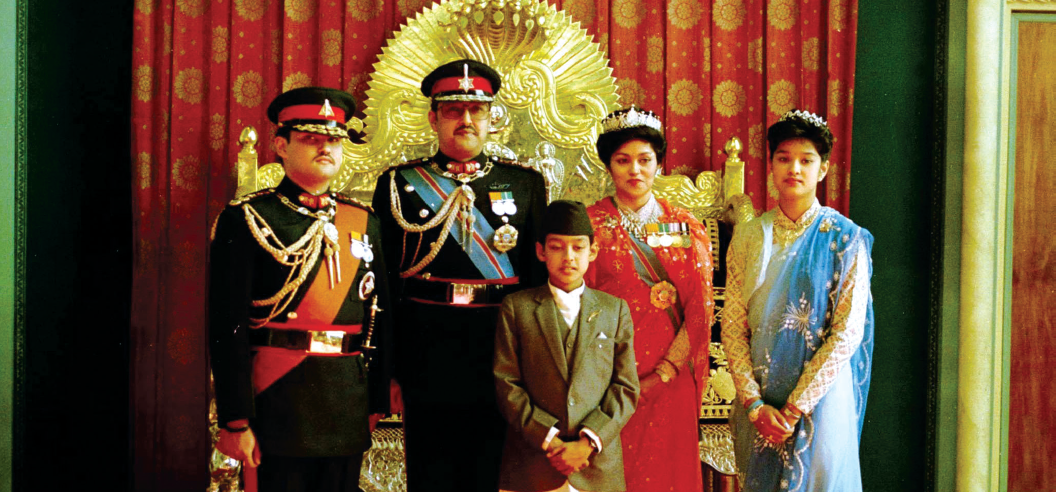
In a meeting with then Prime Minister Girija Prasad Koirala a few weeks after the royal massacre on 1 June 2001, King Gyanendra had said, and I quote Koirala’s personal aide at the time Puranjan Acharya, “Mr. PM, people see you as a corrupt and unpopular leader.” This made Koirala furious, and he replied, “Your majesty, people also accuse you of stealing idols from temples.” This exchange shows the degree of animosity between King Gyanendra and PM Koirala following the royal massacre. Soon after he came back to the prime minister’s residence in Baluwatar from the palace, Koirala asked Acharya to find out the telephone numbers of some Maoist leaders, with whom he wanted to talk about overthrowing King Gyanendra.
Eighteen years ago, Nepal witnessed a horrible royal massacre, which observers say was the beginning of the end of the monarchy and the establishment of a republic. Many political leaders say the issue of republicanism came as a reaction to the massacre and subsequent political developments rather than as a principled position of the political parties.
For the first time in Nepal’s modern history, the 2001 royal massacre brought the monarchy’s weaknesses to the fore, and created confusion among ordinary citizens. King Gyanendra failed to establish cordial relations not only with PM Koirala but also with other political leaders.
The monarch started consolidating power, taking advantage of the unpopularity of the political parties which had been unable to curb corruption and the Maoist insurgency. The parties, on the other hand, were trying to stop the king from taking absolute power. Many political leaders and observers say it was the royal massacre that planted the seed of republicanism in the minds of the general people.
“If the royal massacre had not taken place, the events of 4 October 2002—when King Gyanendra sacked the democratically elected Prime Minister Sher Bahadur Deuba—and of 1 February 2005—when the king imposed an emergency and took absolute power—could have been averted,” says Kamal Thapa, Chair of the Rastriya Prajatantra Party, who at the time worked closely with the king. “But those steps by the king led the parliamentary parties and the Maoist rebels to sign the 12-point understanding that heralded a republican Nepal.”
A different peace deal?
Even before the massacre, when the Maoist rebels had intensified their violent activities across the country, King Birendra had requested political parties and the government to take the insurgency seriously. A few months before the massacre, King Birendra had sent an informal letter to the government, asking it to resolve the Maoist insurgency as soon as possible. At the same time, some royal family members were holding informal talks with the Maoists about initiating a peace process. Many political leaders say the royal massacre took place at a time when King Birendra was preparing to take decisive steps to resolve the Maoist insurgency.
Soon after the massacre, then second-in-command of the Maoist party, Baburam Bhattarai, wrote an op-ed in the Kantipur daily entitled, ‘Let’s not give legitimacy to the beneficiaries of the new Kot Massacre’, which praised King Birendra for having a liberal political ideology and for being a patriot. In that piece, Bhattarai also wrote of how King Birendra had refused to mobilize the army to suppress the Maoist movement and that various national and international forces were unhappy with his soft approach toward the rebels.
"If the royal massacre had not happened, there could have been a different peace deal"
Kamal Thapa
“If the royal massacre had not happened, there could have been a different peace deal,” says Thapa. The Maoists could have accepted a ‘ceremonial’ or ‘cultural’ king. But following the massacre, the Seven Party Alliance and the Maoists agreed to get rid of the monarchy, which became easier because of Gyanendra’s unpopularity and the support from external forces, particularly India.
Before the royal massacre, discourse on the establishment of republicanism was virtually non-existent. Mainstream political parties used to instruct their cadres not to speak in favor of a republic. Only the Maoist rebels and some fringe communist parties talked about abolishing the monarchy. The massacre laid the groundwork for such a discourse among academics, politicians, media workers and the general public alike.
A large section of the public sees Gyanedra’s hand in the massacre—which is why his acceptability as a king plummeted. Although many Nepalis still have a soft corner for the slain King Birendra, public respect for the monarchy as an institution plunged after the massacre.
Missing debate
“A separate peace deal between the palace and the Maoists was a possibility, but minimizing the role of the parliamentary parties was not,” says Nepali Congress leader Gagan Thapa. “The royal massacre served as a decisive moment for the establishment of republicanism in Nepal, because people did not like the idea of Gyanendra continuing the tradition of monarchy,” says Thapa, who became vocal about a republic soon after the massacre. For this, Thapa was publicly criticized by party President Koirala. “Contrary to general perception, I don’t think the Maoist revolt or the 2006 people’s movement laid the foundation for a republic. Rather it was the 2001 palace massacre that did so. There hasn’t been enough discussion about the impact of the massacre on the establishment of a republic in Nepal.”
Soon after the massacre, an NC team led by senior leader Narahari Acharya launched a nation-wide campaign to swing public opinion in favor of republicanism and federalism. NC President Girija Prasad Koirala had strongly objected to the campaign, saying that it went against the party line.
“We were even barred from making speeches. In a real sense, the royal massacre sparked the debate on republicanism,” recalls NC leader Madhu Acharya, a participant of that campaign. “Had it not been for the massacre, I do not think Nepal would have been a republic today. King Gyanedra committed a series of blunders, which further served to create an environment for a republic,” he adds.
Wither investigation?
Around the massacre’s anniversary, political leaders pledge to launch a proper investigation and make the truth public. Many believe such an investigation remains relevant. Former Speaker Taranath Ranabhat, who was a member of the probe committee formed under the leadership of then Chief Justice Kedar Nath Upadhayay soon after the massacre, says a deeper investigation into the palace carnage is necessary.
His probe committee had concluded that Prince Dipendra had murdered his entire family in an intoxicated stupor, but many doubt its veracity.
“The massacre has had negative social repercussions. It made our country weak. Its long-term impact is even bigger than that of the Maoist revolt,” says Ranabhat. “After the reconstruction of infrastructure, people could gradually forget the insurgency, but the wounds of the royal massacre may never heal. It is never too late to seriously investigate the palace massacre, but subsequent governments have not been serious,” says Ranabhat.
But wasn’t that the job of his probe team? “Our job at the time was to undertake an on-the-spot investigation to determine how exactly the event unfolded. We were not mandated to investigate what caused the massacre,” he adds.
It’s been 18 years since the massacre, but it remains a mystery as to why it happened. The country has undergone massive political changes in these years—changes that the massacre influenced, if only indirectly. Many books have been written on it, yet none has been able to convince the skeptical public. Less in doubt are the momentous repercussions of the massacre on the country’s political course.

As disgruntlement rises Oli scrambles to retain his hold in the party
Sensing a possible gang-up of senior leaders against him, Prime Minister and co-chairman of the ruling Nepal Communist Party (NCP) KP Oli has of late adopted a policy of placating both senior leaders Pushpa Kamal Dahal and Madhav Kumar Nepal.Besides Dahal and Nepal, other senior leaders Jhala Nath Khanal, Bam Dev Gautam and Narayan Kaji Shrestha are also dissatisfied with what they see as Oli’s monopoly in the party and the government. These four leaders are coming closer to check that monopoly. Though there has been progress in forming intra-party structures and picking leadership of the party’s sister organizations, Oli’s monopoly, his governance failure and the question of the future leadership of the party and the government remain contentious.
On Jan 25, when Oli was in Switzerland to attend the World Economic Forum summit, Nepal, Dahal, Gautam and Shrestha had met to discuss various issues related to the functioning of the party and the government. Oli projected this meeting as a ploy to remove him from power. Now, the same four leaders are trying to mount a collective challenge against Oli’s monopoly. PM Oli of course feels this undercurrent of discontent and has reached out separately to Nepal and Dahal, each of whom has strong command in the party. “PM Oli has started reaching out to senior leaders individually in order to foil a possible alliance against him,” says a NCP leader on condition of anonymity.
Soon after Nepal returned from the second Belt and Road Initiative (BRI) forum in Beijing, Oli had a one-on-one with him for over four hours on a range of issues related to party unification. Such a long meeting was the first of its kind following the unification of two communist parties in 2018. The two leaders discussed the ups and downs in their relationship, mainly after party unification, and agreed to take measures to keep their relations cordial. On internal power-sharing, Shrestha, Gautam and Khanal support leader Nepal in his bargaining with Oli.
There is wider dissatisfaction as well. Says a former Maoist leader who now occupies a senior position in the NCP: “We are barred from speaking in party meetings and instructed not to speak even in the parliament. This is a serious issue.”
"PM Oli has started reaching out to senior leaders individually in order to thwart a possible alliance against him"
An NCP leader
Don’t rock the boat
To clear the air of suspicion, Oli and Dahal are meeting on a regular basis. But that does not mean everything is hunky-dory between them. Perhaps Dahal is aware that Oli is hedging his bets. “As part of his appeasement policy, Oli is assuring support to both Nepal and Dahal as they bid for party chairmanship in the general convention,” as another NCP leader put it. However, mistrust between the two leaders is mounting.
When PM Oli was in Vietnam, Speaker of the federal parliament Krishna Bahadur Mahara, who is close to Dahal, directed the parliament secretariat to remove ‘unparliamentary’ remarks made by the PM before his foreign trip. Leaders close to Oli saw this as a ploy to remove him.
Dahal’s soft approach to main opposition Nepali Congress is also a bone of contention. In recent weeks, in public forums as well as in the parliament, Dahal has been highlighting the need for collaboration between the government and the opposition, while Oli has been strongly criticizing opposition leaders.
Whoever secures Oli’s support is likely to win party chairmanship after Oli gives up the post during the next General Convention. He has reportedly intimated to both Nepal and Dahal that due to his poor health he will not stand for party chairperson again.
Oli is thus using the general convention as a bargaining chip to perpetuate his stronghold in both the party and the government. The recent finalization of district chairs and secretaries had helped bridge the gap between Oli and Nepal.
Bamdev Gautam in particular feels cornered. First, he claims he lost the parliamentary election from his Bardiya-1 constituency in 2017 due to the betrayal of party leaders close to Oli. He had lost to Sanjay Kumar Gautam of the Nepali Congress by 753 votes even though he represented the strong UML-Maoist alliance. Now, Bamdev Gautam is in constant touch with Dahal, Nepal and Shrestha.
Last year, co-chair Prachanda had floated a proposal to get Gautam elected to the federal parliament by asking lawmaker Ram Bir Manandhar, elected from Kathmandu-7, to resign. Oli, however, rejected Dahal’s proposal, which further widened his rift with Gautam. Even before party unification, Oli used to criticize Gautam as being unnecessarily close to the Maoist party. Of late, hinting at Oli, Gautam has been speaking of systematic efforts at ending his political career.
No presidential pardon
Following the three-tier elections, Jhalanath Khanal had claimed the post of the country’s president in 2018. Oli opposed it, while Madhav Kumar Nepal stood neither in favor nor against Khanal’s candidacy. Of late, he is leaning toward the Nepal camp. But Khanal, a former prime minister, does not have much hold on the party organization, where power is shared between Oli, Nepal and Dahal.
Another senior leader Narayan Kaji Shrestha has also been criticizing the federal government’s working style. Last August, he resigned as party spokesperson following disagreements with PM Oli over the demands of Dr Govinda KC. Later, Dahal and Oli urged him to continue as spokesperson. Nepal and Shrestha are on the same page on several issues; they had a cordial relationship even before the unification. “Some of my ideas related to party- and government-functioning remain unaddressed,” says Shrestha, who has been urging top leaders not to engage in factional politics.
Again, from the outside, Dahal and Oli seem to have a cordial relationship. But the rift between them is widening, especially over federalism. Dahal is displeased with the centralization of power and resources under PM Oli’s watch.
Maoist leaders meanwhile complain of Oli’s interference in ministries led by former Maoist leaders. A few months ago, the Home Ministry had come up with a proposal to regulate NGOs but the PM got the Home Secretary to halt it. Recently, political appointments in the Alternative Energy Promotion Center, which falls under the Ministry of Energy under Barsha Man Pun, became a bone of contention. Oli rejected Dahal’s recommendation and made one himself. Dahal and Oli also differ on issues related to transitional justice and how they view the Maoist insurgency.
The former Maoist leaders want the ‘people’s war’ recognized in the official party charter. Yet the former UML leaders, and particularly those close to Oli, now say there should be no deviation from the UML line of ‘people’s multiparty democracy’. This has been another source of the Oli-Dahal rift.
The power tussle within the NCP is likely to grow as the General Convention draws closer. While other senior leaders want to hold the General Convention as soon as possible, Oli is not in the mood. When the party was united a year ago, the convention was slated to be held within two years. But it is difficult, as the central level convention cannot take place before the local and provincial ones.
Shifting sands
Dahal wants to hold the convention soon because next year Oli will complete his two and half years as prime minister—when, as per an agreement, Oli has to hand over either the party’s leadership or the prime minister’s post to Dahal.
“We will think of the General Convention only after we settle organizational issues,” says spokesperson Shrestha. But speaking at a program on May 6, Dahal said the party leadership was obliged to hold the General Convention in the next seven to eight months. This means Dahal wants to hold the convention within one year to ensure he gets either the party chairmanship or the prime ministership.
What cannot be ruled out either is an agreement between Nepal and Dahal over party chairmanship and prime ministership by sidelining Oli completely. If Dahal and Nepal come together, Oli will be in a minority both in the parliament and in party structures. Of the three clear factions led by Dahal, Oli and Nepal, Dahal has greater numbers than does either Oli or Nepal. Sources say if Oli continues with his monopoly and refuses to hand over power even after a year, other senior leaders will start ganging up against him.
“I see the possibility of big changes in internal alliances. Dahal, Nepal, Khanal and Gautam have all suffered at Oli’s hands,” said political analyst Shyam Shrestha in a recent interview with APEX. “If these four come together, there would be a change in power balance in favor of this alliance.”
Despite some differences over the formation of intra-party structures and sister organizations, the disgruntled factions agree on the need for an early General Convention. Otherwise Oli could indefinitely extend his tenure as he has vowed to quit only after the convention.
According to party insiders, Dahal knows Oli won’t easily transfer power to him as per the gentlemen’s agreement. As such he has already started reaching out to leaders who are unhappy with Oli. The power tussle inside the ruling party is set to escalate.


