


2 Thai women held with banned Indian currency from TIA
Police have arrested two Thai women with banned Indian currency from the Tribhuvan International Airport (TIA).
According to Himalaya Kumar Shrestha, spokesperson at the TIA’s Security Office, the duo were nabbed with INR 294, 500.
Police said that the banned Indian currency was recovered from a hand bag of the duo during a regular security check.
Police said that they arrested the duo while they were heading towards Delhi, India from Kathmandu.

AMN to organize climate change awareness raising program
Annapurna Media Network’s Unity for Sustainability campaign in collaboration with the Lions Club International District 325 B1 and Leo Clubs are organizing a climate change awareness raising program on “Our Green Future - Sowing the green seeds.
The program will be organized through a theatrical video in different schools of Nepal starting from March 11, 2022.
This program will focus on promoting Green Behavior on school-level students.
Annapurna Media Network declared its "Unity for Sustainability" campaign on November 24, 2021. The campaign fully came into effect from January 1, 2022, and will run for a period of two years.
The objectives of the campaign is to promote Green codes of conduct for the citizens, to promote Green behavior among the students and youth and to interact and aware the school students about Green behaviors and good practices.

Mind Matters | Can’t stop eating and feeling guilty
“I am a 19-year-old female suffering from an eating disorder. I tend to binge eat as a form of coping mechanism against stress. Stress eating gives me a sense of comfort. But lately, I skip meals out of guilt of overeating and gaining weight. I am essentially trapped in this never-ending cycle of either eating a lot or not eating at all. What should I do?” - A
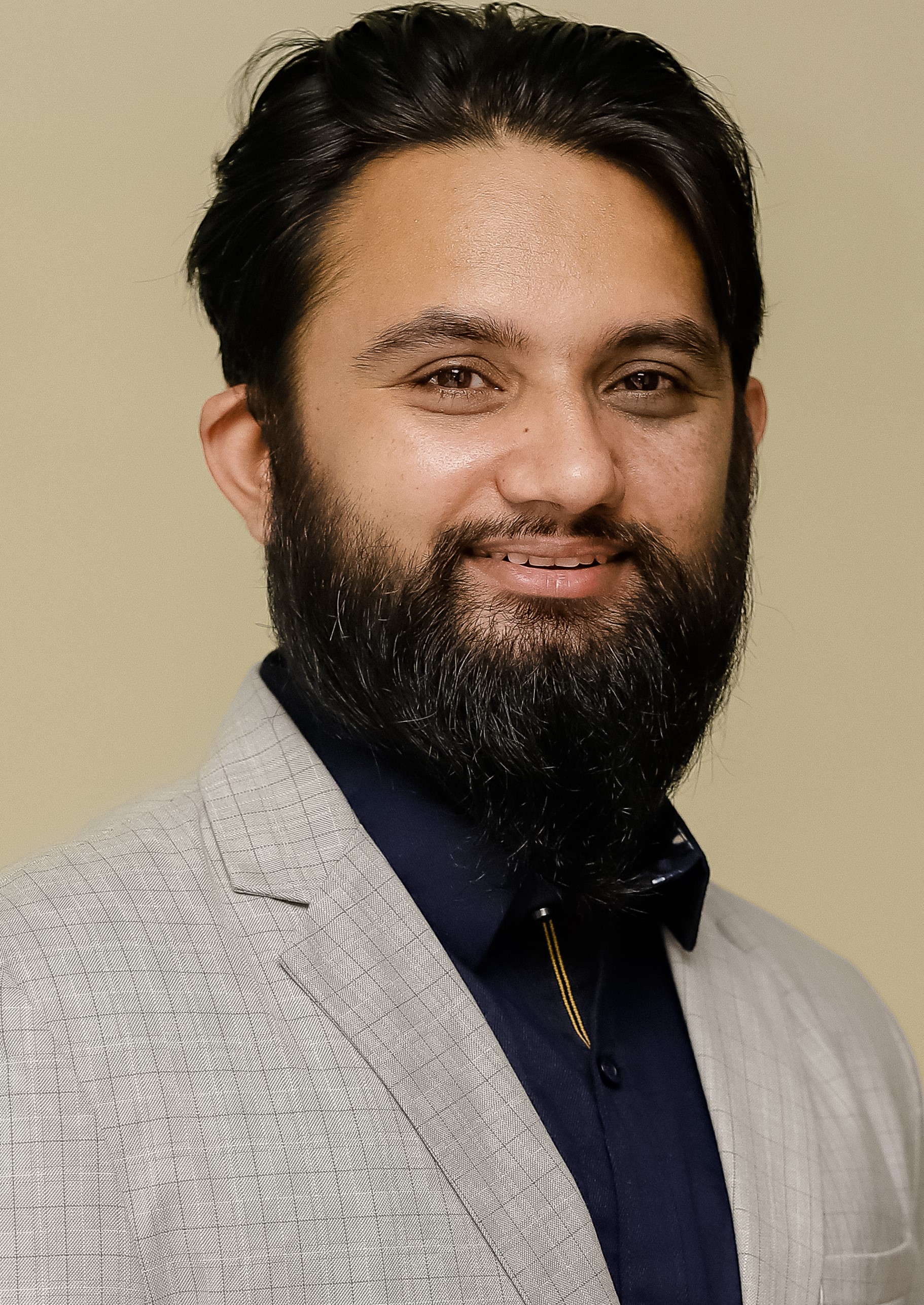
Answer by Kapil Sharma, Counseling Psychologist, Hudec Nepal
First, let’s start by analyzing the cycle. You feel stressed and you start eating as a form of coping. You might feel a sense of brief relief after binge eating if that is your coping mechanism against stress. Also remember to keep track of the time you tend to binge eat. After a period of relief, the guilt of binge eating comes in. This leads to you trying to restrict yourself and you end up skipping meals and counting calories. Then the stress factor hits again and there is craving. Again, the cycle continues.
In this cycle, people tend to eat their food rapidly and in large amounts. They also eat while no one is watching, they eat frequently and more than they want to. Essentially, they feel helpless about not being able to control their cravings. If these symptoms resonate, you are in the cycle of binge eating.
There are multiple measures you can take. The first step to breaking any cycle is figuring out its starting point. Keep a food and mood journal to track trigger factors that lead to binge eating. Start by noting down when you enter the binge eating phase and what triggered it. Also note whether you were aware while eating and continued anyway because you felt helpless. Awareness is the key.
Once you figure out the cause of your binge eating, find an alternative coping mechanism. Do something you like to distract yourself. Mindfulness and meditation works for some as well. Anything that helps release your stress in a non self-destructive way.
Plan meals and snacks and don’t skip meals. Eliminate all the trigger factors. Don’t watch shows about food or maybe shows with models who have perfect bodies. This latter might be a trigger if you suffer from body dysmorphic disorder. Staying hydrated is also important. Keep potential snacks away from reach. Talk to people, communicate about your problems. And lastly, try talking to a professional.

UP assembly election results: Yogi Adityanath, BJP create 7 records
With the BJP’s landslide in the Uttar Pradesh assembly election and chief minister Yogi Adityanath’s win from Gorakhpur (Urban) seat, a number of records have been created, The Times of India reported.
BJP and Adityanath have created at least seven records as results were announced on Thursday.
1. Yogi Adityanath first CM to complete tenure and win a second term
The first assembly of Uttar Pradesh - India’s most populous state - was constituted on May 20, 1952. The state has seen 21 CMs in about 70 years. Adityanath has become the first chief minister in 70 years of UP’s electoral history to complete a full tenure of five years and go on to win a second consecutive term.
2. Yogi Adityanath is fifth CM to win a second consecutive term
Only five CMs, including Adityanath, have won a second consecutive term in UP ever. The four CMs before him to do so were Sampurnananda in 1957, Chandrabhanu Gupta in 1962, Hemwati Nandan Bahuguna in 1974 and Narayan Dutt Tiwari in 1985.
3. First CM to retain power in 37 years
ND Tiwari of the Congress was CM of undivided UP in 1985 when the state went to election. The Congress won and so did Tiwari who went on to retain the post for the second term in a row. Since then, no CM has succeeded in retaining the CM’s chair for a second consecutive term. Adityanath is the first CM to do so since then.
4. First BJP CM to return to power
UP has seen four BJP CMs so far. Before Adityanath, Kalyan Singh, Ram Prakash Gupta and defence minister Rajnath Singh occupied the post. However, none of them could retain office for a second consecutive term. Adityanath is the first BJP CM to do so.
5. First MLA CM in 15 years
When Adityanath takes oath as chief minister for a second consecutive term, he will become the first MLA (member of legislative assembly) CM in 15 years. Before him, Mayawati was an MLC (member of legislative council) as CM between 2007 and 2012.
Akhilesh Yadav was also an MLC when he was CM between 2012 and 2017. When he became CM, Adityanath was a Lok Sabha MP. After taking over, he too chose to become an MLC instead of getting an MLA to vacate an assembly seat and become an MLA within six months of assuming office. In the process, he became the fourth MLC CM of UP. Ram Prakash Gupta, also of the BJP, was the first MLC CM of the state in November 1999.
Adityanath was a five-term Lok Sabha MP from Gorakhpur when he was elected CM with the BJP coming to power with a resounding victory, winning 312 of the 403 assembly seats in 2017. Along with its two allies, the Anupriya Patel-headed Apna Dal and OP Rajbhar-led Suheldev Bharatiya Samaj Party, the NDA won 325 seats.
At the moment, two CMs - Nitish Kumar in Bihar and Uddhav Thackeray in Maharashtra - are MLCs.
6. Third CM to complete tenure
Adityanath has already registered a record in his name. Of the 21 CMs in 70 years, only three have completed the full tenure of five years. Bahujan Samaj Party supremo Mayawati was the first one (2007-2012) and Samajwadi Party president Akhilesh Yadav the second (2012-2017).
7. First CM to break Noida jinx
The “Noida jinx” is a feared phenomenon in UP politics.
The residential-cum-industrial city of Noida, which stands for New Okhla Industrial Development Authority, is a satellite town of the national capital Delhi and a city in the Gautam Buddh Nagar district of UP.
According to the Noida jinx, whichever CM visits the city during his/her tenure loses the next election or does not complete his/her term. However, both Prime Minister Narendra Modi and Adityanath ignored the superstition and visited Noida to inaugurate Delhi Metro's Magenta Line on December 25, 2018.
Akhilesh Yadav had then commented that Modi and Adityanath would lose the next Lok Sabha and UP assembly elections respectively. However, while Modi won the 2019 Lok Sabha election and broke the jinx, Adityanath has also proven it wrong, according to The Times of India.
The Noida jinx became popular after the then UP CM Veer Bahadur Singh had to quit office in June 1988, a few days after he returned from the city. Singh's successor ND Tiwari too lost the CM’s post after visiting Noida. Subsequently, CMs and other leaders started bypassing Noida.
Akhilesh's father Mulayam Singh Yadav, Kalyan Singh and Rajnath Singh skipped visiting Noida when they were in office. As UP CM between October 2000 and March 2002, Rajnath Singh inaugurated the Delhi-Noida-Delhi (DND) Flyway from Delhi instead of Noida.
Similarly in May 2013, Akhilesh skipped the Asian Development Bank (ADB) summit organised in Noida in which former PM Manmohan Singh was the chief guest. He bypassed Noida again when he inaugurated the 165-km Yamuna Expressway from Lucknow instead of the industrial city. Mayawati as CM ignored the jinx by flying to Noida to inaugurate the Dalit Smarak Sthal in October 2011. She lost the 2012 assembly election, Times of India reported.

Elderly woman killed in Taplejung fire
An elderly woman died when a fire broke out at Purano Gosaline in Kopche of Phungling Municipality-4, Taplejung on Friday.
The deceased has been identified as 67-year-old Chulimaya Limbu.
The fire that started from the house of Rabin Limbu completely destroyed the house of his neighbor Sangita Moden.
Critically injured in the incident, Limbu breathed her last during the course of treatment, Chatrapati Pyakurel, Mayor of Phungling Municipality said.
He said the fire has been taken under control with the security personnel backed by a fire engine.
The reason behind the fire is still unknown. Properties destroyed in the fire are yet to be established.
It has been learnt that Jiten Limbu, Chairman of ward-4, among others were injured while trying to douse the fire.
Fire breaks out in Phungling Bazaar of Taplejung
A fire broke out in Phungling Bazaar, the district headquarters is Taplejung, on Friday.
Police said that the fire broke out at Kopche in Phungling Municipality-4 at around 8 am today.
Chief District Officer Mahesh Pokharel said that the fire damaged two houses and efforts are being made to take the flame under control.
Nepal Army, Nepal Police and Armed Police Force personnel have been deployed to extinguish the fire, he said.

North Korea recently tested intercontinental missile system: US
The US says N Korea recently tested parts of a new intercontinental ballistic missile (ICBM) system, in what it called a "serious escalation", BBC reported.
Pyongyang said the launches on 26 February and 4 March focused on developing a reconnaissance satellite.
But the Pentagon now says the tests were experimental launches, before a likely full-range ICBM launch.
With a minimum range of 5,500km (3,417 miles), ICBMs can reach the US. They are designed for nuclear arms delivery.
On Thursday, Pentagon spokesman John Kirby said North Korea's two tests "involved a new intercontinental ballistic missile system", according to BBC.
Neither launch displayed ICBM range or capability, but the tests were carried out "to evaluate this new system before conducting a test at full range in the future, potentially disguised as a space launch," Mr Kirby said.
"The United States strongly condemns these launches, which are a brazen violation of multiple United Nations Security Council resolutions, needlessly raise tensions and risk destabilising the security situation in the region."
Both South Korea and Japan have confirmed the US statement and condemned Pyongyang.
Here we go again. And we can't say we were not warned.
North Korea has spent over a year saying that it would return to testing bigger and better weapons. They even displayed them in a military parade and exhibitions, BBC reported.
Pyongyang has carried out several short-range missile tests which will have helped their scientists try out new technology. But testing long range intercontinental ballistic missiles really make Washington sit up and take notice.
Why? Because these missiles put the US mainland within striking distance, as North Korea demonstrated during its launches in 2017.
The Hwasong-12 was thought to be able to reach as far as 4,500km (2,800 miles), putting US military bases on the Pacific island of Guam well within striking distance. The Hwasong-14 demonstrated even greater potential, with a range of 8,000km.
Only the U.S Russia and China have land-based missiles of this range, according to BBC.
Kim Jong Un has warned he will launch "many satellites" soon, which Washington and Seoul will see as an attempt to try out the same technology as an ICBM.
The allies have stepped up surveillance in the region. More sanctions will be announced.
Once again, it seems tensions may return to the Korean peninsula, just as Seoul elects a new conservative president who has pledged to be tougher on Pyongyang.

Russians keep pressure on Mariupol; massive convoy breaks up
Russian forces kept up their bombardment of the port city of Mariupol on Thursday, while satellite photos showed that a massive convoy that had been mired outside the Ukrainian capital split up and fanned out into towns and forests near Kyiv, with artillery pieces moved into firing positions, Associated Press reported.
International condemnation escalated over an airstrike in Mariupol a day earlier that killed three people at a maternity hospital. Western and Ukrainian officials called the attack a war crime. Ukrainian President Volodymyr Zelenskyy said the Russian refusal to permit evacuations from the port city amounted to “outright terror.”
Meanwhile, the highest-level talks held since the invasion began two weeks ago yielded no progress, the number of refugees fleeing the country topped 2.3 million, and Kyiv braced for an onslaught, its mayor boasting that the capital had become practically a fortress protected by armed civilians.
Satellite imagery from Maxar Technologies showed that 40-mile (64-kilometer) convoy of vehicles, tanks and artillery has broken up and been redeployed, the company said. Armored units were seen in towns near the Antonov Airport north of the city. Some of the vehicles have moved into forests, Maxar reported, with towed howitzers nearby in position to open fire, according to the Associated Press.
The convoy had massed outside the city early last week, but its advance appeared to have stalled amid reports of food and fuel shortages. U.S. officials said Ukrainian troops also targeted the convoy with anti-tank missiles.
A U.S. defense official speaking on condition of anonymity said some vehicles were seen moving off the road into the tree line in recent days, but the official could not confirm whether the convoy had dispersed.
In Mariupol, a southern seaport of 430,000, the situation was increasingly dire as civilians trapped inside the city scrounged for food and fuel. More than 1,300 people have died in the 10-day siege of the frigid city, said Deputy Prime Minister Iryna Vereshchuk.
Residents have no heat or phone service, and many have no electricity. Nighttime temperatures are regularly below freezing, and daytime ones normally hover just above it. Bodies are being buried in mass graves. The streets are littered with burned-out cars, broken glass and splintered trees, Associated Press reported.
“They have a clear order to hold Mariupol hostage, to mock it, to constantly bomb and shell it,” Zelenskyy said in his nightly video address to the nation. He said the Russians began a tank attack right where there was supposed to be a humanitarian corridor.

President Bhandari stresses expediting projects under Belt and Road Initiative
President Bidya Devi Bhandari stressed on expediting projects under the Belt and Road Initiative.
She said that the BRI projects have not gained momentum for many reasons even though Nepal and China signed the Memorandum of Understanding five years ago.
"We appreciate the vision of the Trans-Himalayan Multi-Dimensional Connectivity Network. We see them as opportunities for Nepal's infrastructure development and would like to advance this process," the President said, the Global Times reported.
On a different note, President Bhandari said that Nepal and China share a bond of friendship enriched by our common heritage of Buddhist civilization.
"We have deep cultural links across the Himalayas. It goes without saying that we have kept this amity for centuries because of Nepal-China relations are founded on time-tested mutual trust," she said.
Saying that China has been generously supporting Nepal in its development works, the President said that Nepal has always remained committed to the one-China principle and advocated in history for China's rightful place in the United Nations.
"Our mutual trust keeps our relations largely problem-free today. Our areas of mutual cooperation are ever expanding. We need to continue to work for taking this friendship to new heights. I see innumerable possibilities in Nepal-China relations," President Bhandari said, The Global Times reported.


