


Microsoft says Azure cloud service disrupted by fiber cuts in Red Sea
Microsoft said on Saturday that its Microsoft Azure users may experience increased latency due to multiple undersea fiber cuts in the Red Sea, The Business Standard reported.
In an updated status message for its Azure system, the company said its users may experience service disruptions on traffic routes through the Middle East.
"We do expect higher latency on some traffic that previously traversed through the Middle East. Network traffic that does not traverse through the Middle East is not impacted. We'll continue to provide daily updates, or sooner if conditions change," Microsoft said.

Chair Dahal demands action against wrongdoers at Tinkune
CPN (Maoist Center) Chairman, Pushpa Kamal Dahal, has demanded the government to investigate the violent incidents that occurred at Tinkune area, Kathmandu and bring to book the culprits.
Chair Dahal said so after inspecting the office of the CPN (Unified Socialist) which was also vandalized by the protestors on Friday.
Talking briefly to the media, he said the government also needs to seriously review the lapses in security arrangement.

Kathmandu’s problematic solid waste (mis)management
Waste management in Kathmandu Valley is a big problem. It generates 1,200 metric tonnes of solid waste everyday, where only a few gets recycled. More than 700 metric tonnes of solid waste end up at Banchare Danda landfill site, with around 300 garbage trucks dumping waste there on a daily basis.
The purpose of the landfill, initially, was for the disposal of solid waste that can neither be recycled. That amounts to around 30 percent of the total waste the valley generates. But sadly, that’s not the case. From degradable to non-degradable waste, everything is disposed of at Banchare Danda landfill site.
There are municipalities like Waling (Syangja) and Tilottama (Rupandehi) that have done a commendable job in managing their solid waste. Their waste management sites do not even emit foul smells. Dhundi Raj Pathak, solid waste management expert, says that the same kind of management can be replicated in the Kathmandu Metropolitan City (KMC). “All we need to do is replicate the same mechanism on a larger scale, and the first place to start would be to ask every household to segregate their waste into degradables and non-biodegradables.”
Around two years back, KMC had asked Kathmandu’s households to segregate their waste before dumping it in a garbage truck. A fine of Rs 500 was also imposed. Pathak says the initiation was good, but the problem was on how the city workers handled the segregated waste. Everything got dumped into the same garbage truck and ended up in landfills despite segregation. Eventually, people stopped segregating their household waste.
What Kathmandu needs right now is a proper plan for the disposal of segregated waste, that can be brought into implementation as quickly as possible. For that, the city authority needs to convince every household to segregate their waste.
KMC Spokesperson Nabin Manandhar says they are already on it. “We will be running awareness campaigns and training in every ward to segregate and collect waste.”
This time, he adds, the city will not be imposing fines.
“The plan is to achieve zero waste within Kathmandu,” says Manandhar. “We have completed a one year study on managing solid waste, and we are planning to create a model where every waste material is utilized.”
There is a plan to convert organic waste into manure and biogas, and sell the dry waste to recyclers. Furthermore, the city is also planning to convert some of the dry waste into coal that can be used in brick and cement factories. To manage biodegradable waste, the city is planning to set up a plant at its garbage collection center in Teku. The facility will convert organic waste into fertilizers and biogas.
“We can’t say when this plan will be operational, but we have taken the starting steps,” says Manandhar.
Waste collected from Kathmandu Valley, Kakani, and Banepa end up at Banchare Danda landfill site. Rabin Man Shrestha, chief of KMC’s Environment Management Department, says if each municipality, including the ones in Kathmandu, takes responsibility for the waste they produce, it would be easier for the city to manage the waste.
“It’s always the Kathmandu Metropolitan City that gets blamed for the situation at Sisdol and Banchare Danda, when there are other municipalities contributing to the problem,” he says.
He claims 55 percent of the total waste generated in the city will be managed once the plan to convert organic wastes into fertilizer and biogas is realized.
There are no plans to manage non-degradable waste though. In 2013, the KMC had invited a tender for the management of non-degradable waste. No one applied. Over the years, the KMC officials have also taken several foreign cities to better understand how they are managing their solid waste. They gathered a lot of knowledge about waste management, but the city never took the step to implement that knowledge.
“The plans are limited to the paper. For things to progress, the tender process that the city activated a decade ago must conclude,” says Pathak, the solid waste management expert. “Only then, the city could start by setting up a material recovery facility to segregate non-degradable waste before selling it to independent buyers or recyclers.”
If the plans were to be put in action immediately, Pathak believes that the facilities needed for solid waste management can be up and running in approximately three years.
“We don’t need any pilot programs to test, because we have had multiple tests already,” he says.

What do you do when you are stressed?
In today’s competitive world, all of us are pushing ourselves beyond our limits, be it at work or in our personal lives. It can be stressful. And we often look for ways to put our minds at ease. Anushka Nepal from ApEx talked to three artists to find out about what they do when they are stressed.
Sushant Ghimire, Singer

There are usually two types of stress that I usually go through. One is just being stressed out after a hectic day or some personal issue. In that case, I just sleep. I like to give myself some rest, take a long nap, and then I feel better. Another one is when I get burnt out from work and need a long break. When that happens, I visit my hometown in Sunsari. I don’t do anything else but spend time with my family. I find that quite rejuvenating.
Bipin Maharjan, Tattoo artist

Being around nature helps me feel better. I try taking a day or two off from work and plan bike rides or hiking—anything that will help me experience nature. The distance depends on my mood though. I might plan a short or a long trip depending on what I want to do that day. Since I might only have a day for myself, I don’t usually go trekking. I choose destinations for which I can head out in the morning and be back by the evening. Besides that, I love to paint.
Samaira Shrestha, Model and theater artist

I like to start my day with some positive affirmations. Every morning, I read some statements out loud. It helps me feel good about myself. But when I’m extremely stressed, just affirmations aren’t enough. So I go to the gym. Working out is one of my coping mechanisms. I try to surround myself with people who create a positive and jolly environment around me. I spend time with my family and that helps too. They’re quite a funny bunch and make me laugh more than anyone else I know. Besides that, I meditate. That helps me put my mind at ease.

Waling and Tilottama: Role models of garbage management
Syangja/Rupandehi: The mention of the word ‘dumping site’ or ‘landfill’ rarely elicits good feelings. No one wants to go near one, much less have a picnic there. But Waling Municipality in Syangja district has turned this general notion about landfill on its head. Yes, the spot where the town dumps its waste is also a picnic park—and a popular one at that.
The first thing you’ll see as you enter the municipal waste disposal site is the greenery. The area is covered with vegetation, all the grass and trees with paved walkways. There is no whiff of foul smell about. This is explained by the fact that the municipal office only disposes of non-degradable waste here.
Every individual household in Waling segregate their waste and municipal workers make sure that non-degradable wastes aren’t mixed with the degradable ones when they do their garbage rounds. Failure to segregate means the waste doesn’t get collected, and the concerned household must pay a fine. By simply involving the community in solid waste management, Waling Municipality has managed to keep itself tidy.
It is also generating revenue through non-degradable waste. From plastic to paper, everything is sold to recycling companies. Once the non-degradable waste is dumped into the site, it’s further separated by the employees.
“Every material has a different price. Among glass bottles, prices differ between the bottles depending on their color. It’s the same for the plastic. Price depends on its quality,” says Dilip Khand, the former mayor of Waling Municipality, who currently manages the solid waste management site.
Annually, the municipality profits around Rs 2.5m to Rs 3m by selling recyclable waste. Multi Layered Plastic (MLP/plastic that’s found on wrappers) doesn’t get sold. But they have found a solution to manage this type of plastic as well. It gets shredded and is used as one of the components for asphalt.
As for the bio-degradable waste, it’s utilized to make vermicompost (biodegradable waste converted into organic manure with the help of earthworms). Waling Product Holding Multipurpose Cooperative is responsible for making and selling vermicompost. Some farming households make their own vermicompost, thus limiting their waste.
Fecal waste from households doesn’t get dumped in the river either. Each household is mandated to have a septic tank. The municipality is responsible for cleaning the tanks, for which each household pays Rs 5,000 per cleaning session. The fecal waste doesn’t go to waste either. It gets separated into solid and liquid forms. While the solid waste is turned into vermicompost, the liquid is turned into drinkable water.
A visitor to Waling will notice how clean the town is, from its neighborhoods to street to river.
“It is the willingness of the locals to keep their surroundings neat that makes Waling so clean,” says Khand.
But this enthusiasm and wisdom didn’t come overnight. At first, some town residents were opposed to the idea of separating their household waste, says Yogmaya Pangeni, coordinator at the Social Development Committee of Waling.
“They fell into line only after the town mayor announced that he would personally visit their homes to pick up and segregate their waste.”
Besides Waling, the other place that’s doing a great job with waste management is Tilottama Municipality in Rupandehi, Lumbini Province. Like Waling, waste materials are segregated at their source, at the household level. Two garbage trucks are deployed twice a week, once to collect degradable waste and the other to collect non-degradable waste. But the waste is currently collected from only 11 wards (Ward No. 7 to 17) out of the total 17.
While the responsibility of solid waste management in Waling is taken by the municipality, the responsibility of managing waste in Tilottama is undertaken by WASH Cooperative. The non-degradable waste is separated, compressed, and packed for selling the materials to the highest bidder, while the degradable waste is turned into vermicompost.
These models of managing solid waste were initiated by the United Nations Development Program (UNDP) as Promoting Green Recovery Project (PGRP/the project has already come to an end) in five different municipalities, among which two of them are Waling and Tilottama. Both the municipalities agree that this couldn’t have been possible without the UNDP’s assistance.
Before initiating the project in Tilottama, Aarju Karki, program officer for PGRP, says that the dumping site was merely a pile of garbage and nothing more. “With the combined effort of WASH Cooperative, Tilottama Municipality, and UNDP, we were able to make this dumping site systematic with added machinery and expertise on waste segregation,” she adds.
The pile of garbage that was dumped before the initiative started is also being segregated separately. “Some contractors take the responsibility of segregating certain areas from the dump and take what they need, while paying a certain amount to the cooperative,” she says. More than half of the waste from the pile has already been managed.
Besides, Tilottama Municipality is actively working on making sure that every household takes the responsibility of segregating their waste. Waste material from a household isn’t collected if not segregated. Also, the locals are encouraged to make their own manure. The municipality has distributed compost bins in every household. Dustbins have also been placed at different stops. The municipality employs two individuals in each ward to make sure no one litters the area.
“The officers are there to make sure that anyone who litter is fined (Rs 500). They also dispose of any non-degradable waste found in the area,” says Shanta Bashyal Bhattarai, one of the consumers in Tilottama.
One of the major forces driving these municipalities into managing and selling waste materials, besides keeping their environment clean, is its financial benefit.
“Solid waste management has become one of our important sources of income,” says Krishna Khand, mayor of Waling Municipality.
Even for Tilottama, their recent monthly revenue was Rs 365,880 from selling scraps. They haven’t yet started making profits, but with the ratio they’re working on, Khem Prasad Gautam, president of WASH Cooperative, says they will be making good profits in the coming years.
The same initiative could be taken in the Kathmandu Metropolitan City. “The best way to move forward is to have solid waste management sites in each ward, since the waste produced in Kathmandu is more than what we see in Waling,” says Khand, former mayor of Waling Municipality.
It’s an investment that guarantees future returns. “One could do so much with waste materials that’s generated in the Kathmandu Valley,” says Khand. “When I travel around Kathmandu and see the garbage piles, I can’t help but think that it’s money that’s being littered, not waste.”

Is TikTok doing more harm than good?
Almost every Nepali has swiped through the videos on TikTok at least once. The videos are short and do not need a lot of your patience. TikTok has also become a good place to promote businesses as well as one’s own talent. Most content creators want to go viral and make money out of the views they receive. But several TikTok users ApEx spoke to say that the platform is being misused at the same time, especially when it comes to Nepali contents.
“People make videos just for the views, and most of them are downright disgusting,” says Pooja Subedi, a 29-year-old from Dhapasi, Kathmandu. One of the most disturbing aspects of Nepali content on TikTok, she says, is parents using their children to get more views. A few months back, Subedi came across a video where a mother filmed her daughter not older than six years on a song called ‘Anaconda’ by Nicki Minaj, which explicitly sexulizes women’s bodies. “What was the purpose of that video?” questions Subedi. The mother in question later apologized for posting the video, but did not take it down since the video had gone viral.
Individuals ApEx spoke to have come across numerous videos where adults are filming their children for no apparent reason other than to attract viewers’ attention, no matter what the consequences. There is one video of a child crying for not knowing the answers to his/her homework, calling it cute and adorable.
“I don’t think a child crying is something that needs to be publicized,” says Asmita KC, a 29-year-old living in Hattigauda, Kathmandu. “Imagine how traumatic it’ll be for the child when he/she gets recognized just for crying on a video that his/her parents decided to post.”
Several videos don’t take people’s privacy into consideration either. People start filming videos everywhere, without thinking about timing or location. Sweksha Karna, a 22-year-old currently studying in Australia, says she came across a dance video of a woman who was filmed in Basantapur, Kathmandu, which she thought was quite inappropriate. “There was a blood donation program going on in the background. Those people did not ask to be on the video,” she says.
Not just that, but many restaurants, in the name of promoting their business, film their customers without asking. Videos are being taken without permission, hurting the sentiments of several people involved. The same happened to the parent’s of Monika Thakuri, a TikToker who died by suicide. Her father was filmed crying at the hospital bed after his daughter’s death. The video went viral. No one wants to relive moments like that, but now it’s all over TikTok.
Also, people frequently spread misleading information just for the sake of views. For instance, if there is an accident or a fire, users post videos with a different audio from some other accidents to raise concerns among people. It creates confusion and panic when the situation might not even be serious. “I have also seen videos where people film their neighbors and add a different audio, misleading viewers into questioning if it’s domestic violence,” says KC.
Everything that happens on TikTok comes down to the number of views and likes. The more engagement they have, the more money they make. Good contents don’t get views while the problematic ones go viral
Rekha Shah, a 40-year-old woman who runs a cosmetics store in Shankhamul, Kathmandu, feels that TikTok has made people quite inhumane. Wherever someone sees an individual suffering, she believes that their first instinct is to film the victim rather than help them out. “People are after increasing the number of viewers and likes out of someone else’s misery. I find that quite scary,” she says.
People are going above and beyond to increase engagement in their contents. “I have seen vidoes where people stand on the edge of a cliff, pretending to commit suicide, just to match a song’s lyrics,” Shah says. “It’s promoting unhealthy behavior. I find that scary since people and children on TikTok try copying that.”
Sexual and derogatory comments circulating throughout TikTok is another huge problem. Many content creators are being harassed every day, and people are starting to normalize those activities. Meena Uprety, sociologist, says that most individuals on TikTok are the ones who enjoy negativity. “They like to argue or bring someone down through comments or videos,” she says.
Shristi Prasain, a 36-year-old shopkeeper from Bhaktapur, says she faced the same scrutiny once when her video accidentally went viral. It was a video of her and her husband in a swimming pool. “It was supposed to be a romantic moment, but people turned it into a disgusting one,” she says. It made her quite conscious on what to post and what not to. “I was disturbed after reading the comments for several days. People chose to harass me just because my husband held my hand in the video,” she says.
These types of comments are also seen on videos posted by minors. Since the platform is not properly regulated, several individuals below the age of 18 have gone viral, exposing them to sexual harassment, including inappropriate text messages from strangers.
“My 10-year-old daughter sometimes says she wants to post videos and go viral too. I don’t allow that but she’s quite influenced by the videos she sees online,” says Shah. She is worried that her daughter might have to face the same kind of harassment if exposed to the platform.
“Parents are also quite ignorant on what their children are doing. Some are even promoting this type of attention their child is receiving,” says Subedi, recalling the mother-daughter duo (Sumitra Bartaula and Bibika Bartaula) who live on TikTok all the time.
The mother frequently asks her daughter to talk to strangers, as well as sexualize the daughter. People start defending the duo if anyone points out that it’s wrong. “The mother sometimes says statements like ‘Give that uncle a kiss’ on live videos to her daughter, and frankly, I find that quite disgusting,” says Subedi.
Without proper monitoring of the online contents, sociologist Uprety believes that TikTok will do no good. The first priority would be to filter the contents and place strict regulations on what can or can’t be posted/commented on every social media platform, which should be looked over by respective agencies like cybercrime bureau. “But if this continues, we will have no choice but to ban TikTok,” she says.
Sexual and derogatory comments circulating throughout TikTok is another huge problem. Many content creators are being harassed every day, and people are starting to normalize those activities
SP Pashupati Kumar Ray, spokesperson for the Cyber Bureau of Nepal Police, says that it’s not the responsibility of the bureau to monitor any social media app.
“In case someone is harassed online, one can go through the district court and file a case for violating the Criminal (Code) Act, 2017. Only then can the bureau step in to take down the contents that are problematic, and file a case against the individual involved,” says Ray.
Advocate Santosh Sigdel, founder and executive director of Digital Rights Nepal, an organization working to protect and promote digital rights, says that the problem is on the mindset of content creators/users, rather than the platform itself.
“I think society is also equally responsible for making the platform safe for everyone,” he says. “The authorities as well as TikTok should also closely monitor if the contents and comments posted are following TikTok’s guidelines.”
According to him, banning the platform isn’t the solution since the same people will end up in some other online platform.
Everything that happens on TikTok comes down to the number of views and likes. The more engagement they have, the more money they make. Good contents don’t get views while the problematic ones go viral.
“It’s bringing the worst out of everyone and people have no decency,” says Prasain. The platform lacks regulation, and is spreading hatred, violence, and is normalizing verbal and sexual harassment. Majority of individuals ApEx spoke to say that they would rather prefer TikTok to be banned, since it’s doing more harm than good
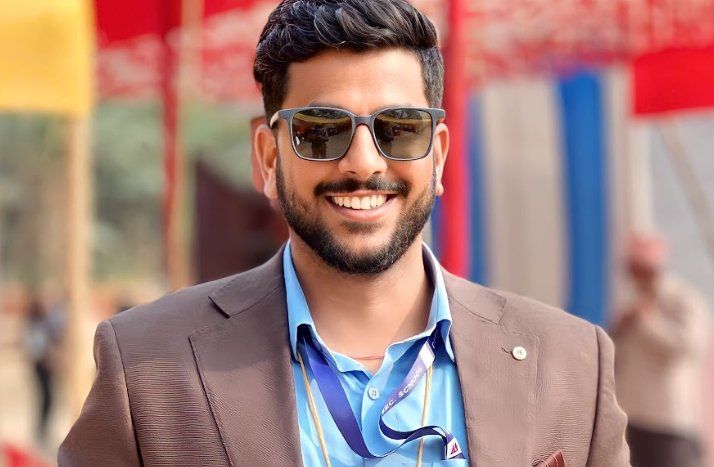
Santosh Kumar Yadav: This man is promoting project-based learning at schools
Santosh Kumar Yadav is a civil engineer by profession. But beyond that, he organizes exhibitions for the school students across Nepal. His aim is to give students the much-needed exposure in the fields of arts and science through project-based learning, something he lacked during his school days. Yadav, 25, was born in Siraha district and spent most of his childhood there. After completing his high school, he wanted to study engineering and applied at the Institute of Engineering, Pulchowk Campus, in Lalitpur. Yadav was an exceptional student, so he managed to secure a spot in the college acceptance roster. It was during his college days that Yadav realized how little he knew about the subjects he was studying outside of the textbooks. In 2015, the students were asked to take part in a national exhibition, which caught Yadav by surprise. “I had no experience of taking part in extracurricular activities prior to the exhibition. I didn’t even know what the word ‘exhibition’ meant,” says Yadav. Not knowing how exhibitions work, preparing a project with his team was challenging for young Yadav. For him, everything was new and intimidating. He had to learn to conquer his fear of public speaking, conduct extensive research on the project the team was working on, and figure out a way to apply it in practice. “I thought to myself if I had a chance to participate in exhibitions during my school days, I would have been well prepared,” says Yadav. His fear and anxiety was only intensified when he learned that most of his team members knew what they needed to do. Yadav had gone to a school that didn’t have funds and resources to organize science exhibitions and competitions to encourage the students. He says participating in the national exhibition gave him the idea of organizing similar programs at the school level. He started from his own school in the town of Lahan, Siraha. Lahan Science and Arts Fair 2072 four categories: science, social, environment, and art. It was a success. More than 1,000 students visited the exhibition which saw participation from over 20 schools. “The preparation was hard and took nearly three months. It was a huge success which gave us the encouragement to organize a similar exhibition in other schools,” says Yadav. Two years later, Lahan Science and Arts Fair 2074 was held, which saw nearly 7,000 attendees. Another fair was held in Golbazar Municipality of Siraha, which also saw the opening of a public library called ‘Aarambha’. “The purpose for all this was to give students that confidence and leg-up that I lacked when I was going to school,” says Yadav. Within the past seven years, Yadav says he has seen a lot of changes, in students as well as in schools. Following his initiative, many schools have started organizing intra-school exhibitions where students are exposed to project-based learning. Yadav says he feels most satisfied and happy when the students he met during exhibitions contact him to show their appreciation. “Sometimes students call me to let me know that they won the intra-school exhibition because of my feedback. That’s when I feel like I have indeed accomplished something,” says Yadav. He adds the attitude and confidence level of many students have also changed a lot, all because of the exhibitions. “Since the students have to explain their projects, they have gotten better at public speaking. They are no longer shy around strangers,” says Yadav. “Many students are now well aware of how to start a research project, work with a team, come up with new and innovative ideas, as well as learn how to present their ideas in a simple way to the audience.” Yadav believes that these were the skills he needed when he had to take part in the national exhibition. “I had no confidence at that time, I didn’t know how to do my research and give my idea a physical form, and most of all, I had a fear of speaking in public,” he says. Although Yadav could not get the needed exposure, he says that he is happy to see the school students of today getting prepared for the future. “They are getting to experience project-based learning,” he adds. Currently, Yadav works as the head of the Civics Department for Shree Namuna Secondary School in Udayapur district. He plans to organize exhibitions in every part of Nepal. “I have organized exhibitions in Madhesh and Koshi provinces, and Kathmandu. The plan is to take this program in all parts of Nepal,” he says. At the school where Yadav works, he tries to conduct as many extracurricular activities as he can to expose the students to new things, and to nurture their curiosities. “Every student is excited about the exhibitions. I feel satisfied when I see their enthusiasm,” says Yadav, “I know the students from other schools feel the same way. They just need to be given a chance to explore and experiment new ideas and concepts.”

Queer community lauds Supreme Court’s order on same-sex marriage
On June 29, the Supreme Court issued an interim order to the government to ensure marriage registration of same-sex and other non-traditional heterosexual couples. It was a landmark decision for same-sex couples as well as individuals identifying as part of the LGBTIQA+ community. As per the court’s order the government must now set up a transitional mechanism to register the marriage of same-sex and non-traditional heterosexual couples, and amend the laws related to marriage in the Civil Code 2017. While the queer community and their supporters have lauded the court’s order, some politicians have taken it as an affront to their faith and values. One prominent figure offended by the idea of legitimizing same-sex marriage is Kamal Thapa, a former deputy prime minister and the leader of Rastriya Prajatantra Party. “The Supreme Court’s decision regarding the registration of same-sex marriages is flawed. Same-sex marriage is against natural law, social norms and culture. Marriage is a sacred relationship between a man and a woman. If same-sex marriage is legalized, it will lead to family confusion and social distortion [translated from Nepali],” the Hindu right-wing leader wrote on his Twitter following the court’s order. People’s perception toward same-sex marriage is divided. While some support Thapa’s ideology, there are individuals who disagree with him at the same time. Rabindra Mishra, senior vice-chairman of RPP, replied to Thapa’s tweet in favor of the LGBTIQA+ community and the court’s recent decision. “When I looked at his [Thapa] tweet, I could see many individuals supporting and defending us against his ideology. That, I think, shows that there are people accepting us gradually,” says Pinky Gurung, president, Blue Diamond Society (BDS). On June 7, Gurung and eight other applicants representing the LGBTIQA+ community had filed a public interest litigation at the Supreme Court, calling for legitimization of same-sex marriage. Gurung says although it is important for her community that the people accept and support same-sex marriage, their main focus right now is to claim the rights they deserve. The court’s decision is also momentous for Nepal as a country itself for being the most queer-friendly country—at least in terms of law—in the whole of South Asia. No wonder, the Supreme Court’s decision was praised by the international community. US Ambassador to Nepal Dean R Thompson tweeted, saying the decision was “a significant step toward marriage equality and recognition in Nepal that marriage is a fundamental right.” Australian Ambassador Felicity Volk also tweeted in favor of the court’s decision, saying that “Nepal continues to demonstrate regional leadership in promoting the rights of LBGTIQA+ communities.” It has been a long battle for the queer community of Nepal to have their nuptials recognized as a legal union. The first writ peition to legalize same-sex marriage was filed back in 2004, and the Supreme Court had formed a seven-member committee in 2007 to study the legalization of same-sex marriage. The committee’s report was submitted to the Office of the Prime Minister and the Council of Ministers in 2015, which in turn forwarded it to the Ministry of Women, Children, and Senior Citizens. But no further actions were taken. Sujan Panta, advocate and legal expert on LGBTIQA+ rights, says that one of the major reasons behind the ministry’s lack of interest to amend the marriage laws to recognize the same-sex union is because many people in the position of power still hold beliefs similar to that of Thapa. “Majority of them still find same-sex marriage to be ‘unnatural’, but with this court order, Nepal took its first step toward legalizing same-sex marriage,” adds Panta. While Nepal’s constitution states that there “shall be no discrimination when it comes to sex or matrimonial status”, the National Civil (Code) Act, 2017, still dictates marriage to be the union between a man and a woman. “If we were to completely legalize same-sex marriage, a total of 18 articles needs to be amended,” says Panta. Sunil Babu Pant, politician and LGBTIQA+ rights activist, says despite many amendments needed, the marriage registered will be valid and permanent. “The reason the court has ordered for a spearate mechanism to register same-sex marriage is to provide time for the lawmakers to amend the marriage law,” he adds. The LGBTIQA+ community of Nepal has only won half the battle; there are many challenges ahead. But for those who have been deprived of legal marriage documents because of their sexual identity, this is a cause for celebration. Maya Gurung, a 38-year-old transwoman, has been married to her partner Surendra Pandey for the past six years. Now with the court order, Gurung says she is overwhelmed with joy. “Now we can finally feel that our marriage will be legally secure,” she says. Gurung is looking forward to receiving the privileges all married couples do. Not being able to register their marriage had deprived them from several services like opening a joint bank account or registering each other as spouses in hospitals. Registrations at government offices are another hassle. Not having a legal document also deprives couples from participating in their partner’s funeral. Dilmaya (Aniee) Tamang, a 30-year-old transwoman, has been in a living relationship for the past 10 years. The major struggle for her and her partner was finding a flat to rent. “People would ask us for our marriage registration, or our citizenship where we both are registered as males,” she says. With the latest court order, Tamang and her partner can finally be registered as a married couple. “But this won’t be enough. Our society is not yet ready to accept our sexual identity and orientation. We still have a long fight ahead of us,” she says. Gurung, the president of BDS, says the court decision gives same-sex couples some hope for the future. “We have come across many suicides and suicide attempts among same-sex couple because of they were not accepted by our society and made to feel insecure for their sexual identity,” she says. Gurung believes that the Supreme Court has given a lot of couples, married or thinking of getting married, legal validation to their relationship. As for the society’s acceptance, she believes the the process will be gradual, and that the legalization of same-sex marriage will definitely plays a big role in changing the perception of individuals and society. “When there are laws backing us up, people will be compelled to accept that despite their disagreement,” says Gurung. “We also need to spread awareness, not just for acceptance but also to help people come to terms with their sexual orientation.”


