


Fond memories of my grandfather and Dashains past

My paternal grandfather was a very down-to-earth person to the degree that he went around the homestead barefoot, talked very less to the point of being taciturn, and minded his own business to the extent of being solitary. Unlettered, but a man of infinite wisdom. Of small stature but having a stately bearing. Nonetheless, temporal and celestial matters received his attention in equal measure.
In his youth, he had journeyed down to the North-eastern plains of India and got himself a government job. Half a year in the job, in a vivid dream, he saw his widowed father: all dressed in white, greyed hair and beard, and a sickly countenance. Such was his devotion to his father that he quit the job without a second thought and returned home for good.
Year after year, season after season, day after day, he worked the fields, tended to his livestock, and silently endured the vagaries of nature. Not even once he lamented the government job he quit in a blink nor grieved for the creature comforts it could have afforded him and his large family. He was at peace with his wife, his deities, his rustic existence, and quietly proud of his “lowly” peasant life.
***
At age ten I was a dangerous little man, for I was endowed with a devilishly curious mind and a commensurately creative bent. Armed with bundles of tangled copper wires, parts salvaged from all kinds of electronics, nuts and bolts, and other junk, I was on a dogged pursuit of making electricity from fire, more precisely, from embers. The devil should know, from where I got this sinister idea.
Many times, my grandfather had seen me put my quixotic idea into action behind the cowshed. The incendiary accouterments I had made me look like a potential arsonist to him. For me, he was a potential saboteur of my grand secret mission. Each day, we were playing hide and seek. Each time he found me engaged in the wizardry of electricity-making, he would banish me to the edge of our village where the banshees lived but to no avail. I would return more determined, more motivated than ever for creating trouble.
Also read: High consumer spending will be a boon for the economy
That year, until Dashain arrived, our relationship remained rocky. Even then, it was purely diurnal. At night, peace would be restored between me and him. We shared a bed of rock, so to speak. Instead of something cushy and comfortable, he preferred a woolen rug on top of a hay mattress. He liked it hard. Perhaps, it was a cure for his slowly curving back. And I did not mind it either.
***
Right after the rains end in late September, nature triumphantly returns to its resplendent glory: Life-giving water is plentiful, serpentine brooks and streams sing a mellifluous murmur, verdant woodlands come alive with tweeting little birds, and idle clouds sail across in the blue skies. Planting season has just ended, mother earth is bountiful, and village folk go about their daily lives with a buoyed spirit. A mildly intoxicating fragrance impregnates the whole atmosphere. This pervasive aroma is the harbinger of grand festivities in the hills of Western Nepal.
Pupils whose places of learning had closed for the holidays or who somehow managed to break free from their drab school life would first appear in the village. Second, came the lahures and their families who had been grinding away the whole year in Jalandhar, Haryana, Bombay, Calcutta, Delhi, Dimapur, Shillong and cities in India. Last arrived the bureaucrats (a sizable number) and their city-born bratty kids, and fair-complexioned fragile wives.
On the ridge of a hillock, along the tortuous and treacherous foot trails, you could see a motley procession of homebound souls, decked in bright colors, lugging heavy bags but determinedly pushing towards their homes. This influx of out-migrants would last for about a month. The old folks likened this annual homecoming to the fowls returning to their roosts in the twilight hours.
***
It was customary for these returnee members of the community to pay a visit to the elderlies, hand them sweetmeats, nuts, tobacco, clothes, etc. and listen to their past exploits, stories and imbibe some practical wisdom. In return, the repatriates would share with them the trials and tribulations of their journey back home, stories of faraway lands, foreign people, interesting happenings, and tidbits about the changing world.
Every family would paint their house ochre and milky white, and remove the weeds around the house and front yard. Even this sleepy settlement of around ten score mortals would turn into a hubbub of lively activities. Not even affected a tiny bit by the excitement in the air, my grandfather went about quietly preparing for Dashain. Being the patriarch of the family, he oversaw and participated in hay collection for the cattle, beautification of the old house and homestead, and restocking provisions.
***
Maha Navami would be the day everyone would be waiting for. Anointed with aromatic oils and dressed in all sorts of fineries, the old and young would journey to the Kot Ghar on the hilltop. Around eight in the morning, rhythmic beating of drums would start to sound from all directions and eventually merge with the music coming from the Kot Ghar.
Senility had set in. So my grandfather started a little bit early. Along the stretch of around three kilometers to the Kot Ghar, he trundled slowly, stopping at every bend and at every encounter with a friend or relative his age to make a small chat. They reminisced about the good old days, the times of their youths, and the ominous times that surrounded them.
Also read: Dashain: Then and now
At the Kot ghar, the prized spot under the awning would be waiting for him from where he would have an unobstructed view (darshan) of the Khadga and Chattra (local deities) and the gory spectacle. He was rather not fond of animal sacrifice so he continued to chat with his friends even after the animal sacrifices started.
Those special spots were off-limits for us kids. We found our own vantage points. The ensemble of musicians played a hypnotic rhythm occasionally punctuated by the sky-rending roar of the dhankuri baja (a really long pipe). This ancient music was perhaps the enabler to all the bloodshed that ensued later. Hundreds of animals, big and small would be killed at the maulo (sacred altar). At around three in the afternoon, I and my grandfather would return home at a leisurely pace.
On the auspicious day of Vijaya Dashami, my grandfather would be sitting on an ornate rug, putting tika and jamara, blessing the receiver with Om Jayanti Mangala Kali Bhadrakali Kapalini mantra, some other benedictions, and giving away sweets, fruits, and paper bills according to the status and gender of the receiver. I would receive the tika as soon as it began so that I could break my fast and go devour the delicacies. After that, I would sit beside him all day long.
Tika ceremony would continue late into the evening till everybody who had arrived from far and wide had received his blessings, and only he would break his fast. With this, the greatest festival of the year climaxed. The next day itself, family members who had gathered for the celebration would start to disperse in all four directions.
I cherish the fond memories of the many magical, mystical, and majestic childhood Dashains that I was a part of and in which my paternal grandfather played the central role. After he passed away thirteen years ago, I have not been to the Kot Ghar even once and Dashain has not been the same for me ever since.
The author comes from Gulmi, and is a community development professional based in Kathmandu

Opinion | Unsanitary taxes
Let us face it, talking about menstruation and related issues is still a taboo in South Asia. You invariably get a shocked eye or a raised eyebrow if someone brings it up casually. It is a culture in this part of the world to wrap the sanitary napkin packet in a newspaper or put it inside a dark bag when you purchase it from the medical store.
When I started my periods, sanitary napkins were hard to get even in Kathmandu. Luckily, my mum used to DIY pads for my sister and me at home with cotton, a sheet of plastic, and a gauge. I have hardly used recycled cloth for my periods and I have never felt so lucky. I have heard dozens of embarrassing stories of my friends and sisters who used cloth pieces during periods and got infections or leakage/staining.
I think it was 1998-99 when some companies started importing the pads from India and that is when I started buying them too. For many years, I bought the packets as if I was transporting something illegal inside a wrapped newspaper or a black plastic bag. With time, I asked them not to wrap the pads in anything as I felt it was as normal as people buying diapers.
More than 20 years have gone by and women and girls in Nepal are still struggling with access to menstrual products. It is not a new thing to read that thousands of Nepali girls still skip school due to periods or lack of sanitation in school. Every year many I/NGOs are working with communities in awareness-raising regarding hygiene and use of menstrual products.
Last week, once again, the whole tax issue on sanitary pads surfaced. They already attract 15 percent customs duty and 13 percent Value Added Tax. Now the news was that an additional 10 percent is to be imposed on the old sum. According to the Inland Revenue Department, Rs 342.31 million was collected on 1.17 billion worth of sanitary napkins imported last year. Whereas the world is working to make these products accessible to each and every girl child and woman for free, our own government is shamelessly increasing the taxes.
Also read: What if… sanitary pads were made free?
Let us do some math. If a girl has her first period at the age of 11 and each year she uses 15 packets of sanitary napkins, considering today’s per packet price of Rs 215, she is spending Rs 3,225 a year. And keeping the price constant for another 35 years (which is not possible but I do it here just for the heck of a general calculation), she will be spending approximately Rs 112,875 only on the pads.
Apart from all these expenses, the inaccessibility of the product, and the stigma regarding periods, in the past couple of years the issue of sanitary pads piling up in landfills and the time they take to decay has also become a matter of concern. To address that, the west has come out with an amazing invention called the menstrual cup: a magical invention that has undoubtedly revolutionized the whole idea of having periods and handling them. The price of a silicon cup, just a touch bigger than the size of an espresso shot glass, ranges from $10 to $45-50 and it has a 10-year recycling life.
Personally, I have been using the cup for over four years and have been recommending it to my friends. I started using one while I was struggling to recover not only from my endometriosis cyst surgery but also from the tampering that my body had to go through due to the surgeon’s negligence. (That is another story that can separately fill a whole page.) My periods were pretty heavy and I was not confident enough to go out using a napkin because I thought I would stain.
The menstrual cup did give me confidence, and it is easy maintenance in the western world where you have access to clean drinking water even from your taps. Here in Nepal, we are still fighting for a separate washroom and clean sanitation, forget clean water to wash your cup every time you dump blood and reuse it. So, ultimately, the menstrual cup can be considered a luxury item that is only useful for women who can afford to buy mineral water every time when she is out and can thus wash her cup for reuse.
So, at the end of the day, the incompetent government should open its eyes to consider rebating the taxes, even if it cannot make the sanitary pads completely tax-free. Women and girls (who are going to be your future vote banks) are half the population and their basic needs should be taken seriously.
They are already cursed to be born with a vagina in this part of the world and the government is not making it any easier.

Opinion | Raise electric vehicle taxes
Nepal’s promotion of electric vehicles through lower taxes is a classic case of the poor being disadvantaged to finance the greening of the rich.
There is no doubt that Nepal must do more to increase the adoption of electric vehicle. Nepal is still far from achieving its goal of having electric vehicles represent at least 20 percent of the total vehicle fleet, which is currently less than 1 percent.
This year’s budget, announced in May 2021, abolished excise duty and reduced customs duty from 40 percent to 10 percent on import of electric vehicles. It reversed provisions in the previous year’s budget that had increased excise and customs duty on electric vehicles. Taxes have been an easy policy target for promotion of electric vehicles. After all, customs and excise duties are the single largest factor driving up the cost of those vehicles in Nepal.
Despite fully endorsing Nepal’s goal to increase the use of electric vehicles, I’ve long struggled to explain why I want taxes on electric vehicles to be raised. It is not a popular view.
Then, I failed my driver’s license exam.
Also read: Race to stupidity
Some 25 years after driving with a clean record, and a driver’s license in two countries, I failed the driving exam in Nepal when I returned home this year and applied for one. It wasn’t that I was casual about it. I bought and studied all the model test papers for the written exam. I went for three days of driving practice around the course where the test was to be held.
The pass rate in Nepal’s driver’s license exam is dismally low, approximately 25 percent. In comparison, in India, it is closer to 70 percent, even though India has half the per-capita personal vehicle ownership of Nepal.
The Department of Transport Management, which manages driver’s licenses, argues that strict driving exams are necessary to keep our roads safe. This is a rubbish claim, widely discredited by evidence, and masks a different reality: vehicle ownership is simply not a goal for Nepal.
The government simply doesn’t want to encourage people to own personal motorized vehicles. Reasonably so, the country can’t really afford it and the road infrastructure isn’t quite there to support expanded vehicle ownership. Along with the low pass rate on driver license exams, high duties on vehicles are also an indicator of the intent to discourage vehicle ownership.
The goal of disincentivizing personal vehicle ownership is a sad reflection of our poverty and state of development. But it is our reality, and one that should encourage promotion of public transport, and now shared rides, as we build towards a future of prosperity where we can all own cars, bikes, and other types of motorized vehicles.
It is within this reality that we should ensure the promotion of electric vehicles don’t open floodgates to vehicle ownership. Even with the higher taxes in last year’s budget, electric vehicles were still cheaper in Nepal than conventional ones.
Also read: The life-changing power of gratitude
Even under high taxes, the composite taxes for electric vehicles were 120-140 percent. Conventional vehicles, on the other hand, face composite taxes of approximately 250-300 percent. These tax differences more than offset the higher base price of electric vehicles relative to their comparable equivalent conventional vehicles.
There is a cost to reducing vehicle import duties when those taxes account for approximately 40 percent of all government income. This loss of revenue directly affects service delivery to the poor. Last year, for instance, the government is estimated to have raised approximately Rs 100 billion from duties on vehicle imports. The entire education budget that year was Rs 161 billion.
Even taking two wheelers into account, vehicle ownership in Nepal is limited mainly to the rich. The poor must rely entirely on public transport, which is weak, unreliable and lacking any real investment to enhance its quality.
Imports of Kia Niro, an electric vehicle, stopped last year after its price increased to Rs 12.5 million. This year, with the revised budget, the price is down to Rs 7 million. How many underprivileged children could you educate with Rs 5.5 million annually?
Those driving the Kia Niro, and other electric vehicles, believe they are reducing Nepal’s fuel imports, increasing electricity demand, and transitioning to clean transport. But for millions of poor Nepalis deprived of quality education, health, and other social services, because their government cannot afford it, it will be time to start building towards another revolution for equality.

Opinion | The life-changing power of gratitude
We come into this world wailing, distressed. Our needs, which at that point are few and basic, must be met for us to be content and quiet. Unfortunately, for many, the sense of unfulfillment and anguish stays for a lifetime. It’s our nature to always want more, to compare ourselves, and find flaws in our otherwise pretty good, if not great, lives. We could have everything we ever wanted—good health, a stable job, et al, and still be unhappy.
Mental health issues aside, it’s often sheer unwillingness to value what we have that causes us so much pain. While cultivating a positive mindset could put an end to most of our worries and is thus really crucial, it’s easier said than done. It’s a skill that must be honed over time, say some really happy people I know. And being grateful, for things big and small, is a good place to start.
I have a friend who is the most charming and cheerful person I know. I can say without an iota of doubt that there isn’t anyone who has anything bad to say about her. I’ve never heard her utter an unkind word. For as long as I’ve known her, and it’s perhaps been over a decade, she’s been gracious, always willing to help others, and ready with a compliment or a word of encouragement when needed.
I’m not exaggerating when I say she radiates warmth and positivity. And she makes it all look so easy. But she recently confessed that it doesn’t come naturally to her. Her first thoughts, about people and situations, are vicious. It’s a conscious effort to look beyond what annoys her and dig out the good bits that she chooses to focus on. The result: She is much happier and isn’t bogged down by unnecessary, petty things.
Also read: Many ways we mourn
This mindset, she said, stems from the extreme gratitude she feels for all the good things that happen in her life. So many things could’ve gone wrong but they haven’t very often. And even when they sometimes have, as bad things invariably do, focusing on positive things has helped her overcome them without going into panic-mode. However, it’s natural for negative thoughts to creep in, making it difficult to be grateful. That is where a conscious effort to shift your focus comes handy.
Robert Emmons, world’s leading scientific expert on gratitude and author of the bestselling book ‘Thanks!: How Practicing Gratitude Can Make You Happier’, says “gratitude is an affirmation of goodness. We affirm that there are good things in the world, gifts and benefits we’ve received. We recognize that the sources of this goodness are outside of ourselves.” Gratitude isn’t about ignoring the hassles and problems in life. But a grateful outlook helps you take things as a whole, and no particular experience as an isolated one, designed to torment you. You are better able to identify the good things in your life, despite your circumstances.
Emmons, who has been studying the effects of gratitude on physical health, psychological well-being, and our relationships, says being grateful makes you more likely to take better care of yourself. A friend recently had some health issues. The doctor ran some tests and said her heart looked just fine. She says she saw her heart beat and felt an overwhelming sense of gratitude. Up until then she hadn’t paid much attention to her eating habits and didn’t exercise at all. She now goes on walks, cycles when she can, and tries to eat well. Thankful to what she considers her good luck, she’s determined to be healthier and happier.
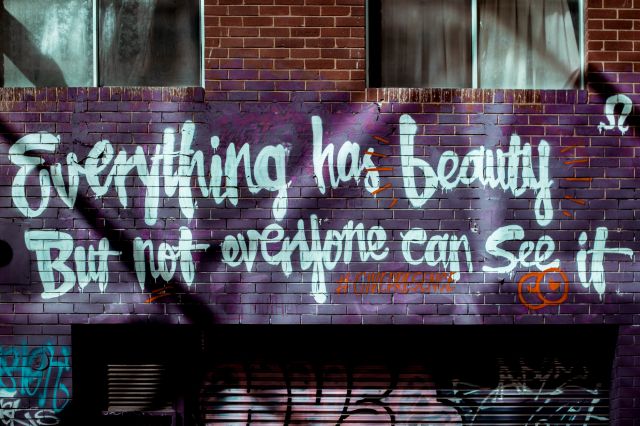
Apparently, it helps if you write down things for which you are grateful. In a series of studies, Emmons and his colleagues have helped over a thousand people, from the ages eight to 80, cultivate gratitude by maintaining a gratitude journal. People who practice gratitude consistently were found to be forgiving, compassionate, and were less likely to feel lonely. They also had stronger immune systems, lower blood pressure, and slept well. On the psychological side, grateful people had higher levels of positive emotions and were optimistic and happy.
At a risk of embarrassing myself, I must confess that, for the longest time, I was the stubborn sort, grumpy unless things went exactly the way I wanted them to. My mother once jokingly said that I take after my father’s side of the family—a delight to be around only when everything is hunky-dory. But I believe that is true for most of us (though in my case the obstinate trait is largely genetic). Most of us aren’t able to handle criticism or that sometimes we could be wrong too. It’s difficult, impossible even, to own up to your mistakes, say sorry, and move on. We value ourselves and nurse our egos far too much to ever back down.
This ‘I-deserve-the-best’ mindset makes us defensive, easily hurt, and worse, wallow in self-pity. It took a couple of major health scares in my family, several years ago, for me to value life and the people in it, to come to the stark realization that perhaps many issues aren’t as important as we make them out to be. It was only then that I started being so much more grateful for all that I had and that has quite drastically upped the quality of my life.
I’m a lot less stressed and it’s easier for me to let go of things I can’t control than ever before. Being grateful—for those books I was able to buy, that delicious rice pudding my mother made, the time I was able to spend in the company of my loved ones, and being alive for another day—helps me deal with the inevitable hiccups with a ‘this-too-shall-pass’ approach. Life’s far from perfect but I’m the happiest I’ve ever been.


