


Opinion | Nepal losing its Hindu adherents

The house-visit phase of the 12th national census has just concluded and by now all the requisite data must be in. The census staffs had visited people's homes, asking for their names, castes, religions, sex, etc. On the other hand, some Dalit activists and atheists have been vociferously expressing their dissatisfaction with the whole process. Dalit religious activists are saying that the Dalits should not have had to select ‘Hindu’ as their religion as they believe Hinduism is the main cause of their discrimination. Likewise, the atheists are asking: why couldn’t they say they believe in no god at all?
On the basis of the census tabulations, the state will come up with various plans, policies and programs to lift the status of certain groups. Moreover, census figures will be used to gauge the rise and fall in the number of adherents of certain religions. Expect some drastic changes in the religious mix.
This time, the census will show a higher number of Christians and a lower number of Hindus. But why has the number of Hindus gone down? The Hindu extremists may even accuse others, mainly Christian missionaries. But they will not analyze themselves, not see how they have discriminated against other human beings on caste basis. They will continue to ignore the demand for Dalit religious rights. The ignorance and insult of high-caste Hindus is a major factor making many Dalits change their religion. This is why the number of Hindu adherents may be down when the results of the census are published.
The Hindu extremists have never considered that the Sudras also belong to Hindu religion, and have similar castes, cultures and traditions. This has made many Dalits adopt Christianity so that they are treated as equals, both religiously and culturally. In Christianity there is no hierarchal discrimination. Everybody is equal and anybody can be a church pastor. That’s why it attracts Dalits and ethnic tribes.
Also read: Opinion | Alternative politics: Is there still hope?
According to the new Christian Dalits, changing religion was a kind of rebellion against Hindu rites and rituals that traditionally discriminated against them in social, cultural and religious spheres. The Dalits are barred from entering temples and the so-called high castes refuse to have family relations with them. Moreover, Dalits are often mistreated, manhandled and even killed by so-called high caste Hindus. Many Dalits say they won’t have to face such discriminations in Christianity. Moreover, some Dalits argue, why follow a religion where beasts are loved and worshipped while many fellow human beings are insulted?
The encroachment of a foreign religion is a big challenge and threat to native Hindus. Day by day, more and more people, especially Dalits, are attracted by other religions that respect them. Just see the number of churches that have sprung up in places like Jumla and Kalikot, never mind in the more developed urban centers.
In India Dr. Bhim Rao Ambedkar converted many Hindu Dalits into Buddhism. Similarly, in South India, many Dalits changed their religion and adopted Christianity en masse. Nepali Dalits may decide to take a leaf out of their books.
If the current trend of systemic discrimination does not stop, there could soon be a drastic reduction in the number of Hindu adherents, with the exit of those who have otherwise been following Hinduism for ages. If Hindus are serious about protecting their religion, the first thing they need to do is respect the rule of law. For that they have to take legal action against those who practice caste-based discrimination. Second, they should adopt progressive policies to make the society a more even playing field. Likewise, the radical Hindus should deconstruct the discriminatory social norms and values, and they must introspect: What is making so many Dalits change their native religion?

Opinion | A toot for Tootle
Given the menacing attitude of taxi drivers in Kathmandu, a friend introduced me to Tootle, a two-wheeler ride-sharing application in August 2017. I had had some experience with Uber in the US back in 2014 when a friend of mine told me about this new innovation of using a private car for transport and how it had made life easier in cities where public transport and taxis are scarce. Plus, how it had changed the lives of both the users and the car drivers.
While revisiting the US in 2017, while returning from a party in the wee hours, we booked an Uber and I was talking to the driver. A mother of three kids, she is a stay home mom in the day and does Uber at night, after her husband returns from work. It had not only given her financial independence as well a break from her domestic chores. “It is refreshing to do Uber, I feel fresh to come out of the house. I get paid....and I get to meet new people each time...Worth it!”
With a high impression of Uber, I returned to Nepal in early December 2017. Now, we don't have Uber in Nepal. What next? Then, at that point, “Tootle” tooted in my head. I installed the app and started using it. It surely made commuting easier and affordable for single users like myself. The whole bargaining, pleading, and negotiating with taxi drivers became a thing of the past. Now, I take out my phone, switch on Wi-Fi or 3G, start the app, mark my location, my final destination and the ride will be right outside my doorsteps.
Also read: Opinion | Dangerous morning walks
In September 2018, another new ride service entered the Nepali market. This time it was Bangladesh-born and bred Pathao service. After “Moving Bangladesh” it was finally in Nepal. Pathao suddenly became very enticing due to its promotional schemes. As its Google Map happened to be friendlier than Tootle’s, booking was easier and more user-friendly. (I had taken two free rides with the schemes.) In those days, I was more frequent with Pathao.
Initially, I thought I would meet the same riders. But to my surprise, it was a new rider every single time (though after frequent use I met a couple of them more than once). I started interacting with the riders and asking how they had started and how much they earned a month by associating with this service. Some of the stories are interesting enough to share.
Lakpa Lama, 20, just out of high school, was doing full-time Tootle rides to save to go abroad for further studies. His daily expenses were also covered by ride-earning.
Suraj Thakuri Malla, 27, has a three-year-old daughter, does part-time Pathao rides, and saves all his earnings for his daughter to go to a good college. I trickily asked him how much he has made so far and he said in the past four months he had saved about Rs 90,000 from Pathao rides. A full-time worker at a construction office, he is hopeful of sending his daughter to a good college in the US or Australia.
Suresh Tamang is a returned migrant worker who is making a pretty good living working full time on Pathao as well as Tootle. He says he takes rides from both the apps and earns around Rs 45,000-Rs 50,000 very easily. He also shares that getting to stay with his family made whatever he earned in his own country all the more rewarding.
Also read: Opinion | The world ain’t Squid Game
Sanjay Tamang, a Tootle and Pathao rider, and I had a pretty rigorous discussion recently on our ride from Sanepa to Hattisar while stuck in rush-hour traffic. He told me how there is no insurance for the pillion rider and how bike maintenance needs to be his own if there is damage during the ride. He also lamented lack of extra benefits for the rides after hours (from 8 pm-11 pm). He asked me that if I write anything about this conversation then I should mention that, like the taxis getting one-and-a-half-time fares after 9 PM, these riders should have some extra perks as a motivation for riding in the dark in this freezing winter. (He too has a full-time job and works from 5:30 pm till 11 pm to make that extra income.)
These are a few of the stories of 100,000-plus riders all over Kathmandu valley who are associated with Tootle/Pathao. While lifting lives of all these riders and their families, these services have prevented women from all those incidents of sexual assaults and groping in public vehicles. They have helped youngsters be independent and pay their college fees. The government should either improve public transportation, which, of course, is a better option, or make taxis work in a systematic manner. The other option is to work things out “legally” for such life-easing innovations as Tootle/Pathao.
On the other side, such companies should definitely take customer care and service seriously. They are liable for the safety of the users as well as the riders. Proper training and safety majors should thus be their top priorities. My biggest dread is a rider with racing bikes like Ktm Duke or Pulsar 300 wearing socks on flip-flops.

Opinion | Alternative politics: Is there still hope?
After the failure of the first Constituent Assembly to deliver a constitution despite numerous extensions, the youth had come together to form a pressure group which later took the shape of a political movement. This was in 2012, and it was an exciting time.
The Arab Spring Movement had just taken place, and hash-tagging in social media was considered real activism with the hope of lighting up revolutions. Youths gathered around the trending slogans, mostly in social media, but also in street activism. This brought in an era of optimism and the idea of alternative politics in Nepal was born. And the rise to power in Delhi of Arvind Kejriwal, an outsider in politics through the Aam Aadmi Party, coincided with this development in Nepal.
This added fuel to the fire, and we were giddy with hope. In the first local elections after the promulgation of the constitution, Ranju Darshana, a 21-year-old undergrad student, had received almost 24,000 votes as a mayoral candidate for Kathmandu from a party formed from this movement. Ranju’s candidacy appealed to the youth and also addressed the near absence of women in political leadership.
I have been a hardline supporter of the need for an alternative political force in Nepal since the beginning. The major political parties are structured into rigid patriarchal organizations controlled by ‘upper caste’ old men where meritocracy isn't welcome. The idea of alternative politics was thus based on a simple premise: Nepal’s major political parties have morphed into feudal machines that are incapable of putting qualified people in power.
Also read: Opinion | Hard lessons of history
But the skeptics believe that emergence of a strong new political party in Nepal is almost impossible. They argue that Nepal’s terrain does not allow for mass proliferation of a new force as easily as it happened in Delhi. And almost a decade after its conception, the idea of alternative politics is in grave danger, proving the skeptics right, but not only for the same reason.
One of the founder leaders of the movement, Ujwal Thapa, who later transitioned into a political party by the name Bibeksheel Nepali Dal, unfortunately succumbed to Covid-19 a few months back. And the enormity of the leadership vacuum that Thapa’s demise has created is now slowly unfolding.
The party Thapa had founded was united with the one founded by Rabindra Mishra, who had jumped into the bandwagon of alternative politics after completing a pensionable career as a journalist in the BBC. Renamed Bibeksheel Sajha after the reunion, the party has officially taken a right turn endorsing the ‘personal opinion’ document of Mishra that is sympathetic to monarchy, wants to abolish federalism and urges a referendum on secularism.
Mishra refuses to accept that he has steered the youth-centered alternative political movement on a rightist path. In fact, in puerile and naive attempts to justify his ‘majoritarian’ political stunt, he questions the right of others to call anyone a rightist or leftist. Arguing like a child, he has even advocated for justice to the kings.
There is no doubt that frustrations from the continuous bickering of the mainstream politicians, and the communist government’s inability to deliver stability despite its huge majority, has made many people question the new political developments. And in the age of instant gratification derived by social media, there are enough people nostalgic about the ‘royal rule’. It has also not helped that the political party led by Prachanda, the harbinger of most of the progressive agendas in the past few decades, is also the most undemocratic in its internal functioning.
Also read: Opinion | Systemic dysfunction
But Mishra’s misreading of the signs and his recent political steps have put the idea of alternative politics in danger. The core constituency of such a force, the educated progressive youth who have sustained this force till now through support and contributions, has disassociated itself completely. And personally, I have come across many such youths now supporting the building of alternative forces within major political parties.
“Our political parties are like elephants, they maneuver slowly,” says Shankar Tiwari, a young political commentator who has been elected a general convention representative from Nepali Congress. “Our political set up formed a progressive constitution first and are now restructuring the internal party functioning guided by the constitution.”
Some among the foreign educated youths also believed that the rulers our political parties produce are ‘stupid’ by default. But that is a naive underestimation of political conflicts Nepal has gone through and the tough journey our political parties have undertaken.
I believe our major political parties have failed to attract capable youths largely because of lack of internal democracy and zero tolerance for dissent. So, while the elephants are learning to dance, Mishra is showing signs of building a similar feudal structure and a desire to curb dissent. The so-called alternative movement is on an irrevocable path to demise.

How South Asian states are managing Chinese influence
A day after the devastating earthquake in Nepal in April 2015, China dispatched a 68-member search-and-rescue team to aid its southern neighbor. Within months, it had pledged over $650 million to help Nepal. The event also acted as a springboard for several long-term Humanitarian Assistance and Disaster Relief initiatives, such as an MoU on risk reduction and emergency response signed during President Xi Jinping’s visit to the country in 2019.
Nepal is not alone. Over the past one decade, moves like these have indicated a deepening engagement between China and countries in South Asia such as Bangladesh, Maldives, and Sri Lanka. In fact, China’s economic and political footprint has expanded so quickly that many countries, even those with relatively strong state and civil society institutions, have struggled to grapple with the implications. This reflects in China involving itself in domestic political developments in these countries, actively pursuing people-to-people relations, and even influencing how it is portrayed in the media in these countries.Our project, “China’s Impact on Strategic Regions,” is aimed at understanding the effect of such engagement and is based on a sharing of experiences across national boundaries by dozens of influencers with deep local knowledge. The study found that Chinese engagement leaves a deep impact on the institutions, civil societies, and elites of partner countries. The effect is higher in aspects of state and society that are already under duress.
A critical understanding of the drivers of this engagement, the various forms it has taken, and its impact on South Asian countries has been largely missing from the discourse, which is punctuated by broad-based assumptions such as allegations of debt-trap diplomacy. In reality, however, in a multidimensional region like South Asia, each of these relationships—in Bangladesh, Maldives, Nepal, and Sri Lanka—are unique. In Nepal, while centuries-old ties of trade, culture, and family were the initial drivers, in recent years China has had other avenues to expand its influence. At present, development assistance and Nepal’s keenness to explore an alternate route for trade and transit have taken the center-stage in the relationship with China.
Also read: US engagement in Nepal to grow, with or without MCC
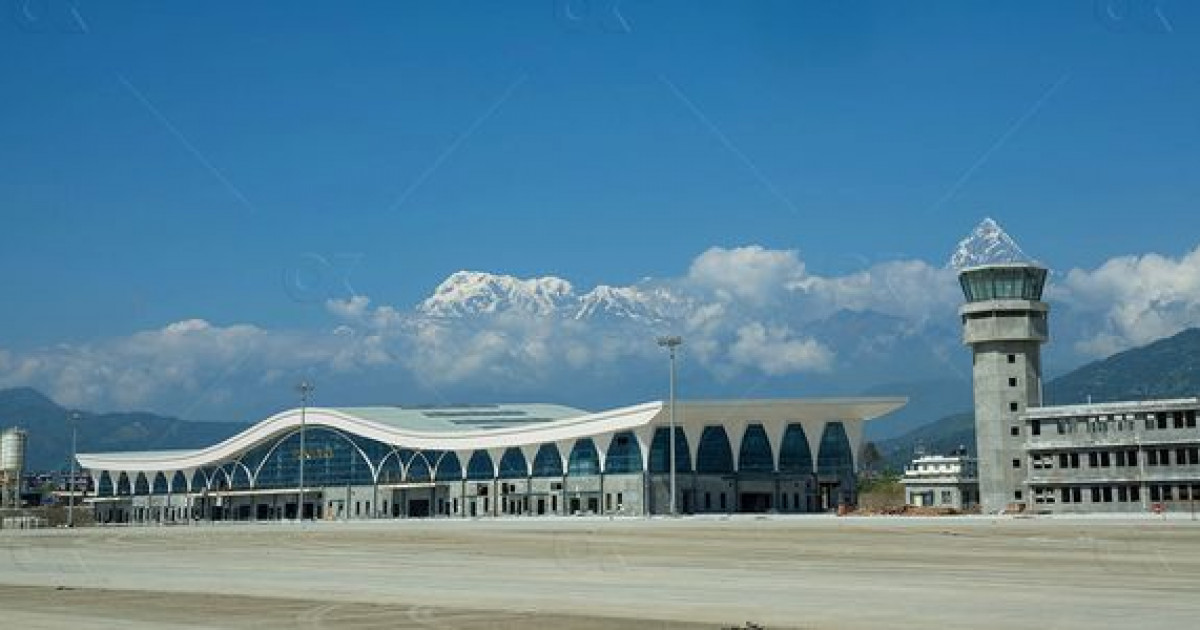
However, this has also meant that for every instance of successful partnership, as in the case of the Pokhara International Airport, there is an instance of shrinking space for Tibetan issues in Nepal’s newspapers; or for every instance of a fiber-optic cable link with China ending Nepal’s dependence on internet through India, there is an instance of Nepal’s state-owned airline finding aircraft purchased from China unprofitable and unviable.
Significantly, we found that contrary to popular discourse, partner countries such as Nepal wield considerable agency, learning from their experiences and that of others in the region. This is reflected in the rigor to evaluate all available options before accepting Chinese proposals, and, if need be, reject them, as in the case of the Budhi Gandaki Hydropower Project, which was found irregular and non-transparent by a parliamentary committee in 2017.
For all their uniqueness, as developing states, the common and overwhelming motivation for the countries under study is the quest to partner with countries that can help develop their economy, improve their infrastructure, and help their citizens meet their ambitions of a higher standard of living. These countries will engage the United States, China, or anyone else that can best assist them in realizing these goals.
In this scenario, the challenge for the US and its partners is to develop a policy that consistently and productively engages South Asian countries on their developmental needs. It follows that such engagement should be based on its own merits, delinked from how the countries choose to engage with China.
The decision at the Quad summit in March 2021 to focus on vaccines, emerging technologies, and climate is a productive step in this direction, as is the Build Back Better World initiative, announced at the June 2021 meeting of G7 leaders. Together with the Blue Dot Network, it has the potential to offer the kind of engagement these states seek.
As countries in South Asia graduate to lower middle-income status, they are likely to require assistance in dealing with a new reality where they are ineligible for much of concessional financing. The United States could use its influence in Western multilateral organizations to ease the transition and help these states develop the capacity to access alternative avenues for assistance.
Beyond state institutions, there is scope for partnership with other organizations. Media outlets and civil society organizations in all four countries have been focusing on questions of good governance—from their regimes’ human rights records to opacity in Chinese contracting practices. Building their capacity, over time, will lead more stakeholders in these countries to see the dangers of opaque deals and ignoring environmental and other concerns.
This new report has been translated in Nepali, Bangla, and Sinhala with the hope that it helps generate reasoned discussion in these places beyond just the elites—considering Chinese engagement is increasingly a whole-society phenomenon.
Pal is a visiting fellow in the Asia Program at Carnegie Endowment for International Peace. He tweets @DeepPal_. Chadha is a research assistant and project coordinator in the Asia Program at Carnegie Endowment for International Peace. He tweets @SahebSChadha


