


Crawling fast track (With Photos)

I have closely followed the Kathmandu-Tarai Fast Track national pride project for over two years. Whenever I’ve inquired about the project with the Nepali Army, which is responsible for its execution, they assert that everything is on track. However, the actual on-site progress tells a different story.


Since the government entrusted the project to the army six years ago, the deadline has been extended four times. The most recent deadline is set for April 2027. But the progress of the fast track stands at a mere 28.56 percent, with financial progress at 29.44 percent.


During my recent visit to the site, my primary focus was on the tunnels. I visited the construction site of three tunnels—Mahadevtar, Dhedre, and Lendanda. Work on three other tunnels has yet to start.


Currently, out of the total 6.415 km length of three tunnels, 3.592 km has been completed, marking a progress rate of 56 percent. This might be a hopeful sign.


A visual odyssey of Dubai’s vibrant charms (Photo Feature)
At the heart of the United Arab Emirates (UAE), where the desert meets the sea, resides a city that embodies luxury, innovation, and limitless exploration. Against the backdrop of the Global Climate Conference, COP28, Dubai revealed its multifaceted allure, beckoning both delegates and visitors to explore its vibrant tapestry.


Venturing beyond the conference precincts, I embarked on an excursion through Dubai, a diverse fusion of cultural heritage and contemporary extravagance. The city unveiled a myriad of experiences, each more thrilling than the last.


From the awe-inspiring views during a lavish yacht party, where the shimmering skyline mirrored the bright-black sky above, to the adrenaline-pumping adventure of a desert safari, navigating golden dunes under the Arabian sun, each moment was filled with excitement.


The sun-drenched beaches welcomed guests with their flawless sands and azure waters, offering a tranquil escape amidst the city’s bustling energy. As night descended, Dubai’s nightlife lit up the sky, casting an enchanting ambiance over the lively streets and bustling venues.


Through my camera lens, I captured Dubai’s essence—a blend of tradition and modernity, where ancient heritage harmonizes seamlessly with futuristic marvels. Each photo encapsulates the spirit of adventure, luxury, and cultural opulence that defines this extraordinary city.

Every image of Dubai tells a story of marvel and indulgence, creating a vibrant tapestry of experiences waiting to be discovered.


A city for COP28 (Photo Feature)
Dubai: The 28th global climate conference (COP28) is currently underway in Dubai, United Arab Emirates (UAE) and will go on till Dec 12. It’s being held at Expo City—a cutting-edge venue designed to champion sustainability and circularity principles. This purpose-built city spans 4.38 sq km and offers an enhanced quality of life for its visitors, featuring top-tier events.

Expo City in Dubai is segregated into two zones for COP28—the Blue Zone, accessible to accredited party and observer delegates conducting formal negotiations—and the Green Zone, serving as a platform for activists to share their climate projects and stories on a global scale.

With a record-breaking 84,000 registered attendees, this year’s COP marks a significant contrast from its modest beginnings in Berlin in 1995, which had fewer than 4,000 delegates. Last year’s COP27 in Egypt attracted around 50,000 visitors, further highlighting the growth and importance of this global event.

During COP28, Nepal, chair of the Least Developed Countries (LDCs), emphasized the urgent need for dialogue on mountain and climate change issues. They advocated for fair grants to address the climate crisis and stressed the necessity for a predictable, simplified, and sufficient Loss and Damage Fund tailored to LDCs and mountainous countries.

The Nepali Pavilion has been actively engaged in hosting at least five sideline events daily, with an estimated 250 Nepali delegates participating in the conference.

The conference commenced with a landmark agreement on establishing a loss and damage fund, aimed at assisting developing countries in managing the repercussions of climate change—an agreement reached on the inaugural day of the event.


Kathmandu gears up for Chhath celebrations (Photo Feature)

The preparations for the Chhath festival in Kathmandu are nearing completion, with the banks of the Bagmati River and the city's ponds adorned in vibrant decorations for the upcoming celebration.

This revered festival, deeply entrenched in Nepali tradition, venerates the Sun God, Surya, and Chhathi Maiya, the Goddess of Purity, Fertility, and Power. Its observance involves meticulous rituals and offerings, symbolizing gratitude, penance, and the pursuit of blessings for well-being and prosperity.

Nepal, renowned for its rich cultural diversity, embraces Chhath with profound enthusiasm and reverence. The festival holds significant importance in the hearts of Nepalis, particularly those dwelling in the Terai region. Rivers and ponds across Kathmandu transform into lively hubs of colorful decorations and communal gatherings during this auspicious occasion.
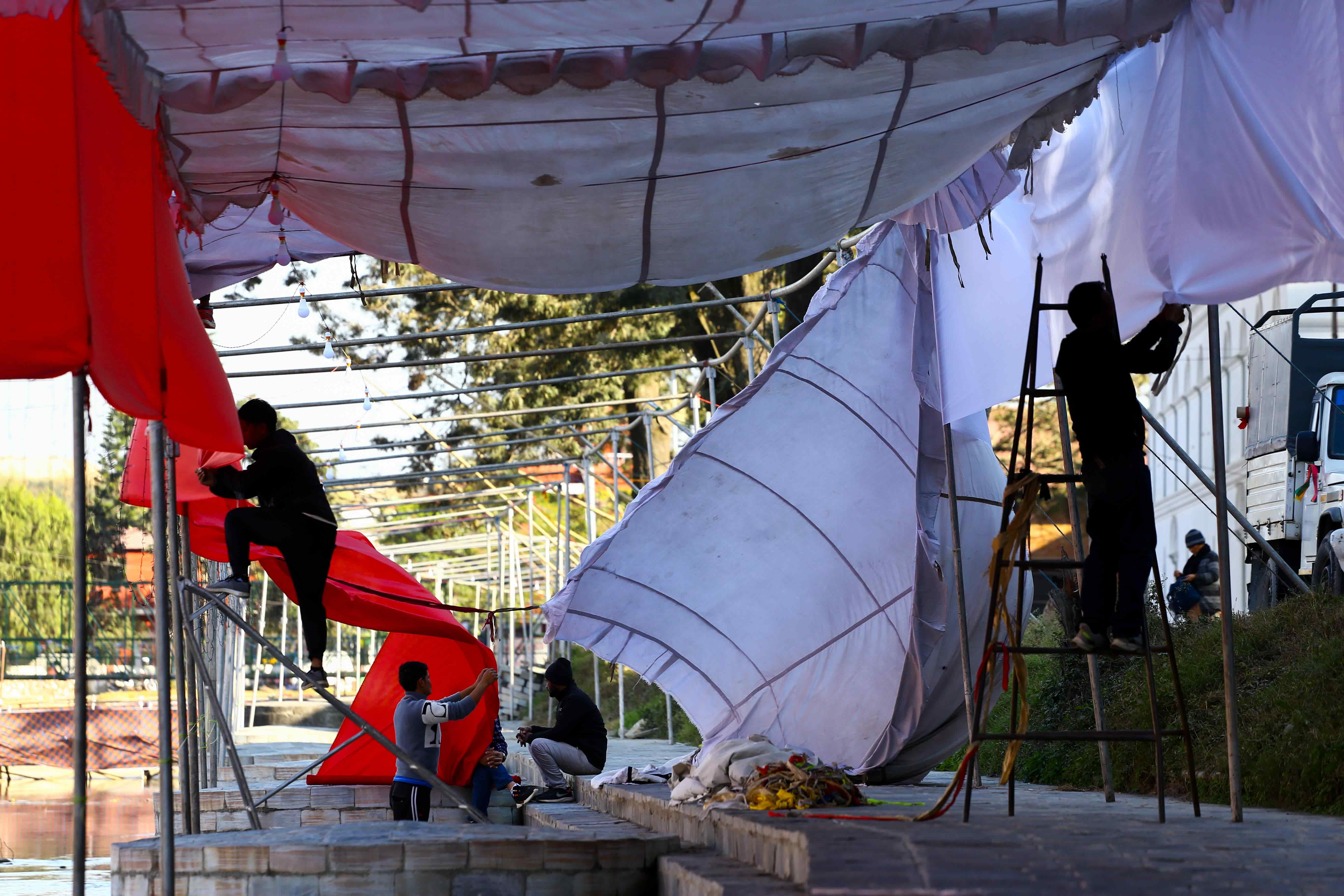
The detailed preparations for Chhath encompass a multitude of activities, from diligently cleaning the riverbanks and ponds to embellishing them with vibrant ornamentation. Elaborate makeshift stages, referred to as 'ghats,' are meticulously constructed along the riverbanks, where devotees will partake in various rituals and offer prayers to the rising and setting sun.


