


CPN (Maoist Centre) forms taskforce to give suggestions on MCC

CPN (Maoist Centre) has formed a task force to give suggestions on the Millennium Challenge Corporation Nepal Compact, an American grant worth $500 million.
Party leader Krishna Bahadur Mahara said that the party decided to form the task force after the issue of MCC was raised in the meeting of the former Standing Committee members held on Saturday.
“We have formed a taskforce to give suggestions on the MCC. We will move ahead as per the suggestions of the taskforce,” he said.
Meanwhile, a meeting held at the party office in Paris Danda on Saturday discussed holding all three tiers of elections in one go, Mahara said.
The meeting has decided to give authority to party Chairman Pushpa Kamal Dahal to mobilize the cadres and leaders until the cases of Covid-19 declines.
The meeting has also decided to give the responsibility to Chairman Dahal to complete the organizational works.

NC leader Sharma suggests PM to remove Minister Yadav
Nepali Congress General Secretary Bishwo Prakash Sharma has suggested Prime Minister Sher Bahadur Deuba to relieve Minister for Physical Infrastructure and Transport Renu Yadav of her position.
He said that Minister Yadav should be removed from her post for making the remarks to incite social violence.
Minister Yadav was dragged into controversy after she threatened to Kill Chairman of Janamat Party CK Raut during a programme organized at a public programme in Rautahat on Wednesday.
Sharma also suggested Minister Yadav to resign from her post.
Minister Yadav had warned of carrying out another Gaur massacre by killing CK Raut.
As many 27 cadres of the then CPN-Maoist were murdered at a Gaur-based rice mill on March 21, 2007. Madhesi Janadhikari Forum, the then party of Upendra Yadav, incumbent Chairman of Janata Samajbadi Party had carried out the massacre.

Ruling coalition decides to consult with legal eagles to fix date of local elections
Ruling coalition has agreed to fix the date of local level elections.
A meeting of the high-level political coordination committee held on Friday decided to consult with the legal experts for the same, a leader, who attended the meeting said.
Now, the debate on elections have come to an end.
Earlier, a dispute had ensued in the ruling alliance after CPN (Maoist Centre) Chairman Pushpa Kamal Dahal proposed for early elections.
Addressing the nation on Friday, Prime Minister Sher Bahadur Deuba had also committed to hold the three tiers of elections.
The main opposition CPN-UML has also been piling the government to fix the date of local elections.

Local level facing an acute shortage of civil servants

With the promulgation of the new constitution in 2015, Nepal adopted a federal system with three tiers of government—federal, provincial and local—thereby restructuring the unitary state into a federation. This increased the number of government offices, leading to a surge in demand for workers. For instance, the offices and ministries of the seven federal provinces automatically increased the need for additional staff. In the new federal set-up, there are six metropolitan cities, 11 sub-metropolitan cities, 276 municipalities, 460 rural municipalities, and 6,743 wards. Civil servants are required to run these offices, besides supporting the functioning of elected representatives. Moreover, various departments have added branches so that citizens can conveniently get services.
As expected, there has been a severe staff shortage. Before the 2017 local level elections, the Ministry of Federal Affairs and General Administration, in coordination with the Public Service Commission (PSC) and other concerned authorities, had initiated homework to meet the workforce demand. Five years on, progress has been patchy. The tenure of elected local governments is ending in May 2022.
Immediately after the formation of local governments, elected representatives started complaining about the lack of civil servants. Of the almost 65,000 posts approved for the local level, more than half (i.e. 34,473) seats are still vacant. The recruitment process was moving ahead smoothly, but the ministry’s attempt for adjustment of civil employees resulted in shortage of staff in almost every local level office, hindering service delivery.
A related problem is lack of laws mandating coordination and cooperation between the federal and provincial governments. The federal government is still reluctant to delegate power to the provinces, preventing them from recruiting the required staff on their own.
Also read: Nepali political parties far from inclusive
Even though there could be no smooth adjustment of civil servants, the Nepal Police claims to have more or less adjusted its personnel in the federal and provincial governments. Right now there are 4,000 vacancies in Nepal Police but that is normal, says SSP Bishnu Kumar KC, Spokesperson and Information Officer of Nepal Police. At the end of each year, they prepare a list of approved posts and incumbent staff and coordinate with the Ministry of Home Affairs and Public Service Commission on new recruitment. Throughout the year the number of staff decreases due to resignation, retirement, and deaths. “We have deputed extra personnel in Province no. 1 and Sudurpaschim, and slightly reduced personnel in other provinces,” he adds.
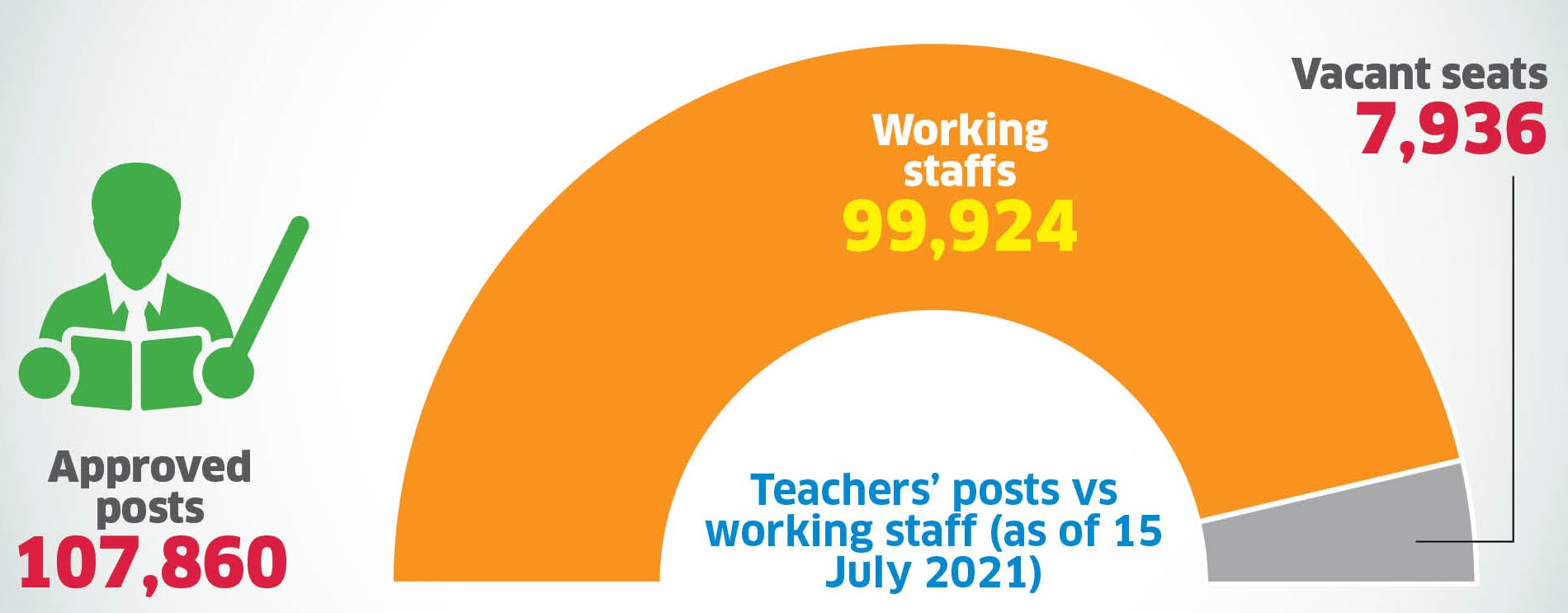
Almost 8,000 seats of teachers are vacant, currently filled with temporary teachers appointed on contract basis. Temporary hiring has given rise to nepotism, favoritism and corruption, as school heads have the authority to utilize and manage school’s resources and manpower.
We need more technical civil servants
Kashiraj Dahal
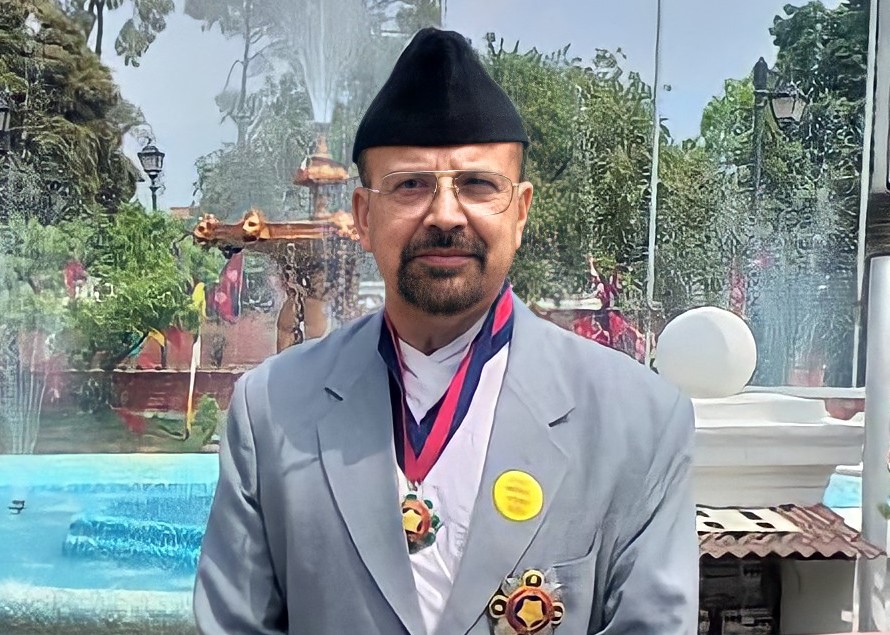
Local bodies are our major service providers as they are directly associated with the public and with broad work areas. They thus need more civil servants. But 55 percent of the allocated seats in local level civil services are vacant, creating a void between government and the public. The concerned authorities should immediately fill these vacant seats via federal and provincial Public Service Commissions. Prior to that, the parliament should pass the ‘Nijamati Ain’, which upholds the essence and importance of civil services.
The government must focus on recruiting professional technical staff, as their multiple skills will help get governmental work done in less time. It will also restore the credibility of the civil servants who are often accused of not doing their jobs on time. I believe in quality not quantity, so let’s not count posts but adjust them on a need basis. Our administrators have no idea of work division, but without it, we can’t be competent as well.
Dahal is an expert in public administration and former Secretary of the Nepal government


