


Should Nepal’s elderly take the Covid-19 vaccine? Absolutely, say experts

The Ministry of Health and Population is all set to begin the second phase of immunization against Covid-19 from 7 March 2021. Those above 55 are the priority this time. But most people belonging to this group seem hesitant. They aren’t sure if the vaccine is safe.
This concern stems largely from what they have seen on social media. Many people who got the vaccine, worldwide, have complained of headaches, fever, and fatigue among other side-effects. Also, the fact that the first phase of the vaccination in Nepal saw a moderate turnout, with only half of the prioritized individuals inoculating themselves, has people questioning its safety, efficacy and need.
Tara Shrestha, 66, housewife and resident of Pulchowk, Lalitpur, says her eldest daughter who’s in London, UK, suffered from fatigue and fever after getting the vaccine. Shrestha wasn’t enthused about getting vaccinated in the first place and now she has made up her mind: She isn’t going to.
“There’s no point of it if it’s going to make me ill. At least I’m okay right now and there’s no imminent danger,” she says.
Safety concerns
The effects of the pandemic-induced infodemic—wherein everybody became an expert and made their ideas public via social media leading to information inundation—has perhaps never been as evident as today, fueling a sense of unease and skepticism. People don’t know what to believe in but the worst of it doesn’t leave their minds.
‘What if the vaccine doesn’t work and makes me sick with Covid-19 instead?’, ‘What if I am allergic to the vaccine?’, ‘Will I have to keep getting new shots every time the virus mutates?’ and, ‘Do we actually need a vaccine as Covid-19 infections are already on the decline?’—These were some of the common concerns among a random sample of 37 people ApEx spoke to on the streets of Lalitpur and Kathmandu.
Saraswati Karki, 47, who runs a grocery store in Gaushala, Kathmandu, isn’t going to let her parents and in-laws, all of whom are over 60, get inoculated. She sees no need for it as she believes the threat has largely passed. She says home remedies like turmeric water and ginger fenugreek paste have protected her family so far. They will continue consuming different herbal concoctions like these to stay safe.
“I wouldn’t have been so opposed to my family getting vaccinated if I was sure it was safe. Everybody I know who has gotten the vaccine has complained of one or the other side-effect,” she says.
Queries answered
However, Sameer Mani Dixit, PhD, a public health expert, says everyone, except those who are severely immunocompromised, should get the vaccine.
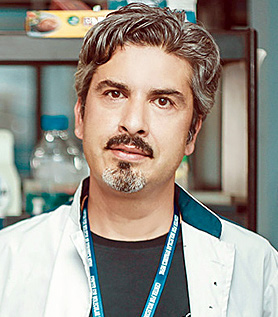
No one should be in two minds about it, he says. The Covid-19 vaccine is not at all harmful and poses no threats whatsoever to the human body. What’s important to understand, he says, is that every vaccine will have some side effects and that’s completely normal.
“The idea that you can get Covid-19 from the vaccine is baseless,” says Dixit. What’s true instead, he adds, is that millions of elderly people around the world have been vaccinated against Covid-19 and no one has died or even been gravely ill.
“As far as I know, even fever isn’t a common side effect of the vaccine among the elderly,” he says. This, he explains, is because as you age your immune response becomes low and doesn’t kick in as effectively as it would have when you were younger.
Various reports suggest that mild body ache, chills, and other flu-like symptoms are common and go away in a couple of days. The side effects are a small price to pay for the potential risks you run if you choose not to get jabbed.
Dr Shailendra Kushwaha, consultant cardiologist at Norvic International Hospital, Thapathali, Kathmandu, says the WHO guidelines for the Covid-19 vaccine clearly state that everyone except those under 18 and those suffering from acute phase of fever, cough or other diseases requiring hospitalization are eligible for the vaccine.

Vaccine contraindications
Dr Kushwaha says there are a lot of false beliefs emanating from lack of information dissemination and the resultant unawareness.
And indeed, unavailability of information regarding the vaccine—its importance and contraindications—was cited as a major reason most people didn’t want to get vaccinated. Even those who thought they would eventually have to get it wanted to wait and watch for a while, see how others would react to it.
According to Dr Kushwaha, the vaccine is contraindicated for those who have previously had allergic reactions to vaccines or injectable therapies and other pharmaceutical products. It’s also not recommended for pregnant women and lactating mothers as these groups haven’t been part of any Covid-19 clinical trials so far.
The vaccine is also temporarily not advised for those who have active symptoms of SARS-CoV-2 infection or those who have been given anti-SARS-CoV-2 monoclonal antibodies or convalescent plasma as well as those who are currently unwell and hospitalized.
“For those who have a history of bleeding or coagulation disorder, it’s best they get the vaccine under their physician’s supervision,” says Dr Kushwaha, adding that this is currently what we know for sure about the vaccine based on clinical trials.
“It’s all very new and much of it is being studied. We still don’t know many things about the vaccine and new information will become available as we move forward. But that doesn’t mean we have to be scared of getting vaccinated,” he says.
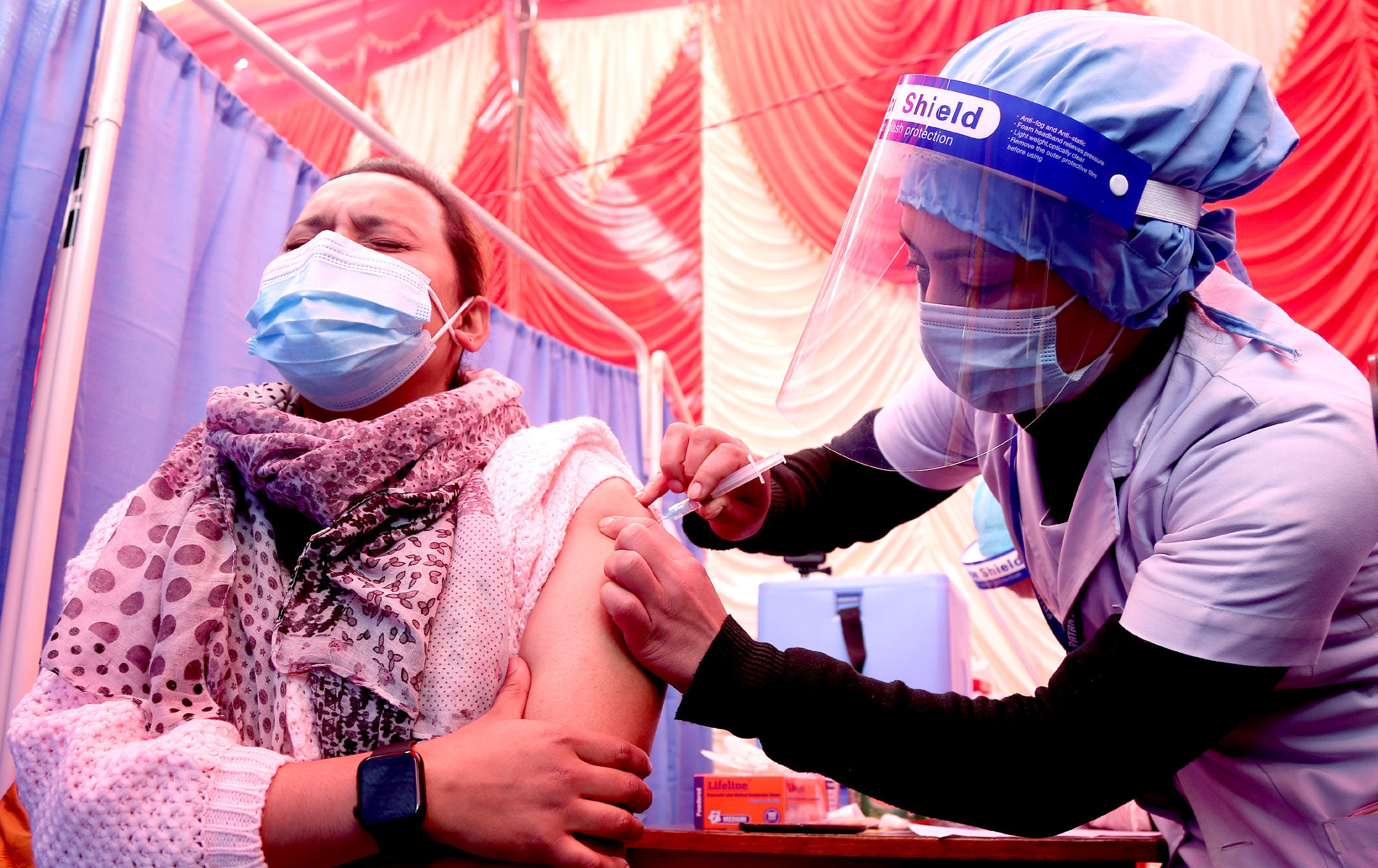
Both the experts—Dixit and Dr Kushwaha—also stress on the importance of the vaccine for those who have already contracted Covid-19. Dixit says if you have recovered from Covid-19, there’s no reason why you shouldn’t get vaccinated to give your immune system the boost it needs to fight future infections.
Informed decisions
What’s unfortunate is that the Nepal government hasn’t been able to effectively convey just how vital it is that everybody takes the vaccine. Out of the 37 people we talked to, 34 confessed they thought the vaccine was unsafe. They felt the government must have procured low-quality vaccines or made some compromises for commissions.
Sunny Vaidya, 26, who works at Dhukuti, a retail outlet for the Association of Craft Producers, in Kupondole, Lalitpur, says it’s the general sense of mistrust that leads to fear—more so now when our health is at stake.
“Our government is a sham. Everything it does benefits the ones in power and puts the rest at a disadvantage. It’s hard to believe they have the public’s interest in mind while urging us to get vaccinated,” he says.
Vaccines work by mimicking an infectious agent—viruses, bacteria or other microorganisms—that can cause a disease. It trains and prepares our immune system to effectively and quickly respond against it, thus preventing its multiplication that leads to diseases. Getting the Covid-19 vaccine readies your body to fight the virus should you get infected.
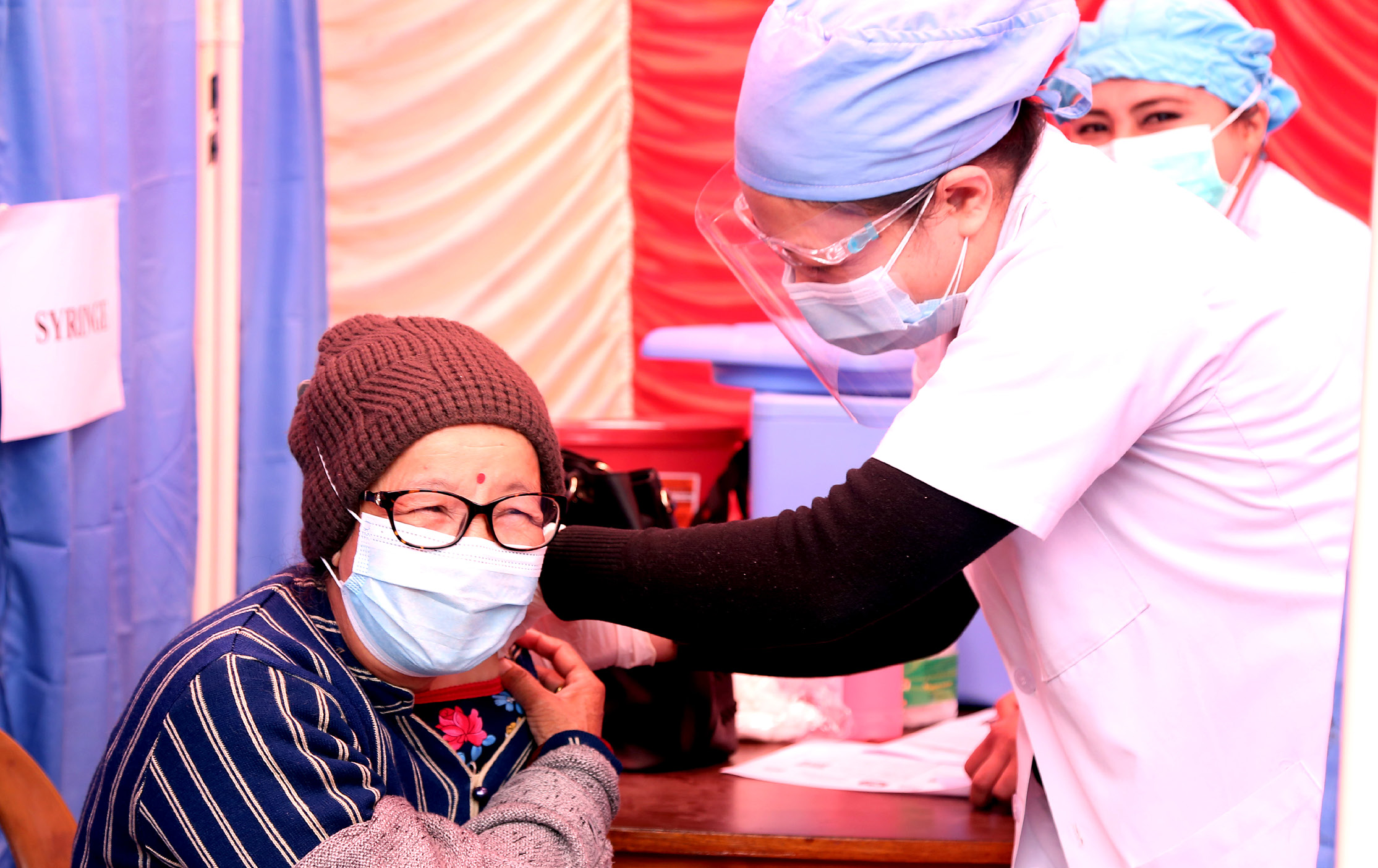
According to Dixit, many people also seem to think that being vaccinated means they will not be infected by the virus, which is not true. What happens is that their bodies will fight the virus and not let it multiply, thus effectively killing it, because their bodies have been prepped to recognize it as a threat.
“You might get infected with the virus after you take the vaccine but you won’t suffer from the diseases it could cause,” says Dixit. And given all the potential complications of the novel coronavirus, getting the shot seems to be the safest bet.


Province 1 traffic police enforce ‘no-horn’ rule with love
Assistant Inspector of Police (ASI) Tulamani Acharya stops a bus plying on the Koshi Highway at Dhat, Biratnagar and greets the driver with a Namaste. The driver, used to being shouted at by traffic police officers, is surprised. Acharya then requests the driver to desist from using pressure horns from now. The driver reciprocates the greeting, acknowledges the request, and drives off.
Likewise, ASI Kishor Niraula stops a honking truck at Virat Chowk of Morang on the East-West Highway. Niraula also greets the scared-looking driver with a Namaste and makes the same request. Niraula was informing all the drivers of vehicles on the road-section in the same way.
ASI Dhamendra Rajbanshi was similarly informing drivers on the Biratnagar-Rangeli road section at Karsia in Morang of the rule that bars the use horns except during emergencies. Putting his hands together, Rajbanshi also politely warns that in the future, strict action will be taken against those who break the rules. The drivers in turn commit not to honk.
Traffic police personnel deployed across all 92 units of Province 1 are busy on the roads, spreading awareness against honking, with their stern but gentle warnings.
Previously punished with fines and reproach, the drivers are surprised at this gentler approach of the traffic police. Pankaj Sah, a driver, says he is impressed. “We were scared every time a traffic cop stopped us. We feared we had unknowingly violated some rule and would now be slapped with heavy fines,” Sah says. “But now they’re stopping us only to give us warning. This is good. Everyone has to abide by the rules.” Sah finds the traffic police’s changed behavior and new approach persuasive.
As noise pollution has increased in the region, the traffic police recently launched a special campaign aimed at making the province a completely horn-free zone.
Chandra Bahadur Khadka, Chief Inspector of Morang Traffic Police, also urges drivers to stay within the limits set by traffic rules. The traffic police are using placards and one-minute stops to raise awareness. Non-compliance to rules will result in disciplinary action, Khadka informs.
Province Traffic Police Chief SP Sanjeev Sharma informs that the special campaign to control noise pollution will ban the use of pressure horns in all 14 districts of the province.
Horning was already banned in the province but the ban was not informed during the lockdown as there were hardly any vehicle out on the street at the time. But now the province is in a mood to strictly enforce the ban.
According to the Vehicle and Transport Management Act, a driver violating the ‘no horn’ rule can be fined between Rs 500 and Rs 1,500. SP Sharma informs that the rule will be deemed to have been violated if the driver honks under the pretext of overtaking, signaling, asking for lane change, and crossing intersections.

Infrastructure changing the face of Lumbini
Until seven years ago, it took almost an hour to get from one end of the 21-km Butwal-Bhairahawa road to another in a vehicle. The narrow, rough road tormented vehicles and passersby with dust. Now, the same road has been turned into a six-lane highway and the distance between Butwal and Bhairahawa can be covered in a maximum of 20 minutes.
This road, now named Butwal-Behaliya Trade Road, has reduced the travel time between Butwal and the Indian border to 30 minutes. Locals as well as travelers are amazed at the progress. The federal Minister for Culture and Civil Aviation Bhanubhakta Dhakal, who recently visited Butwal via Bhairahawa, could not hide his surprise as well. “So much has changed,” he said on the visit. “Looking at this road, we can say the country is developing.”
Like the Butwal-Belahiya Trade Road, the Bhairahawa-Lumbini road has changed its face too. Tourists coming to Lumbini used to be disappointed with the old cars, ramshackle trucks and rough roads in the area. No more. The road from Bhairahawa to Tilaurakot via Lumbini has been widened to four lanes. “Once these roads are completed, the face of local tourism will be transformed,” says Leela Giri, Lumbini’s Industry, Tourism, Forest and Environment Minister.
Around Rs 100 billion is being spent on infrastructure, including roads, in Rupandehi district. The construction of Bhairahawa's Gautam Buddha Airport as well as projects under the Lumbini Development Fund’s masterplan including 5,000-capacity meeting hall, Butwal-Belahiya Road, Lumbini-Bhairahawa Road, Belwas-Bethari Road are in the final stages of completion. The International Conference Center in Butwal is the largest in the country, with more than half the work in the Rs 1.2 billion project now complete. A permanent exhibition venue is also being built with the meeting hall.
The construction work of Buddha Circuit has also been completed to make Lumbini, the birthplace of Buddha, accessible by road from all sides. Now visitors coming from the western side will reach Lumbini via Tilaurakot and Ramapur. From the east, an upgraded road also leads to Lumbini through a postal road. Agricultural produce can now be brought to markets easily. Farmers can reach markets of Butwal and Bhairahawa even on bicycles, carrying their agricultural produces. “Paved roads have greatly eased our lives,” says Ram Naresh Kurmi of Suryapura Chowk.
Butwal is a riverside city and its development as a river civilization has already started. After becoming finance minister for the second time, Bishnu Poudel had laid the foundation stone of the Tinau-Danav Corridor.
The roads to be constructed on either side of Tinau and Danav rivers will be connected to the Bhairahawa-Lumbini road. The long-term goal is to extend it to the Indian border. This six-lane road will link connecting roads in rural areas of Rupandehi and enhance the beauty of the Tinau River. Plans to build an arch bridge over the river are also being discussed. There is yet another plan to build a dam to create a reservoir for boating.

Acts of charity: When a little goes a long way
While most of us were busy whipping up dalgona coffee and baking banana bread during Covid-19 lockdowns, Ayushma Rana was out distributing food packets to those in need. Despite her family’s repeated pleas to stay home as she had two small children and aging parents, Rana could often be found scurrying from one place to another in Bhaisepati, Lalitpur, trying to reach as many daily wage workers as possible.
“I told my family I would help 100 people and then I would stay at home. When that goal was met, I said 50 more, and I’d stop. But before I knew it, I’d managed to reach 6,000 people,” says Rana, founder of ST Group which deals in luxury gift packaging and event management.
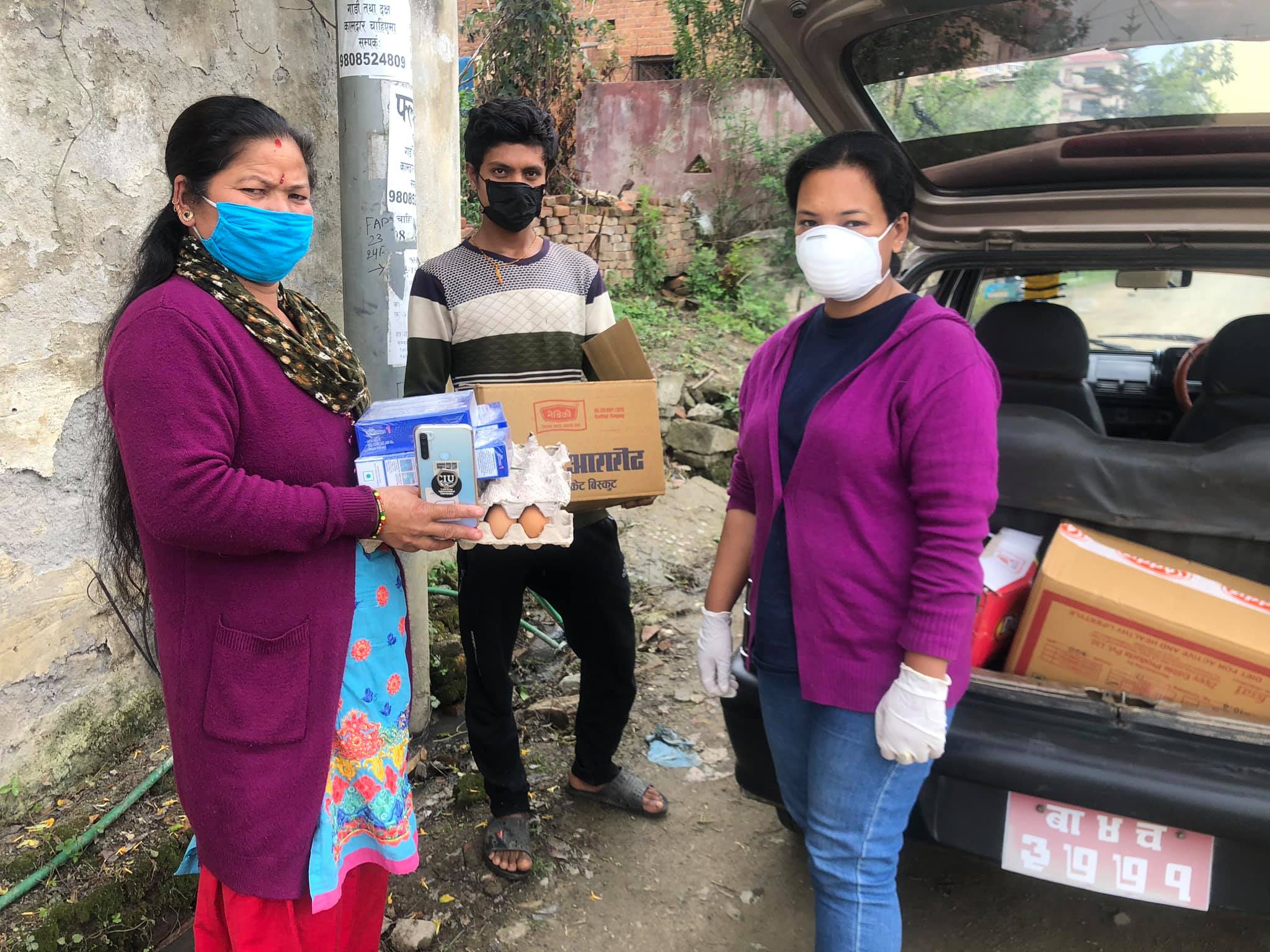 Ayushma Rana distributing food packages during Covid 19 lockdown.
This, however, wasn’t anything new for her. Rana has always tried to do whatever little she could whenever she could. During the 2015 earthquakes, her home in Ekantakuna, Lalitpur, got destroyed but she and her brother were out helping victims with food, medicines, and other necessities. Since 2016, she has also been distributing socks and woolen caps to street children, vendors, milkmen, and garbage collectors every winter.
“I believe each one of us must do what we can whenever we can. Every little bit counts especially in a country like Nepal where the government is apathetic and so many people struggle to make ends meet on a daily basis,” she says.
Her views are echoed by Saurav Rimal, who is involved in various smart city projects. Rimal says we have, for far too long, been complacent and thus dependent on the local authorities and the government. We are quick to complain but hesitate to take action, he adds.
When Kathmandu was under a lockdown, Rimal visited places in the city like Gongabu bus park, Bhrikutimandap, and Kirtipur that used to be crowded pre-Covid. His goal was to find daily wage earners who were struggling to put food on the table.
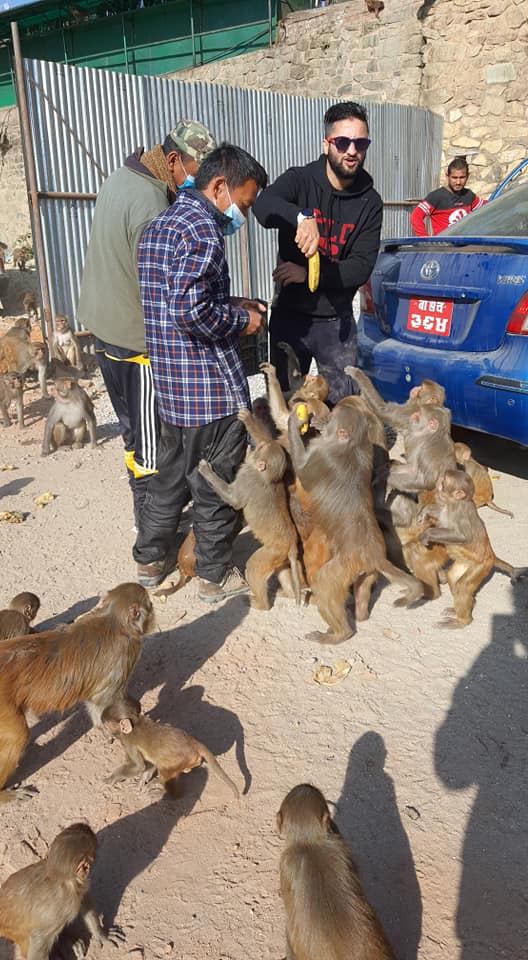
Saurav Rimal feeding monkeys during the Covid-19 lockdown.
Rimal’s efforts kept more than 500 families from starving during the lockdown. He also fed monkeys and stray dogs in and around the Pashupati and Swayambhunath areas.
Recently, Rimal distributed jackets and blankets to sugarcane farmers from Sarlahi who were in Kathmandu for a protest. They were asking the government to see to it that the sugar mills cleared their dues.
Many of them, he says, didn’t have a proper place to stay and had flimsy clothes ill-suited for Kathmandu’s steadily dipping temperature. Rimal used his own savings and money sent by friends abroad to buy them some warm clothes as well as make arrangements for a decent place to stay.
“I know what I’m doing isn’t sustainable. There is only so much I will be able to do with my limited resources. But I still intend to do everything I can for as long as I can,” says Rimal.
This is where unity as Nepalis would come in handy, he adds. If communities came together to help those in need instead of merely cribbing about how the government doesn’t do anything, we could witness a sweeping change across the nation.
“Unfortunately, most people have the mindset that as long as they are paying their taxes, they needn’t be bothered with anything else,” he says.
No help is small
Juju Kaji Maharjan, who comes from a family of social workers, feels this is because most people underestimate the power of a single person working for a cause. They don’t think feeding a homeless person or helping a family with their hospital bills can make much of a difference.
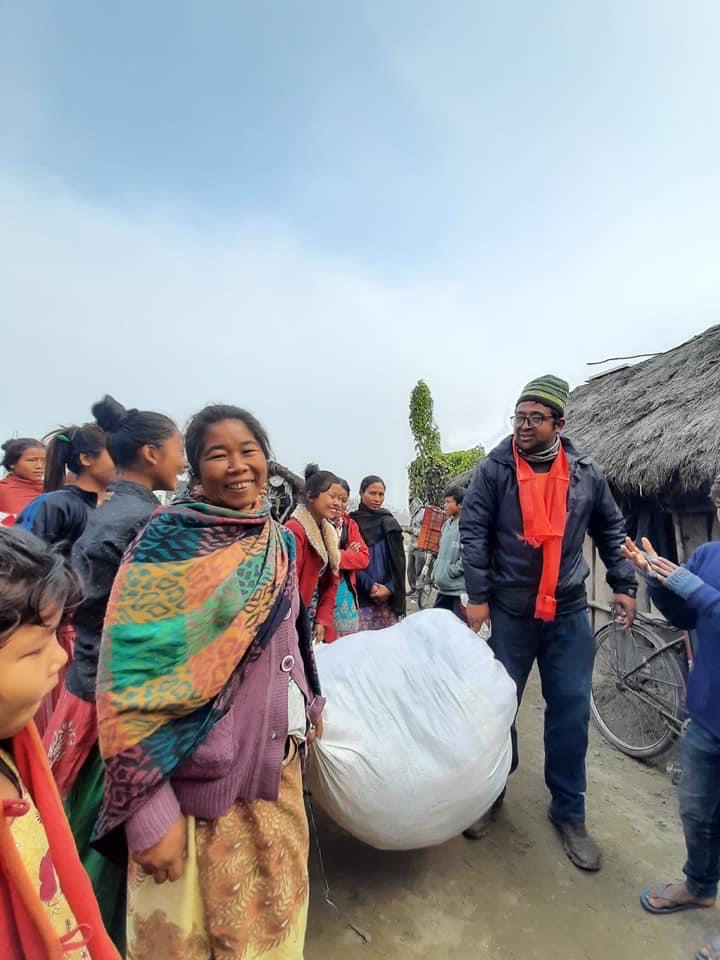 Juju Kaji Maharjan distributing food after the 2015 earthquake.
What most don’t understand, he says, is that small actions can have a ripple effect and ultimately lead to big changes. The results of those small actions aren’t immediately visible that a lot of people find it difficult to stay motivated.
Rana says helping others gives her a sense of peace and more people should do it because it feels so good. “It’s an endorphins rush that you’ve got to experience,” she says. When she hands someone a pair of socks, she is consoled by the fact that the receiver might stay a little warm, at least for that night. Every selfless action has the potential to make life a little better for someone else and for you too, she adds.
According to Dristi Thapa, who works at The Orphan’s Home in Nakku, Lalitpur, no help is big or small. What matters is you choose to operate out of a place of love and that will never go unappreciated.
Thapa started working at the orphanage as she has always believed in the importance of giving back and making a difference, as small as that might be. The children at the home, she says, take delight in the tiniest of things. For example, they were ecstatic about a slice of cake they all got on her birthday. Their eyes just lit up, she says. You would have to consider yourself lucky to be a harbinger of that kind of pure happiness.
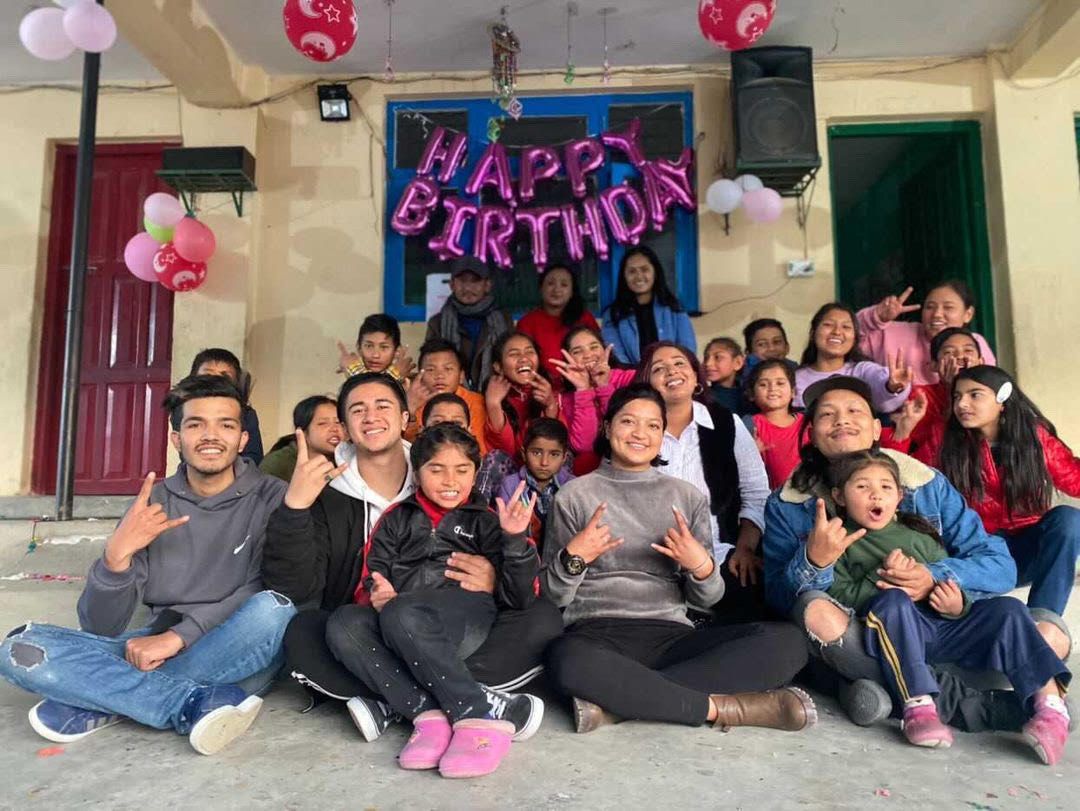 Dristi Thapa celebrating her birthday with orphans.
“I might not be able to do very much but if I can bring even the littlest of joys in a child’s life then it will be a life well lived,” she says.
Joy in feeding
Jimi Prem Karthak, proprietor of The Lunch Box, a fast-food restaurant in Kupondole, Lalitpur, runs Food for Naanis program. It was initiated with a simple idea of providing good food for children who need it. The program runs in the city and, though they get a lot of flak for it, Karthak says there is a reason they aren’t keen on focusing on rural areas just yet.
“People in villages grow their own food and most families eat nutritious meals. On the other hand, many low-income families in Kathmandu don’t care about nutrition. It’s also, I think, a case of bad parenting,” he says.
However, Food for Naanis isn’t a charity program and he isn’t a social worker. He doesn’t want to be a messiah for those his program helps. Run entirely on donations by friends and family, and with contacts he has made over the years, he says he is running a party (much like a political one) where there is good governance.
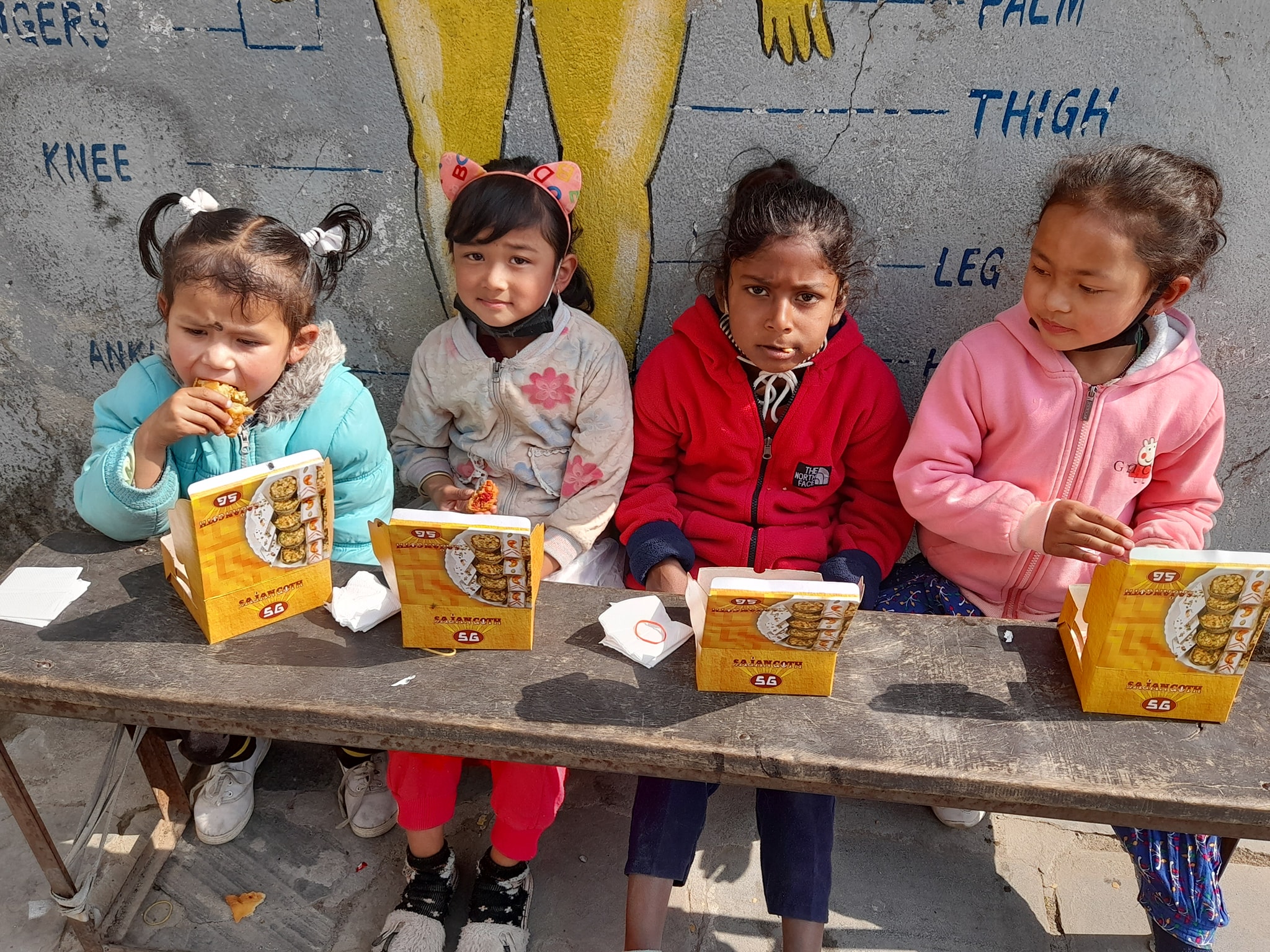 Children eating from food boxes under the Food for Naanis program headed by Jimi Prem Karthak.
“This approach works because there are many people who want to help but don’t have the time to do so on their own. Nor do they know who to trust with their money. If they see there are people who are doing things in an organized way, it’s a win-win situation for all of us,” he says.
So, in that way, Food for Naanis is actually a medium to connect those who want to help with those who seek it. The program has a record of feeding 2,300 children in around two dozen orphanages in a single day.
However, transparency and accountability are often serious issues when you start taking donations, even if they come from friends and relatives. Rana made multiple appeals through social media as she sought help to provide nutritious food to pregnant women, lactating mothers and newborn babies.
To assure those who sent her money through various online payment portals, she took to posting photos of the supplies as well as the deliveries. She also posted photos of hospital bills when she used the funds to treat Covid-19 patients who were unable to afford healthcare.
Do it anyway
Karthak says transparency is sometimes a struggle because orphanages and schools’ authorities don’t always want him to take photos. It’s often a hassle to explain that he just wants to show donors that their money has reached the intended beneficiary.
It’s this complexity in an otherwise noble undertaking that makes Rimal steer clear of donations, though his circle of friends has helped him time and again. He would rather people give what they can to those in need themselves. You could, he says, start by giving a homeless person a packet of biscuits. It could be as basic as that.
“What’s important is that we change our mindset that a little won’t go a long way,” he says, urging you to imagine what, say, 500 rupees set aside from your salary every month could eventually amount to and how that could help someone who doesn’t have the same privileges in life as you.
“And think what could happen if every person in your community started doing this,” he says.
Maharjan agrees that, if you aren’t happy with how things are, you have to start doing what you can instead of always placing the responsibility on someone else’s shoulders.
“The thing about taking up social causes is that besides being an immensely gratifying experience, it’s addictive as well. Once you start and get the feel of it, you cannot stop,” he concludes.


