


From aquariums to ecosystems: Exotic pet fish trade threatens Nepal’s native species

In a startling discovery last year, an Ichthyological survey documented the presence of Pterygoplichthys disjunctivus—a species of Sailfin Catfish native to the Amazon—in the Lohandra river of Eastern Nepal. Known for its hardiness and invasive potential, the species has already disrupted ecosystems in India and Bangladesh. Due to the significant ecological impact of Loricariids species, Bangladesh has imposed a ban on any species of the suckermouth catfish group.
As a non-edible species, its presence in natural waters points towards potential source—pet trade. The record of this species has raised serious concerns among conservationists. “The numbers suggest they have already adapted to natural water bodies and monitoring is necessary to determine whether they have become fully invasive or not,” said Jash Hang Limbu, lead researcher of the study.
The aquarium trade link
The Loricariids species, including Pterygoplichthys and Hypostomus, are popular aquarium fish for their ability to clean aquaria by feeding on algae. Sold as “plecos” or “sucker fish”, they are easily available in aquarium stores across the country. When small, they remain mostly at the bottom of aquariums, feeding on algae and detritus. However, these species can escape or are released into natural waters, once they outgrow aquariums. They have the capacity to adapt, which can result in disruption of native aquatic biodiversity.
While the precise route of introduction into the Lohandra River remains unclear, researchers suspect a combination of accidental releases from aquariums and migration from Indian rivers as a potential cause.
Back in 2018, a specimen was recorded at a commercial fish farm in Dhanushadham municipality, and was released into Dhanush pond, a natural pond within Dhanushadham protected forest. “We failed to identify the species. However, it had an eye-catching body structure, so we rescued and released it in the pond,” said Dev Narayan Mandal of Mithila Wildlife Trust.
Recently, two additional sightings were reported, both in commercial fish farms from the same locality. Despite the potential risk of invasion, the fish was released into nearby rivers. “To my information one farmer killed the fish but the other released it in a nearby river,” said Mandal.

The presence of these fish in remote villages far from aquarium shops hints at the possibility of alternative introduction pathways, such as migration from India or accidental release via fish stock imports. In 2024, a specimen was also captured from the Narayani irrigation canal in Bara district.
According to Limbu sailfin catfish have been recorded in irrigation canals and other water bodies in Morang and Jhapa districts in recent surveys as well. He suspects the presence of two species of sailfin catfish (Pterygoplichthys disjunctivus and Pterygoplichthys pardali) in eastern Nepal, although taxonomical identification is difficult.
In both India and Bangladesh—where the fish has invaded ecosystems, the primary source of introduction is the aquarium trade. Limbu suspects that the fish might have migrated from India through inter-connected river systems. As Nepal’s rivers are linked to those in India, the possibility can’t be dismissed.
However, experts like Kripal Datt Joshi, retired principal scientist at Indian Council of Agricultural Research, are sceptical of the migration theory. “Nepal’s rivers are less polluted and fast flowing - conditions that are not congenial for this species,” he said.
Likewise, Loricariids (both Pterygoplichthys and Hypostomus) are known for their ability to breathe air and even show terrestrial locomotion. Experts say considering this adaptive behaviour, the fish may have found alternative dispersal methods.
Growing threat of invasion in Nepal
The pet fish trade is not the only pathway for exotic invasive species in Nepal. Despite the tremendous native fish diversity - 236 indigenous fish species, introduction of exotic fish species started during the 1950s. A 2015 study by Prem Budha, Professor of Zoology, Tribhuvan University, documented 19 exotic fish species in Nepal. However, the list doesn’t include fish species reared in aquariums.

Many were introduced for aquaculture without proper risk assessments. “If such exotic species escape or are released to natural ecosystems they might adapt to the environment, breed, and can become invasive,” said Budha. Species like Tilapia, has already outcompeted native fish in lakes of Pokhara. Recently, rainbow trout—a species listed under “100 of the World's Worst Invasive Alien Species”—has escaped and are recorded in natural waters, said Bharat Babu Shrestha, professor at Tribhuvan University. “It’s time to regulate exotic species, including Tilapia,” said Professor Shrestha.
Ornamental fish industry in Nepal
Nepal’s ornamental fish industry has grown rapidly, with aquarium shops flourishing in Kathmandu, Pokhara and other major cities. “The number of people buying fish has increased in recent years,” said the owner of Hobby Aquarium, one of Nepal’s oldest shops.
However, the customs import data depicts a different story, showing a sharp decline in ornamental fish imports—an ironic contrast to the booming domestic market.
Currently, imports are processed through the Nepal National Single Window (NNSW), where importers must list species name and quantities. “Based on that online application, import permissions are granted,” said Sumitra Laudari, Senior Fisheries Development Officer at Central Fisheries Promotion and Conservation Center (CFPCC).
Aquarium owners reported that importers import fish based on market demand and international availability. Most imports come from India and Thailand, with occasional imports from China, Indonesia, and other east-Asia-pacific countries.

Nepal lacks comprehensive research and a centralized database on aquarium fish imports. Limited studies exist, mostly in Kathmandu and Pokhara. A 2024 study published in International Journal of Biological Innovations journal reported 53 exotic and four native ornamental fish species sold in Kathmandu aquarium shops. Arowana was the most expensive, while Guppy the cheapest.
Professor Budha noted that international trade is a major pathway for invasive alien species globally. “With growing demand, more non-native species are imported, increasing risk of introduction into ecosystems,” he added.
Another concern is “fish liberation”—religious practice where believers release captive live fish into water bodies. “With exotic fish easily available, there’s a high chance non-native species are being released,” added Professor Shrestha.
Weak regulations, invasion risk and conservation concerns
The Nepal Fish Fry Standard 2061 (amended in 2077) lists 144 ornamental fish species allowed for import. However, many unlisted and high-risk exotic species such as Arapaima, Alligator Gar, Redtail Catfish, Pacu, Iridescent Sharks, Giant Snakehead, Red Devil and Peacock Bass are openly sold in the market. Known for their predatory behaviour and rapid growth, these species have caused severe ecological damage in other countries after escaping captivity.
The aquarium trade also threatens conservation efforts. Some IUCN Red List endangered species like Reticulated Hillstream Loach and Bala Shark (Vulnerable) and Red-Tailed Black Shark (Critically Endangered) are easily available in the market, though they are not listed under the Nepal Fish Fry Standard 2061.

Some of these are smuggled from India, often hidden among frozen fish shipments. “The mortality rate is high with such fish, so we avoid purchasing from those sources,” said a Kathmandu-based shop owner. Nepal’s open border and weak import inspection further increases the possibility of such illegal imports.
Officials acknowledge enforcement challenges, citing a lack of technical officers at quarantine checkpoints. “Due to the lack of fishery experts at quarantine centres/posts, these fish species are often not identified correctly,” said Laudari. Ashok Adhikari from the Ministry of Agriculture and Livestock echoed a similar challenge, “Veterinary officers manage quarantine posts, but they often lack the expertise to identify fish species”.
A potential solution: Breeding native ornamental fish
Nepal has significant potential to develop a local ornamental fish industry. The CFPCC and Pokhara’s Fishery Research Station have begun breeding programs.
Though 15 native species with ornamental potential have been identified, only one is currently being bred. “Identifying and developing technologies for breeding native fish species for aquariums could be an important step in reducing import dependency” said Md Akbal Husen, Senior Scientist at Pokhara’s Fishery Research Station. For instance, River stone carp (Psilorhynchus sucatio)—a native algae eater known as “sucatio”, is being imported despite its local presence. Such species, if bred domestically, could serve as an alternative to invasive plecos or sucker fish.

While the domestic production has increased slightly over the past five years, it still doesn’t meet the market demand, said Husen. According to Laudari, efforts are underway to expand breeding programs at CFPCC.
Officials also reported even private breeders are starting to breed exotic species, but their operations remain unregulated.
The way forward
As the spread of invasive exotic fish species accelerates, Nepal must take proactive measures. Nepal has also adopted Kunming Montreal Global Biodiversity Framework (GBF), Target 6 of which aims to reduce the rate of introduction and establishment of invasive alien species by 50 percent, and to reduce/mitigate the impacts of invasive alien species on biodiversity and in ecosystem services. Nepal is currently drafting the National Biodiversity Strategy Action Plan (NBSAP)—a document that translates the global targets into national actions.

The approval of Invasive Alien Species Management Strategy and Implementation Plan 2081 has raised new hope. “This now provides us with a regulatory foundation,” said Professor Shrestha who was involved in drafting the strategy. “Conducting thorough risk assessment—both pre-border and post-border, is crucial in mitigating the risk of invasion” added Professor Shrestha.
“Strengthening technical capacity at quarantine checkpoints is also essential to prevent the entry of invasive exotic species”, emphasized Professor Budha.

The brain-drain debate: A futile exercise
Frustration and nihilism will never herald any solution nor drive to find success. Nonetheless, politics and political turmoil of Nepal has grossly failed to evacuate people from torrent of relentless hopelessness. For ages, people have desperately anticipated basking in the bright light of prosperity and all-round development. Several series of upheavals and mass movements were cast and were heartily corroborated for the same aspiration. But the entire drive seemingly appears to be recklessly and reflexively on reverse gear. Apocalyptic signs are rife; rapidly evolving situations portend an ocean of apathy from concerned authorities.
Of late, as a consequence, the height of dismay is countlessly compounded that even after many series of political changes the country has not yet reached and received the expected pace of development. Dynamics of welfare state and development is a subject that is continuously raised by the leaders of all political parties. From the last few years, the discussions about slow progress and sluggish development pace are attributed to brain-drain. It is believed that brain drain is the main reason for the under-development of the country and urged for diasporas’ return to accelerate it.
A large section of society is impressively whitewashed to conceive a faulty narrative of brain-drain in Nepal. The latest data shows that nearly 5m Nepalis are abroad. In-deed it has chained our mind, blurred the logical reasoning too. Nowadays, approximately 2,000 people prepare foreign trips every day under various pretexts and wishes. According to the World Bank’s report ‘Large Scale Migration and Remittances in Nepal’, Nepal is the third country in the list of remittance dependent countries after Tajikistan and the Kyrgyz republic.
It is undoubtedly true that many people have gone abroad. But to think that there is brain-drain in the country—merely because more people have gone abroad and everyone is obsessed with foreign countries—is a fantastic delusion. Exploring the details will evidently chart another bleak picture of reality.
Not everyone who has gone abroad can or should be considered a brain drain. Most of those who went there do not contribute at the level of the brain. They are used only as tools or physical labor; they have lived as a laborer, literally. The number of people who are really contributing with brains and are doing intellectual work is very infinitesimal and far more negligible to count or graph. Also, if those people don’t return here, there shall be no scarcity of people with that level of expertise or brains in the country. Certainly, a dense number of experts, qualified, capable, skilled, intelligent personalities for various required fields are still readily available in the country.
Those who have contributed intellectually abroad do not even feel disappointed to leave the country. They assume it as an achievement and present it as pride. After the foreign trip is decided, they throw a lavish party and write statuses as if they are the winners. They abuse the people living here and blame us as if others, especially those who opt stationing in the nation itself, are unable to do anything worthwhile. Their wives, children and family members too accompany them for permanent settlement. Most of them opt in selling property here and grapple with the best in settling abroad itself. They contribute very little or no remittances at all. They did not go there on being deprived of opportunities, rather they flew after pouring crores of rupees. Michael Mathiesen’s book ‘Brain drain: Beyond the Green New Deal’ states that brain drain is not something that should be worried much about and should be included in the adoption of control measures. Instead, labor drain is becoming more of a problem than brain drain.
Today, there is a stark need for general labor in the country. India is the country with the largest number of emigrants in the world. Nepal ranks seventh in the list of countries that send remittances to India. It seems that about three to four billion rupees is taken annually by various workers of Indian origin. This capital flight is not caused by doctors, professors, technicians, engineers and experts. The pool of human resources used in different types of labor market i.e. including house builders, hair saloon operators and construction site employees cause a capacious pecuniary deficit. Almost the same amount is spent on food imports annually. The basis of the necessity to import food is the exorbitant migration or flight of labor force from Nepal.
That group of people are deeply in a dismal situation because they have to stay away from their country and family. Here, various problems and discomforts such as family disintegration, sexual misconducts, and crises in parental intimacy are rampant. That group of people who have gone abroad as a labor force is also really suffering much. Existing data pool gives a hint that the works done by most of them are not only risky, comparatively unattractive and exploitative but also dirty, dangerous and disgusting. Most scholars researching the domain of season migration as well as foreign employment call it a 3D job to highlight the pathetic compulsion. By sweating it out day and night, they are also sending huge remittances to the country. There is also an extreme shortage of the labor they are doing there. But those about whom we are having a superficial debate do not contribute, nor is the country standing still in their absence.
Some of the experts and leaders opine that those who have gone abroad are gems for the country; and praise that they will magically change the country if they return. Such a senseless meta-narrative is obviously deep mental stress and abuse on the dutiful group of experts who want to contribute as much as possible to the country by staying in the country.
Migrant groups’ purported leaders often arrange/sponsor foreign travel arrangements for leaders. There will be extra visits and hospitality as well as occasional gifts and favors. That’s why our leadership might have felt an involuntary attraction toward the group. Have the country’s needs, gross domestic requirement, also been studied in this regard? Regarding brain-drain, both the contribution to the country and the loss to the society due to their absence are almost nil. Our country requires more people who are apt for the labor market. Our country is suffering multifaceted losses due to the lack of people who are to be consumed in the labor market. They also contribute to running the country. Therefore, the discussion of intellectual escape (brain drain) is only amateurish self-righteousness; but the deep attention should be paid on labor drain. They should be the priority of discussion and management. Let’s relieve ourselves from the illusive debate of brain drain and begin questioning it.

Light to moderate rain forecast at few places of Koshi, Bagmati and Gandaki Provinces
There is influence of Westerly and local wind across the country at present. Along with this, there is also the influence of the moisture-laden wind entering the country from the Arabian Sea, according to the Meteorological Forecasting Division.
The weather will be partly to generally cloudy in the hilly region and mainly fair in the rest of the regions. Light to moderate rainfall is predicted at a few places of Koshi, Bagmati and Gandaki Provinces while light to moderate precipitation accompanied by thunder and lightning is likely to occur at a few places of the hilly region of the country including in Sudurpaschim, Karnali and Lumbini Provinces and at one or two places of the rest of the regions today.
Similarly, there is a possibility of light rain and snowfall at a few places in the high hilly and mountainous region of the country today.
The Meteorological Forecasting Division also stated that the haze that is prevalent throughout the country at present will gradually start dissipating.
The Division has called for taking necessary measures and precautions to avoid the effects of thunderstorm, lightning and rain and snowfall that could affect health, daily life, agriculture and road and air transport.

Wheat fields thrive (Photo Feature)
Wheat is Nepal’s third most important food crop after rice and maize. As a globally significant cereal crop, wheat is Nepal’s most important winter crop. It is a major source of calories and protein. Wheat cultivation in Nepal spans from the Tarai plains to the high hills. In the fiscal year 2022/23, wheat was cultivated on 716,978 hectares of land in Nepal, yielding 2,144,568 metric tons of production. Currently, the average wheat productivity in Nepal stands at 2.99 metric tons per hectare.


Although both the area under wheat cultivation and overall production have increased in recent years, the import of wheat, wheat seeds, and wheat-based products has not declined. According to data from the Department of Customs, in the first four months of the current fiscal year alone, Nepal imported 20,279 metric tons of wheat-based products worth Rs 986.7m.


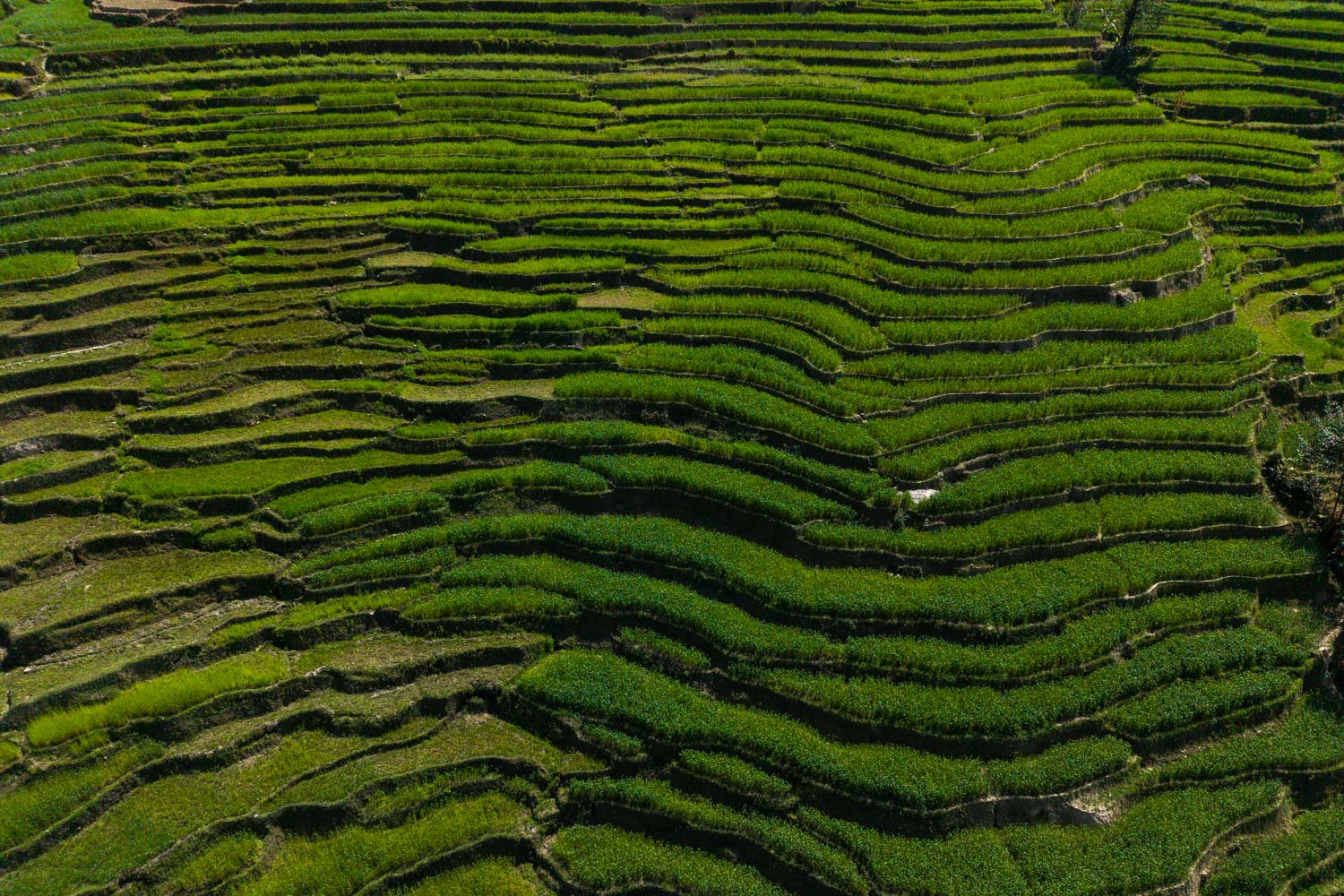
In the previous fiscal year, Nepal had imported 10,112 metric tons of such products, spending Rs 684.38m. In fiscal year 2021/22, 24,785 metric tons were imported, amounting to Rs 1.16m.


Currently, fields in the Helambu and Panchpokhari Thangpal rural municipalities of Sindhupalchok district are lush green with wheat crops. A local resident mentioned that the major food crops in that area include potatoes, wheat, maize, and millet.


