


Pokhara pins hopes on domestic tourists

When the country went into its first lockdown on March 24 this year, everything was shut: schools, salons, gyms, swimming pools, hotels, restaurants, bars and every other service that the government deemed unnecessary. People stayed put in their homes. As lockdown restrictions waxed and waned, for over six months people were alternately scared, confused, bored, frustrated and angry.
When the restrictions were finally lifted in the first week of September, Nepal went back to normal as if the virus had suddenly disappeared. Despite the rising number of cases, ‘covid fatigue’ made most folks shun all health protocols and rush back, pell-mell, to their daily lives. Hotels, restaurants, bars and clubs reopened in all of the country’s major tourist hotspots. Only this time, they were mostly filled with internal tourists.
The rebound against the roughly six months of lockdown was so strong, our sources tell us, tourist cities of Pokhara and Chitwan were full of domestic tourists in September and October, especially around Dashain and Tihar.
 Lakeside's Rolling Stones Rock bar on Dec 22, Tuesday
It is only natural that hotels and restaurants see 2021-eve as an opportune time to revive their businesses that were battered by the covid contagion. With the Ministry of Culture, Tourism and Civil Aviation proposing two-day weekend to promote domestic tourism and the number of internal tourists increasing regardless, tourism entrepreneurs are now hopeful of surviving till the world gets back to normal.
Festive streets
Domestic tourists have of late been flocking to the lake city. Yet the announcement of the Restaurant and Bar Association Nepal (REBAN) Pokhara’s 22nd Lakeside Street Festival was still a surprise. After the lockdown starting March and concomitant restrictions barring over 25 people from gathering at a public place, the upcoming street festival, scheduled for December 30-January 1, could be Nepal’s best attended entertainment event of past nine months.
The days of the festival have been cut from five to three and fewer participants are expected compared to previous years. Yet Pokhara’s tourist entrepreneurs are pinning their hope on the festival to give a new boost to their flagging businesses.
Bikash Bhattarai, general secretary of REBAN Pokhara, assures top-notch anti-covid measures during the three-day festival. “The festival is our effort to light a candle in the pitch darkness that has descended on our business,” says Bhattarai. “And we will take every measure to give attendees a sense of safety.” Bhattarai says REBAN Pokhara has already conducted training sessions on physical distancing and sanitization measures in the restaurants and bars in the Lakeside area.
The street festival will also cut short its list of activities deemed unsafe even outdoors. For instance, live concerts and sports activities including the annual tug-of-war have been cancelled in the fear that they could defy physical distancing protocols. The focus this year will rather be the various Lakeside restaurants showcasing their culinary skills in safe outdoor environments. Instead of musical concerts and crowded sports events, the festival will have small cultural programs and other activities that don’t involve big crowds. There will be health desks and coordinators who will monitor visitors and offer sanitization services.
“Recent trends suggest even domestic tourism can help us not just sustain but even earn a little profit,” Bhattarai says. “The popular restaurants and bars are back to doing up to 70 percent of their pre-covid business, which is a good indicator.”
Contrasting fortunes
For decades now, the Lakeside has been to Pokhara what Thamel has been to Kathmandu—an indicator of the city’s tourism and tourism-related economy. But while the outlook for Thamel, the older hub, is bleak, with many known establishments closing down forever, Lakeside offers a rosier picture. Bhattarai informs that not even five percent of restaurants and bars in Pokhara have remained closed and among those that have not reopened, more than half are getting back to business starting with the street festival. This was made possible with many landlords waving off all rents of some establishments till December. Other landlords waived off 50 percent rent and eased payments to help the outlets retain their spaces and the Lakeside its vibrancy. Unfortunately, the same coordination between landlords and tenants is absent in Thamel.
The Paschimanchal Hotel Association Pokhara (PHAP)—which is also conducting a campaign under the slogan “Jaaun Hai Pokhara” (Lets go to Pokhara) in major Tarai cities like Birgunj, Janakpur, Biratnagar and Chitwan—is also bullish on domestic tourists. As the lockdown restrictions were lifted and people’s mobility increased, Pokhara hotels saw up to 80 percent occupancies, albeit at vastly discounted rates.
“Domestic tourists are now the backbone of our tourism,” says Bikal Tulachan, hotelier and president of PHAP. “Every year, we have been getting more and more. The challenge for us is to maintain that momentum in this difficult post-lockdown phase.” At a time when international arrivals have virtually ground to a halt, Nepali tourist-related ventures have no option but to rely on and cater to domestic tourists, Tulachan says.
 Irish Pub Pokhara on December 23, Wednesday
Citing the example of how well-off Nepalis spend millions of rupees vacationing abroad, Tulachan suggests local businesses improve infrastructure and customize businesses to cater to these tourists and keep the money in the country. While most businesses in tourist hubs were formerly focused on international guests, Tulachan suggests a change in approach.
Expressing doubt about the prospects of the proposed two-day weekly holiday and the ‘Internal Tourism Year 2021,’ especially after tourism minister Yogesh Bhattarai’s recent resignation, Tulachan urges a collective effort of all three tiers of government as well as stakeholders in tourism to boost domestic tourism.
Some happier
Hari Poudel, manager of Lakeside’s famous Paradiso Sports Bar, formerly known as Club Amsterdam, is optimistic too. “We opened fully from September and have done good business since. We would be more than happy if the present situation continues,” Poudel says. He seconds Tulachan that venues now have to adapt to domestic tourists, which means a change in food, ambience, and music, among other factors.

Recalling how the streets of Lakeside were filled with vehicles from Kathmandu during Dashain, Poudel expects the same during the street festival. As there has been ‘negligible number of covid infections’ in the area, Poudel believes the outdoor festival will send a positive message about Pokhara’s tourism industry to the rest of the country.
Paragliding pilot Trisha Bomjan does not share the optimism though.
A seasoned flier who has been working in Pokhara for six years, Bomjan says these are desperate times for paragliders in Pokahra. “We have been giving 60-70 percent discount on paragliding services, which leaves us with almost nothing after you cut our expenses, other fees and paragliding companies’ commissions,” Bomjan says.
The main paragliding clients are international tourists, Bomjan informs. But now the roughly 400 pilots in Pokhara are making do with what little they make flying domestic tourists at heavily discounted rates. Also the accident last month, when a pilot died and a passenger sustained heavy injuries, drastically decreased the number of local passengers, Bomjan says. From 1,000-1,200 flights per day, the number has come down to 100-200, leaving many pilots without any work.
This brings us back to Tulachan who says that Pokhara might still attract local tourists but only if it can do more than bare minimum for visitors. Besides restaurants and bars, adventure tourism as well as other tourist activities need an overhaul to cater mostly to Nepalis. Adventure sports like zipline, bungee and paragliding are still niche among Nepali tourists and mostly a one-time affair. Also, their food habits are vastly different to foreigners’.
This suggests that as with most other businesses, constant adaption is the new name of the game for Pokhara’s tourism-related enterprises.

‘Living Goddess’ post vacant in Nepal’s Bhaktapur
The exalted seat of Ekantakumari, a living Goddess, is set to be vacant in Bhaktapur district after the incumbent Ekantakumari, Jivika Bajracharya’s Bel Bibaha—in which pre-adolescent girls are symbolically married to a bael fruit (wood apple)—was announced for the upcoming Shri Panchami (February 16).
Bhaktapur’s Ekantakumari automatically retires when she reaches 10 or when her Bel Bibaha is fixed, whichever comes first. As the search for a replacement is a difficult job, the Bhaktapur Taleju temple is informed of the impending wedding three months in advance.
Accordingly, Bhaktapur Taleju has been informed this time as well, says Jiv Chandra, the retiring Goddess’s father.
Jivika Bajracharya had been appointed Bhaktapur’s Ekantakumari in 2016. Narendra Prasad Joshi, the Chief Caretaker of Bhaktapur Taleju temple, informs that the search for a new living Goddess has already began. Girls aged two to eight from the Shakya or Bajracharya clans are appointed Ekantakumari.
But belonging to Shakya and Bajracharya clans is not enough to qualify as Ekantakumari, Joshi informs. According to him, the girl has to be a virgin with a pleasant and smiley face, have no flaw or cut in her body, and have a wide forehead, among other features. The family of the chosen one also has to give their consent.
As per tradition, the Goddess’s main caretaker starts looking for a replacement soon as the position becomes vacant. When a prospective match is found, the chief caretaker of Bhaktapur Taleju is informed. The chief caretaker checks all qualifications and if there is nothing wrong with the pick, he recommends the candidate to the central office of the Guthi Sansthan.
While the appointment of Ekantakumari was previously in the hands of the head priest of Bhaktapur Taleju temple, the responsibilities were shifted to the Guthi Sansthan after Nepal became a republic. The Guthi Sansthan provides a monthly allowance of Rs 3,710 to Ekantakumari.
Says Joshi, the Ekantakumari can stay home and lead a normal life, yet she also has to follow certain rules. For instance, she is expected to refrain from chicken meat and eggs. Nor can she partake of food that has already been tasted by others. Moreover, she cannot venture beyond Kathmandu valley and Banepa without the approval of the Guthi Sansthan.
The government also gives allowances to both incumbent and former Kumaris. The former Kumaris receive a monthly pension of Rs 5,600 while the incumbent gets Rs 3,185 a month. Among the former Kumaris who are still alive, only those appointed Kumaris after 2041 BS (1985) get pensions. Accordingly, of the retired Ekantakumaris, only Geeta Bajracharya, Padma Sumana Shakya, Neelam Bajracharya, Sajani Shakya, Shriya Bajracharya and Junisha Shakya are getting pensions.

Youth support buoys protesting Nepali farmers
Nearly a year ago, sugarcane farmers from some mid-Tarai districts had come to Kathmandu to protest. They were asking for payment of their dues, some pending for six years, from various sugar mills. An agreement was signed with mill owners on 3 January 2020. Almost a year after the agreement, the still-unpaid farmers are back in Kathmandu. In total, around 20,000 farmers are yet to be paid.
Different political and apolitical groups have been supporting the farmer strike at Maitighar Mandala. Among the most noticeable ones are the youths with no political affiliations.
Youths from the renowned Facebook groups like MRR and Sisterhood Nepal (SN), as well as social organizations like 100’s Group and Hamro Team Nepal, are lending their support. They coordinate the protest and help farmers with foods, water, and warm clothes.
Some youths who have been to the Maitighar Mandala are themselves sons and daughters of struggling farmers. Arjun Gaire, 28, who lives in New Baneswor, goes there on a regular basis and stands with the farmers for a couple of hours, if not the whole day, carrying a pamphlet.
Gaire sees many political leaders and cadres visit the site and give speeches in consolation. “Frankly, they seem to come for their own vested interests. I hope the support of independent youths like me will give the protest greater legitimacy and profile,” he says. Gaire adds that he is himself encouraged by active participation of other selfless youths.
Young people from Tarai districts have also come to Kathmandu to express their support for the aging sugarcane farmers who are protesting. “I am from a farmer family and I live in a farming community,” says Nabin Yadav, 25, from Sarlahi. An MBBS student in Bangladesh, Yadav has been on an extended ‘pandemic leave’. “I thought, what better way to spend my spare time than by supporting these farmers whose struggles I have personally witnessed.”
 Nabin Yadav
He sympathizes with the protesting farmers who are catching Kathmandu’s biting cold. Yadav is also unhappy with the number of youths supporting the movement. So is Bablu Gupta, 22, the founder of 100’s Group, a youths-led social organization, whose members have been protesting with the farmers at Maitighar Mandala from Day One. Both Yadav and Gupta rue the fact that while youths are quick to join protests with political agendas they seem to ignore important social agenda like justice for poor farmers.
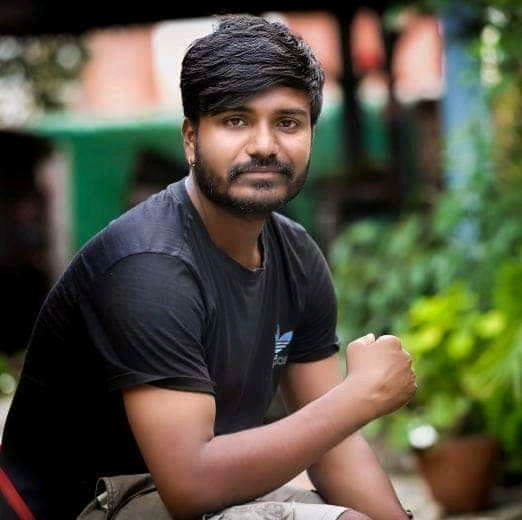
Bablu Gupta
Gupta says he is working as a coordinator to bring together different youth groups. “Besides feeding the sugarcane farmers, our group also encourages others to support the farmers’ fight for justice.”
Nabin Bhandari, 21, an active member of Mens Room Reloaded (MRR)—the Facebook group with around 45,000 Nepali males from all parts of the globe as its members—has been also been volunteering in the ongoing protests.
In a symbolic gesture protesting government apathy towards sugarcane farmers, MRR regularly conducts the ‘Ek Muthi Chini Daan’ program at Maitighar Mandala. In the program, some farmers and protest participants each symbolically donates a fistful of sugar. The sugar-bag is then handed over to concerned authorities. Bhandari reckons all fair-minded people should support the farmers’ movement.
 Nabin Bhandari
Similarly, Sisterhood Nepal (SN), an active Facebook group of young Nepali women, has joined the protest and it is also providing protesting farmers with trousers and warm hats. Lhameen Lama, 23, an active SN member, says she came to add her voice to the protest. “It is our duty. If we keep mum on these important issues, how can we call ourselves conscionable Nepali youths?” she asks.
 Lhameen Lama
According to the farmers, among the various sugar mills that owe them are: Rautahat-based Annapurna Sugar Mill (Rs 300 million) and Shreeram Sugar Mill (Rs 350 million); Nawalparasi-based Lumbini Sugar Mill (Rs 100 million), Indira Sugar Mill (Rs 80 million), and Bagmati Khandsari Sugar Mill (Rs 4 million); and Sarlahi-based Mahalaxmi Sugar Mill (Rs 60 million).
Of these, following the protests and as of this writing, Shreeram Sugar Mill had deposited Rs 164 million in the farmers’ accounts and promised to clear the rest of the dues by December 23. Lumbini Sugar Mill has issued a notice informing that its payments would start on January 15. These mill operators were forced to cough up after the District Administration Offices of Sarlahi, Rautahat, and Nawalparasi issued arrest warrants against offending mill owners.
Hamro Team Nepal, another youth-led social organization, is helping farmers with lodging, food, banners, sitting mat, and water, according to Bimal Pant, its chairman. The group is also helping with the management of the protests.
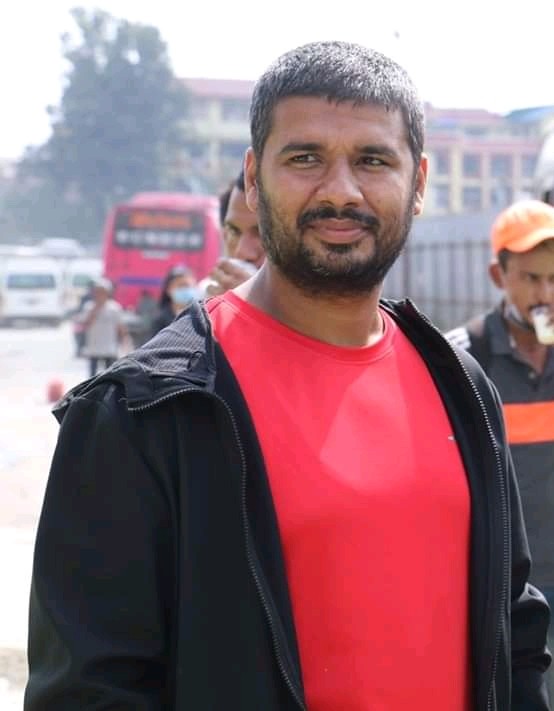
Bimal Pant
Pant says things should never have come this far; farmers should not have to stage protests to be paid. “We youths have the voice to make a change, and we should use our voice,” he adds.
The farmers at Maitighar Mandala are delighted with active youth support. Ramlal Kalwar, a 70-year-old farmer from Kapilvastu, comes and sits on the cold asphalt in protest every day. He is in no mood to leave Kathmandu without being fully paid. “The strong youth presence has attracted even more people to our protest. I am sure our collective effort will bear fruit in the near future,” Kalwar says.

Fostering a reading culture in Nepal
The lockdowns amidst Covid-19 pandemic had the world hoarding toilet paper. Many families now probably have enough to last at least a couple of years, if not a decade. Apparently, quite a few avid readers in Nepal bought books just as frantically. Those in the book business say many Nepalis seem more inclined to read today than ever before.
“There was a time when only tourists would buy books. Bookstores didn’t appeal or cater to Nepalis,” says Daya Ram Dangol, owner of Book Paradise in Jamal, Kathmandu.
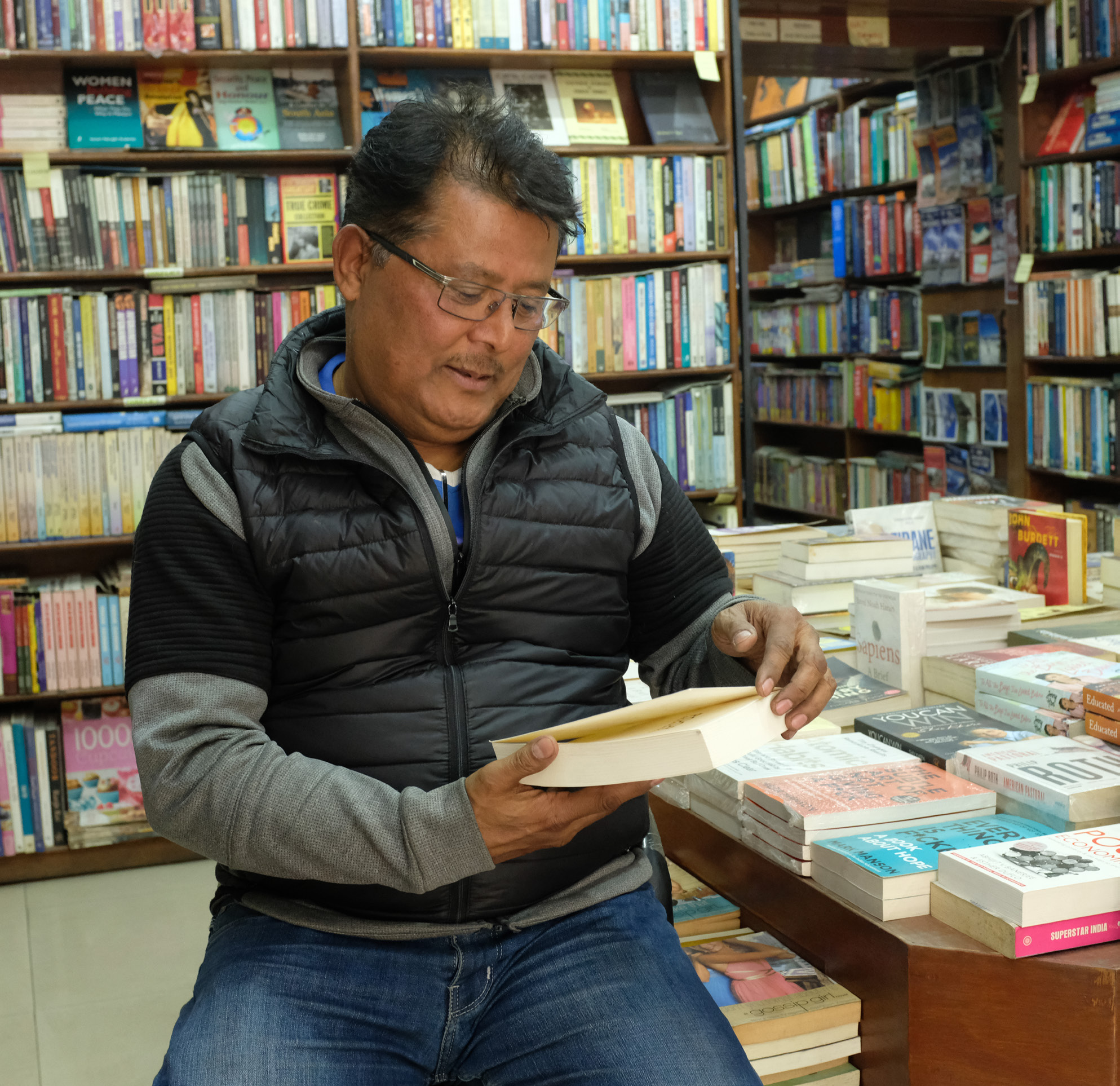 Daya Ram Dangol, owner of Book Paradise in Jamal, Kathmandu
Dangol has been in the book business for over 45 years. When he started, he says, the bookstore he worked at only sold travel books—mostly on Tibet, Bhutan, India—photo books, and a select few coffee-table books.
Things, he says, have definitely come a long way with over 95 percent of his customers today being young Nepalis who, according to Dangol, have varied interests.
“I rarely get foreign customers today. There was a time when the entire business depended on them,” he adds.
He feels this change in the reading scene in Nepal can, to a large extent, be credited to the internet. People these days know about new releases in the market. It isn’t like before when you would have to go to a bookstore to find out what was available.
Siddhartha Maharjan, manager at Mandala Book Point in Kantipath, Kathmandu, highlights the media’s role in making books popular and reading trendy in recent times.
“A lot is being written in the print media about literature these days and that gives books and authors the visibility they deserve,” he says.
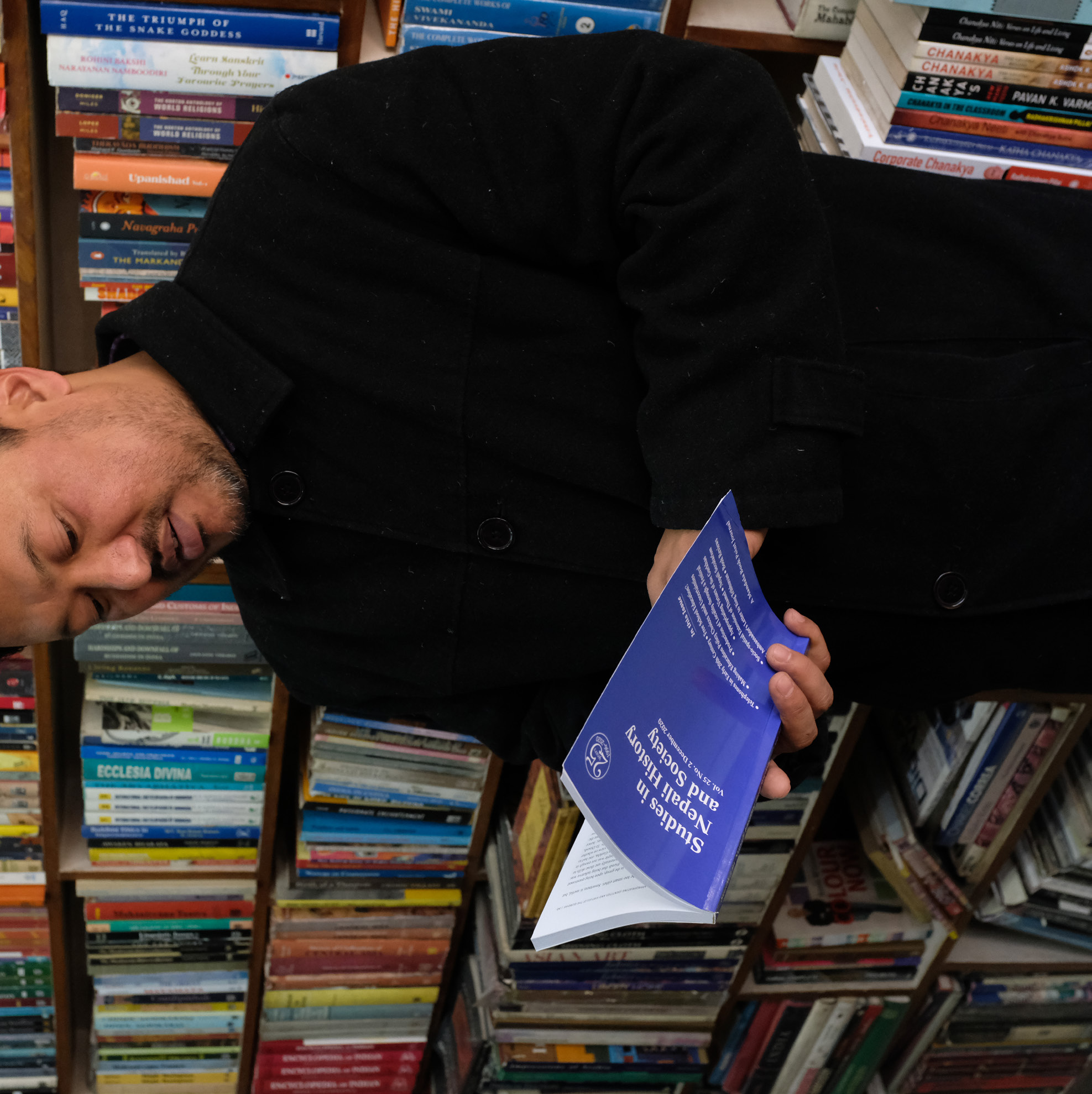 Siddhartha Maharjan, manager of Mandala Book Point, Kantipath, Kathmandu
Maharjan, however, says that Nepal doesn’t have a thriving reading culture—not yet. Most people, he says, read just the bestsellers or books that come highly recommended, be it by friends or on social media.
Like most good habits, a reading habit isn’t something that can be cultivated overnight. And like most habits, the earlier you start reading the better, says Maharjan.
In this regard, schools can and have been playing an important role by giving children reading assignments. But most parents themselves buy the prescribed books for their children—on their way to work or back home. According to Maharjan, there aren’t many parents who actually bring their children to the bookstore and let them pick books.
“This concept of letting kids explore a bookstore is missing here in Nepal and that is what is hindering the development of a reading culture,” he says. Only when children go to bookstores to find a particular book and then come across something else they like, Maharjan adds, will they eventually start reading on their own—not because they have to, but because they want to.
Radha Sharma Rai, senior sales manager at Ekta Books, says they have a rather large children’s section with a kid-friendly setting at their bookstore in Thapathali, Kathmandu. The intent is to get parents to let their kids roam around and discover books. She says she sees many people, who themselves grew up reading, bringing their children and letting them choose books on their own.
Besides cultivating a lifelong reading habit, bookstore owners APEX talked to said that Nepalis, in general, are definitely reading more than ever before—even if it’s a one-off popular book or pop-fiction by Paolo Coelho, Nicholas Sparks, and Chetan Bhagat.
While the older generation seems to prefer books on politics and economy, young Nepalis, they say, are mostly reading about personal development, businesses and startups, and spirituality. But the one genre that apparently sells across ages and interests is biography. With every other celebrity and politician talking about their lives, there is always some book selling like hotcakes.
The Covid-19 pandemic didn’t harm the book business. Rather, as bookstores took to Instagram and other social media platforms to showcase what they had in stock, their businesses actually did quite well. Granted, they had to tweak their business modules a bit but things have pretty much worked to their advantage.
“People these days want to know things. They want to be better versions of themselves. They want to develop new skills. And they realize reading books on topics they are interested in is a great way to do all that,” says Dhan Bahadur Lamsal, proprietor of Fewa Book Shop in Lakeside, Pokhara.
Pratima Sharma, who looks after online sales and marketing at Nepal Mandala Book Shop, also in Lakeside, says people turn to books looking for solutions to issues they might have. And it helps that we now have access to a variety of books, she says.
 Pratima Sharma, online sales and marketing officer, Nepal Mandala Book Shop, Lakeside, Pokhara
“I see a lot of people gravitate towards recent releases, poetry, and self-help,” says Sharma, adding that there seems to be a keener interest in books today as compared to, say, even five years ago.
But ours isn’t a conducive environment for promoting a reading culture, she laments. Books, she says, don’t come cheap. An avid reader herself, she confesses she probably wouldn’t have had access to or been able to afford many books if her parents didn’t own a bookstore.
Nor do we have good libraries in Nepal. This, Sharma says, not only increases piracy but also makes people search for other, cheaper or free, means of information and entertainment.
“The few libraries that we do have, have old books that are usually falling apart. Unlike in other countries where libraries get plenty of copies of new releases, libraries here run mostly on donated books,” she says.
If every Nepali city were to have at least one well-equipped library then that would mean even those without the means to buy books could take to reading. Sharma thinks the government should look into this. After all, in the long run, a robust reading culture helps create a society of smart individuals which could in turn foster prosperity and development.
There is also no concept of sharing books among readers in the community in Nepal. In many parts of the world, Little Free Library, a non-profit based in the United States, promotes neighborhood book exchanges. The aim is to increase access to books for readers of all ages and backgrounds. Communities here could also work upon a similar idea to get more people reading.
For now, Dangol at Book Paradise thinks easing the import process and not levying heavy taxes on books could help in making books accessible to all. Lamsal of Fewa Book Shop agrees. These days our education system supports free thinking and forming opinions from early on. This, he says, naturally has people wanting to read more. Hence, the only caveat to fostering a reading culture is making sure people who want to read have the resources to do so.


